Bromma Kyle, Chithrani Devika B
Department of Physics and Astronomy, University of Victoria, Victoria, BC V8P 5C2, Canada.
British Columbia Cancer, Medical Physics, Victoria, BC V8R 6V5, Canada.
Nanomaterials (Basel). 2020 Aug 26;10(9):1671. doi: 10.3390/nano10091671.
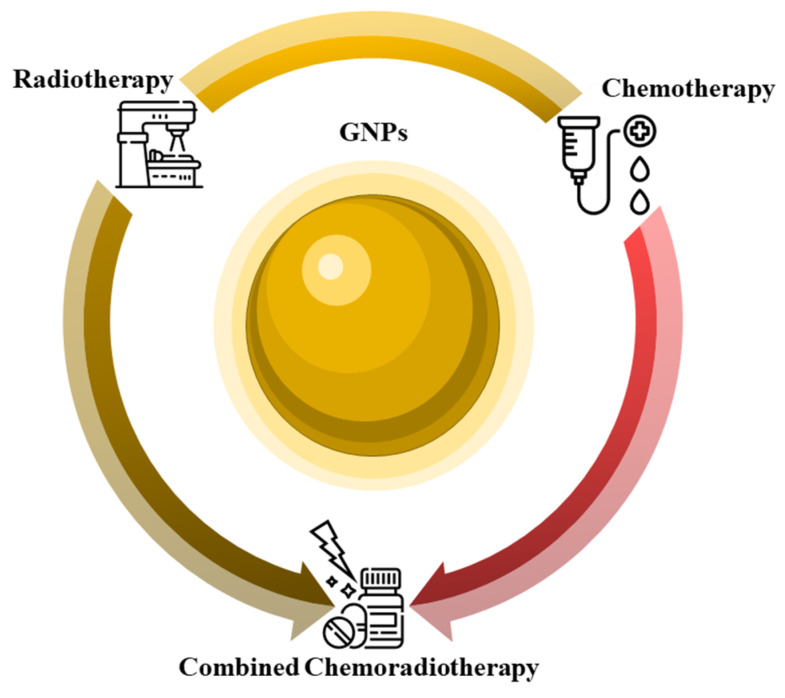
According to the global cancer observatory (GLOBOCAN), there are approximately 18 million new cancer cases per year worldwide. Cancer therapies are largely limited to surgery, radiotherapy, and chemotherapy. In radiotherapy and chemotherapy, the maximum tolerated dose is presently being used to treat cancer patients. The integrated development of innovative nanoparticle (NP) based approaches will be a key to address one of the main issues in both radiotherapy and chemotherapy: normal tissue toxicity. Among other inorganic NP systems, gold nanoparticle (GNP) based systems offer the means to further improve chemotherapy through controlled delivery of chemotherapeutics, while local radiotherapy dose can be enhanced by targeting the GNPs to the tumor. There have been over 20 nanotechnology-based therapeutic products approved for clinical use in the past two decades. Hence, the goal of this review is to understand what we have achieved so far and what else we can do to accelerate clinical use of GNP-based therapeutic platforms to minimize normal tissue toxicity while increasing the efficacy of the treatment. Nanomedicine will revolutionize future cancer treatment options and our ultimate goal should be to develop treatments that have minimum side effects, for improving the quality of life of all cancer patients.
根据全球癌症观测站(GLOBOCAN)的数据,全球每年约有1800万新增癌症病例。癌症治疗主要局限于手术、放疗和化疗。在放疗和化疗中,目前使用的是最大耐受剂量来治疗癌症患者。基于创新纳米颗粒(NP)方法的综合发展将是解决放疗和化疗中一个主要问题的关键:正常组织毒性。在其他无机NP系统中,基于金纳米颗粒(GNP)的系统提供了通过控制化疗药物递送进一步改善化疗的手段,同时通过将GNP靶向肿瘤可以提高局部放疗剂量。在过去二十年中,已有超过20种基于纳米技术的治疗产品被批准用于临床。因此,本综述的目的是了解我们目前已经取得的成果,以及为加速基于GNP的治疗平台的临床应用,在尽量减少正常组织毒性的同时提高治疗效果,我们还能做些什么。纳米医学将彻底改变未来的癌症治疗选择,我们的最终目标应该是开发副作用最小的治疗方法,以提高所有癌症患者的生活质量。