Chai Jong Yil
Institute of Parasitic Diseases, Korea Association of Health Promotion, Seoul, Korea.
Infect Chemother. 2020 Sep;52(3):441-452. doi: 10.3947/ic.2020.52.3.441. Epub 2020 Sep 2.
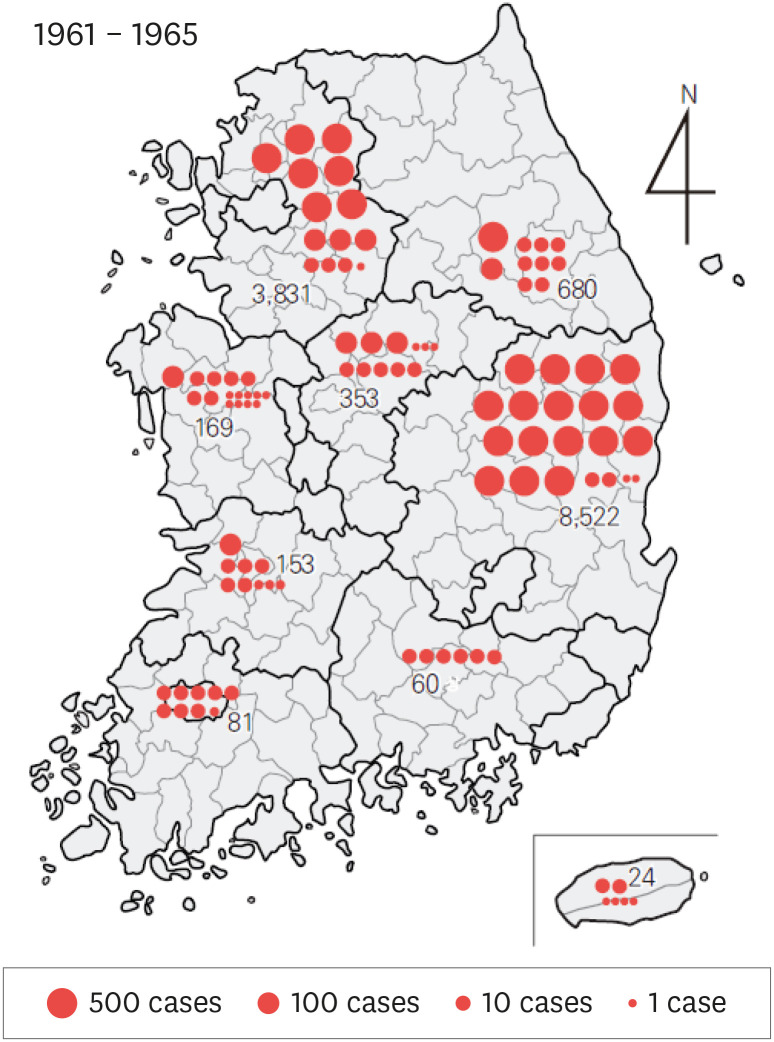
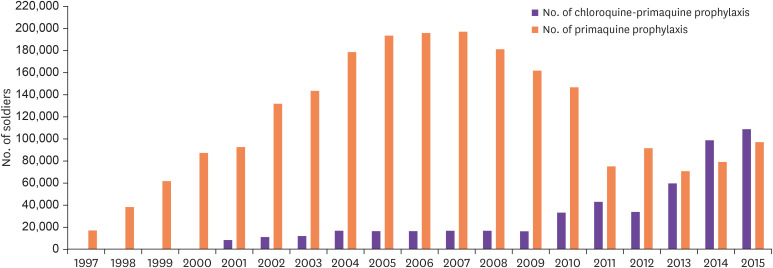
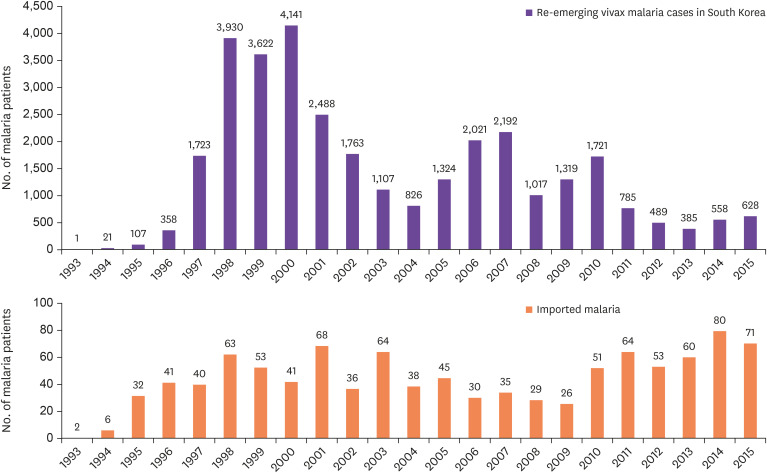
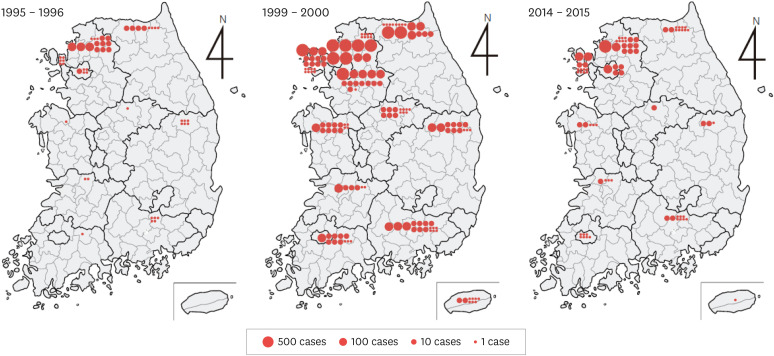
Vivax malaria which had been highly prevalent in Korea disappeared rapidly from the 1960s to 1984 when domestic occurrence of cases stopped. However, malaria reemerged in 1993 near the demilitarized zone (DMZ) bordering with North Korea. The number of patients thereafter increased exponentially year after year totaling 35,526 cases by the end of 2015. A small number of cases (1 - 53 patients annually) also occurred among the United States military personnel camping in Korea. However, after the 2010s the number of annual malaria cases has been decreasing slowly in Korea. Several reports on malaria situation in North Korea described high malaria prevalence after 1997 which peaked during 1999 - 2002 and has been decreasing thereafter. At the beginning of the reemergence, the majority of cases (60 - 90%) were soldiers aged 20 - 25 years camping around the northern parts of Gyeonggi-do and Gangwon-do (Province), Korea just facing the DMZ. However, as the outbreak continued more civilians were infected. The course of illness was relatively mild, and chemotherapy with chloroquine in combination with primaquine was successful in most of the patients. Mass chemoprophylaxis combined with mosquito control activities greatly contributed to the decline of malaria situation among Korean military soldiers.
间日疟曾在韩国高度流行,自20世纪60年代至1984年国内病例不再出现时迅速消失。然而,1993年在与朝鲜接壤的非军事区附近疟疾再度出现。此后患者数量逐年呈指数增长,到2015年底总计达35526例。在韩国露营的美军人员中也出现了少数病例(每年1 - 53例)。然而,2010年代后韩国每年疟疾病例数量一直在缓慢减少。几份关于朝鲜疟疾情况的报告描述了1997年后疟疾高流行率,在1999 - 2002年达到峰值,此后一直在下降。在重新出现疟疾之初,大多数病例(60 - 90%)是年龄在20 - 25岁的士兵,他们在韩国京畿道和江原道北部靠近非军事区的地方露营。然而,随着疫情持续,更多平民受到感染。病程相对较轻,氯喹联合伯氨喹化疗在大多数患者中取得成功。大规模化学预防与蚊虫控制活动极大地促进了韩国军人中疟疾情况的下降。