• 文献检索
  • 文档翻译
  • 深度研究
  • 学术资讯
  • Suppr Zotero 插件Zotero 插件
  • 邀请有礼
  • 套餐&价格
  • 历史记录
应用&插件
Suppr Zotero 插件Zotero 插件浏览器插件Mac 客户端Windows 客户端微信小程序
定价
高级版会员购买积分包购买API积分包
服务
文献检索文档翻译深度研究API 文档MCP 服务
关于我们
关于 Suppr公司介绍联系我们用户协议隐私条款
关注我们

Suppr 超能文献

核心技术专利:CN118964589B侵权必究
粤ICP备2023148730 号-1Suppr @ 2026

文献检索

告别复杂PubMed语法,用中文像聊天一样搜索,搜遍4000万医学文献。AI智能推荐,让科研检索更轻松。

立即免费搜索

文件翻译

保留排版,准确专业,支持PDF/Word/PPT等文件格式,支持 12+语言互译。

免费翻译文档

深度研究

AI帮你快速写综述,25分钟生成高质量综述,智能提取关键信息,辅助科研写作。

立即免费体验

脑-脑同步在 STEM 课堂中。

Brain-to-Brain Synchrony in the STEM Classroom.

机构信息

Department of Educational Psychology, Neag School of Education, University of Connecticut, Storrs, CT 06269.

出版信息

CBE Life Sci Educ. 2020 Sep;19(3):es8. doi: 10.1187/cbe.19-11-0258.

DOI:10.1187/cbe.19-11-0258
PMID:32870083
原文链接:https://pmc.ncbi.nlm.nih.gov/articles/PMC8711813/
Abstract

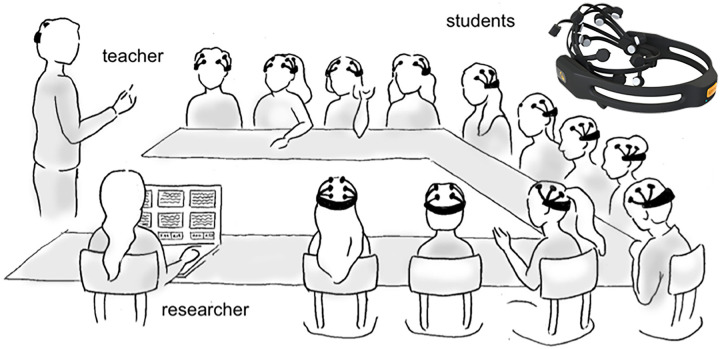
Cognitive neuroscience research is typically conducted in controlled laboratory environments that hold very little resemblance to science, technology, engineering, and mathematics classrooms. Fortunately, recent advances in portable electroencephalography technology now allow researchers to collect brain data from groups of students in real-world classrooms. Even though this line of research is still new, there is growing evidence that students' engagement, memory retention, and social dynamics are reflected in the brain-to-brain synchrony between students and teachers (i.e., the similarity in their brain responses). In this , I will provide an overview of this emerging line of research, discuss how this approach can facilitate new collaborations between neuroscientists and discipline-based education researchers, and propose directions for future research.

摘要

认知神经科学研究通常在控制实验室环境中进行,这些环境与科学、技术、工程和数学教室几乎没有相似之处。幸运的是,最近便携式脑电图技术的进步现在允许研究人员在现实教室的学生群体中收集大脑数据。尽管这项研究仍处于起步阶段,但越来越多的证据表明,学生的参与度、记忆保留和社会动态反映在学生和教师之间的大脑同步(即他们大脑反应的相似性)中。在这篇综述中,我将概述这一新兴研究领域,讨论这种方法如何促进神经科学家和基于学科的教育研究人员之间的新合作,并为未来的研究提出方向。
https://cdn.ncbi.nlm.nih.gov/pmc/blobs/0e34/8711813/63234d2d7234/cbe-19-es8-g001.jpg

相似文献

1
Brain-to-Brain Synchrony in the STEM Classroom.脑-脑同步在 STEM 课堂中。
CBE Life Sci Educ. 2020 Sep;19(3):es8. doi: 10.1187/cbe.19-11-0258.
2
Toward Inclusive STEM Classrooms: What Personal Role Do Faculty Play?迈向包容性的STEM课堂:教师扮演着怎样的个人角色?
CBE Life Sci Educ. 2016 fall;15(3). doi: 10.1187/cbe.16-01-0020.
3
Welcoming Deaf Students into STEM: Recommendations for University Science Education.欢迎聋生进入 STEM 领域:对大学理科教育的建议。
CBE Life Sci Educ. 2018 Sep;17(3):es10. doi: 10.1187/cbe.17-05-0081.
4
The Classroom Observation Protocol for Undergraduate STEM (COPUS): a new instrument to characterize university STEM classroom practices.本科理工科课堂观察协议(COPUS):一种描述大学理工科课堂教学实践的新工具。
CBE Life Sci Educ. 2013 Winter;12(4):618-27. doi: 10.1187/cbe.13-08-0154.
5
Science education. Increasing persistence of college students in STEM.科学教育。提高大学生在 STEM 领域的坚持度。
Science. 2013 Sep 27;341(6153):1455-6. doi: 10.1126/science.1240487.
6
PORTAAL: A Classroom Observation Tool Assessing Evidence-Based Teaching Practices for Active Learning in Large Science, Technology, Engineering, and Mathematics Classes.PORTAAL:一种课堂观察工具,用于评估在大型科学、技术、工程和数学课程中基于证据的主动学习教学实践。
CBE Life Sci Educ. 2015 Summer;14(2):14:ar23. doi: 10.1187/cbe.14-06-0095. Epub 2015 Jun 1.
7
Connected While Distant: Networking CUREs Across Classrooms to Create Community and Empower Students.远程相联:通过联网将 CUREs 拓展至不同课堂,以构建社区并赋能学生。
Integr Comp Biol. 2021 Oct 4;61(3):934-943. doi: 10.1093/icb/icab146.
8
Navigating Social Relationships with Mentors and Peers: Comfort and Belonging among Men and Women in STEM Summer Research Programs.与导师和同辈建立社交关系:STEM 暑期研究项目中男性和女性的舒适感和归属感。
CBE Life Sci Educ. 2019 Jun;18(2):ar17. doi: 10.1187/cbe.18-08-0150.
9
Testing models of reciprocal relations between social influence and integration in STEM across the college years.测试大学生涯中 STEM 领域社会影响和融合之间相互关系的模型。
PLoS One. 2020 Sep 16;15(9):e0238250. doi: 10.1371/journal.pone.0238250. eCollection 2020.
10
Biomedical research: strength from diversity.生物医学研究:多元铸就力量。
Science. 2013 Nov 15;342(6160):798. doi: 10.1126/science.342.6160.798a.

引用本文的文献

1
Implementation of a Real-Time Brain-to-Brain Synchrony Estimation Algorithm for Neuroeducation Applications.实时脑-脑同步估计算法在神经教育应用中的实现。
Sensors (Basel). 2024 Mar 9;24(6):1776. doi: 10.3390/s24061776.
2
The Synergy Zone: Connecting the Mind, Brain, and Heart for the Ideal Classroom Learning Environment.协同区:为理想的课堂学习环境连接心智、大脑和心灵。
Brain Sci. 2023 Sep 13;13(9):1314. doi: 10.3390/brainsci13091314.
3
Inter-brain coupling reflects disciplinary differences in real-world classroom learning.

本文引用的文献

1
The Temporal Dynamics of Brain-to-Brain Synchrony Between Students and Teachers Predict Learning Outcomes.学生和教师之间大脑同步的时间动态可预测学习成果。
Psychol Sci. 2023 May;34(5):633-643. doi: 10.1177/09567976231163872. Epub 2023 Apr 13.
2
Beyond the Isolated Brain: The Promise and Challenge of Interacting Minds.超越孤立的大脑:互动思维的前景与挑战。
Neuron. 2019 Jul 17;103(2):186-188. doi: 10.1016/j.neuron.2019.05.009.
3
Implementing Cognitive Science and Discipline-Based Education Research in the Undergraduate Science Classroom.
大脑间耦合反映了现实课堂学习中的学科差异。
NPJ Sci Learn. 2023 May 2;8(1):11. doi: 10.1038/s41539-023-00162-1.
4
Interdisciplinary views of fNIRS: Current advancements, equity challenges, and an agenda for future needs of a diverse fNIRS research community.功能近红外光谱技术(fNIRS)的跨学科视角:当前进展、公平性挑战以及多元化fNIRS研究群体未来需求议程
Front Integr Neurosci. 2023 Feb 27;17:1059679. doi: 10.3389/fnint.2023.1059679. eCollection 2023.
5
The Teaching Brain: Beyond the Science of Teaching and Educational Neuroscience.教学大脑:超越教学科学与教育神经科学
Front Psychol. 2022 Mar 8;13:823832. doi: 10.3389/fpsyg.2022.823832. eCollection 2022.
6
Attention Matters: How Orchestrating Attention May Relate to Classroom Learning.注意事项:课堂学习中协调注意力的方法。
CBE Life Sci Educ. 2020 Sep;19(3):fe5. doi: 10.1187/cbe.20-05-0106.
将认知科学和学科教育研究融入本科科学课堂。
CBE Life Sci Educ. 2019 Sep;18(3):es4. doi: 10.1187/cbe.18-12-0240.
4
Electroencephalography.脑电图。
Curr Biol. 2019 Feb 4;29(3):R80-R85. doi: 10.1016/j.cub.2018.11.052.
5
Neural engagement with online educational videos predicts learning performance for individual students.学生对在线教育视频的神经参与度可以预测其学习表现。
Neurobiol Learn Mem. 2018 Nov;155:60-64. doi: 10.1016/j.nlm.2018.06.011. Epub 2018 Jun 25.
6
Brain-to-Brain Synchrony and Learning Outcomes Vary by Student-Teacher Dynamics: Evidence from a Real-world Classroom Electroencephalography Study.脑间同步和学习成果因师生动态而异:来自真实课堂脑电图研究的证据。
J Cogn Neurosci. 2019 Mar;31(3):401-411. doi: 10.1162/jocn_a_01274. Epub 2018 Apr 30.
7
Similar neural responses predict friendship.相似的神经反应预示着友谊。
Nat Commun. 2018 Jan 30;9(1):332. doi: 10.1038/s41467-017-02722-7.
8
Interpersonal Coordination: Methods, Achievements, and Challenges.人际协调:方法、成果与挑战。
Front Psychol. 2017 Sep 27;8:1685. doi: 10.3389/fpsyg.2017.01685. eCollection 2017.
9
Student perception of group dynamics predicts individual performance: Comfort and equity matter.学生对群体动态的认知可预测个人表现:舒适度和公平性很重要。
PLoS One. 2017 Jul 20;12(7):e0181336. doi: 10.1371/journal.pone.0181336. eCollection 2017.
10
Brain-to-Brain Synchrony Tracks Real-World Dynamic Group Interactions in the Classroom.脑间同步追踪课堂中现实世界动态群体互动。
Curr Biol. 2017 May 8;27(9):1375-1380. doi: 10.1016/j.cub.2017.04.002. Epub 2017 Apr 27.