Department of Neuroscience, Georgetown University Medical Center, 3970 Reservoir Road NW, Washington, DC 20057, USA.
Int J Mol Sci. 2020 Sep 1;21(17):6336. doi: 10.3390/ijms21176336.
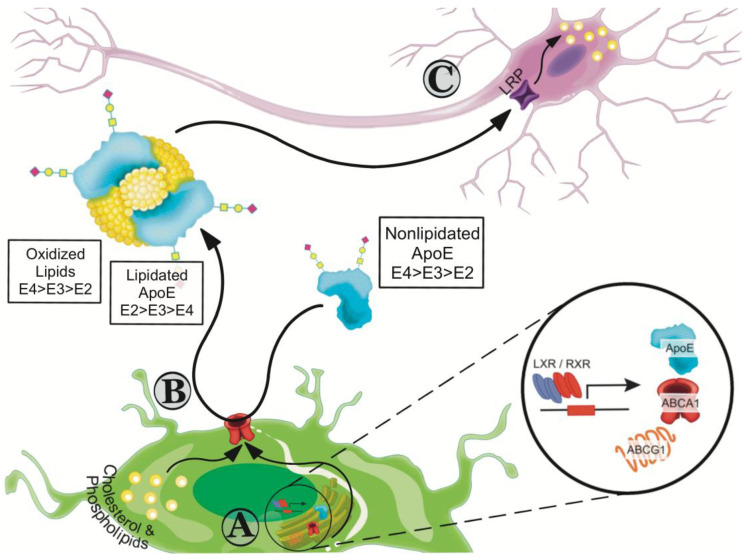
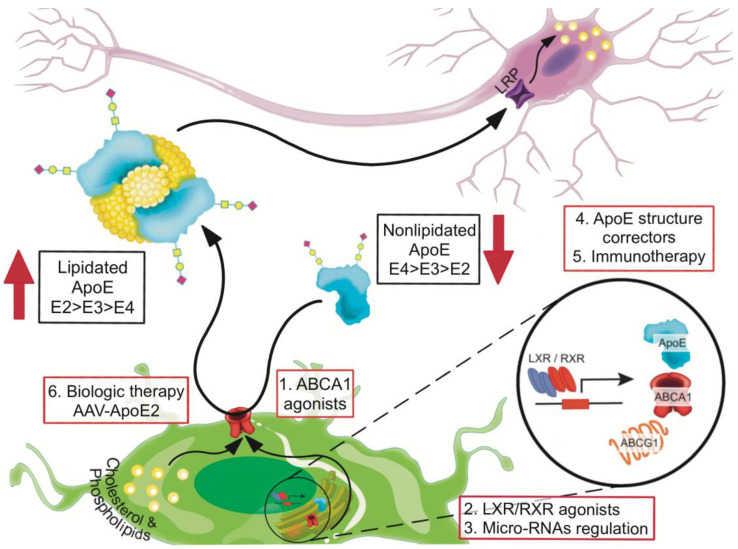
Apolipoprotein E () is the major cholesterol carrier in the brain, affecting various normal cellular processes including neuronal growth, repair and remodeling of membranes, synaptogenesis, clearance and degradation of amyloid β (Aβ) and neuroinflammation. In humans, the gene has three common allelic variants, termed E2, E3, and E4. is considered the strongest genetic risk factor for Alzheimer's disease (AD), whereas is neuroprotective. To perform its normal functions, apoE must be secreted and properly lipidated, a process influenced by the structural differences associated with apoE isoforms. Here we highlight the importance of lipidated apoE as well as the -lipidation targeted therapeutic approaches that have the potential to correct or prevent neurodegeneration. Many of these approaches have been validated using diverse cellular and animal models. Overall, there is great potential to improve the lipidated state of apoE with the goal of ameliorating -associated central nervous system impairments.
载脂蛋白 E(apoE)是大脑中主要的胆固醇载体,影响多种正常细胞过程,包括神经元生长、膜的修复和重塑、突触形成、淀粉样β(Aβ)的清除和降解以及神经炎症。在人类中,基因有三个常见的等位基因变异体,分别称为 E2、E3 和 E4。apoE 被认为是阿尔茨海默病(AD)的最强遗传风险因素,而 apoE 则具有神经保护作用。为了发挥其正常功能,apoE 必须被分泌并适当脂质化,这一过程受与 apoE 同工型相关的结构差异影响。在这里,我们强调了脂质化 apoE 的重要性以及针对 -脂化的靶向治疗方法,这些方法有可能纠正或预防神经退行性变。许多这些方法已经使用不同的细胞和动物模型进行了验证。总的来说,改善 apoE 的脂质化状态具有很大的潜力,目标是改善与中枢神经系统损伤相关的疾病。