Interdisciplinary Research Center on Biology and Chemistry, Shanghai Institute of Organic Chemistry, Chinese Academy of Sciences, Shanghai, China.
University of the Chinese Academy of Sciences, Beijing, China.
J Hematol Oncol. 2020 Sep 3;13(1):119. doi: 10.1186/s13045-020-00957-4.
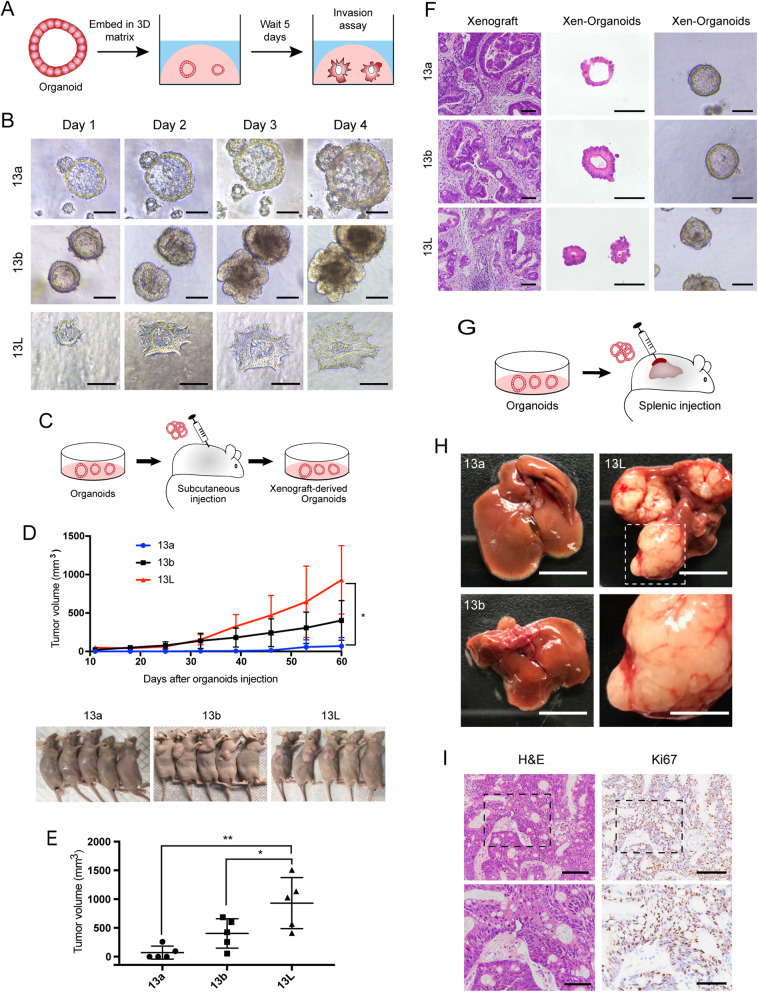
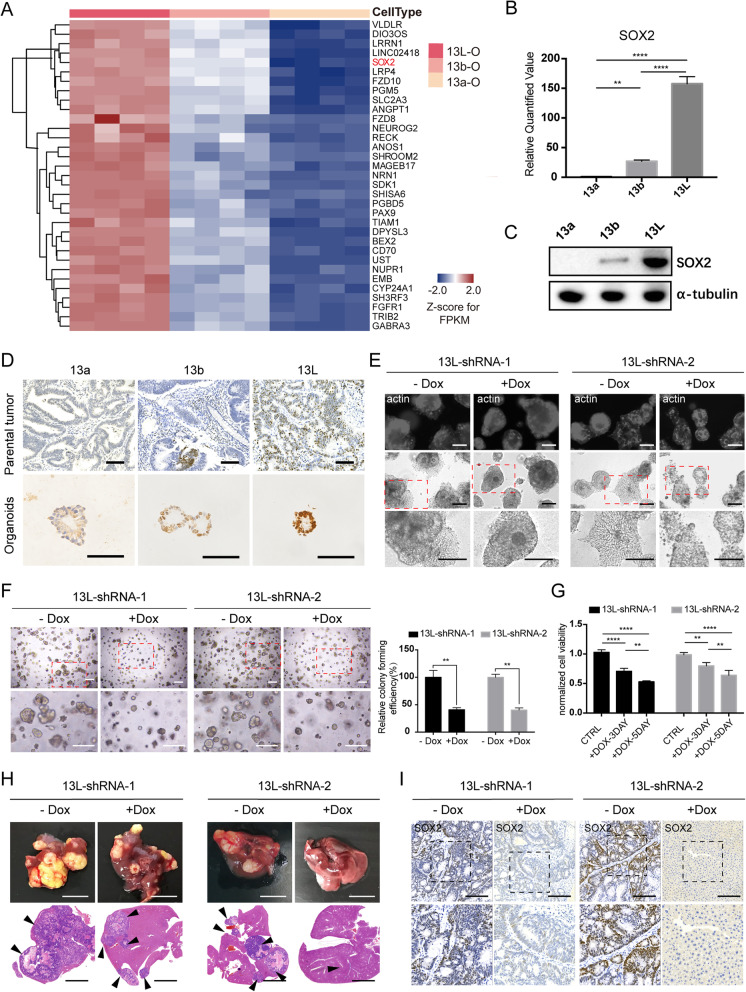
Tumor metastasis accounts for the majority of cancer-related deaths; it is therefore important to develop preclinical models that faithfully recapitulate disease progression. Here, we generated paired organoids derived from primary tumors and matched liver metastases in the same colorectal cancer (CRC) patients. Despite the fact that paired organoids exhibit comparable gene expression and cell morphology, organoids from metastatic lesions demonstrate more aggressive phenotypes, tumorigenesis, and metastatic capacity than those from primary lesions. Transcriptional analyses of the paired organoids reveal signature genes and pathways altered during the progression of CRC, including SOX2. Further study shows that inducible knockdown of SOX2 attenuated invasion, proliferation, and liver metastasis outgrowth. Taken together, we use patient-derived paired primary and metastatic cancer organoids to model CRC metastasis and illustrate that SOX2 is associated with CRC progression and may serve as a potential prognostic biomarker and therapeutic target of CRC.
肿瘤转移是癌症相关死亡的主要原因;因此,开发能够忠实地重现疾病进展的临床前模型非常重要。在这里,我们从同一结直肠癌 (CRC) 患者的原发肿瘤和匹配的肝转移灶中生成了配对的类器官。尽管配对的类器官表现出相似的基因表达和细胞形态,但转移性病变的类器官表现出比原发性病变更具侵袭性的表型、致瘤性和转移能力。对配对类器官的转录分析揭示了在 CRC 进展过程中改变的特征基因和途径,包括 SOX2。进一步的研究表明,诱导性敲低 SOX2 可减弱侵袭、增殖和肝转移生长。总之,我们使用患者来源的配对原发和转移性癌症类器官来模拟 CRC 转移,并表明 SOX2 与 CRC 进展相关,可能作为 CRC 的潜在预后生物标志物和治疗靶点。