Yang Zelin, Du Jizao, Zhu Jinjin, Rong Yuxi, Chen Shaohuai, Yu Lisheng, Deng Xiangyang, Zhang Xiaojia, Sheng Hansong, Yang Liang, Lu Xiangqi, Li Dandong, Yin Bo, Lin Jian
Department of Neurosurgery, The Second Affiliated Hospital and Yuying Children's Hospital of Wenzhou Medical University, Wenzhou, People's Republic of China.
Digestive Cancer Center, The First Affiliated Hospital of Wenzhou Medical University, Wenzhou, People's Republic of China.
Cancer Manag Res. 2020 Aug 17;12:7305-7317. doi: 10.2147/CMAR.S259677. eCollection 2020.
Allicin, an extract of garlic, has antitumor effects in multiple tumor types. However, the efficacy of allicin for treating glioblastoma has not yet been examined. This study examined the antitumor effect of allicin on human cytomegalovirus (HCMV)-infected glioblastoma multiforme (GBM) and its role in cytokine signaling.
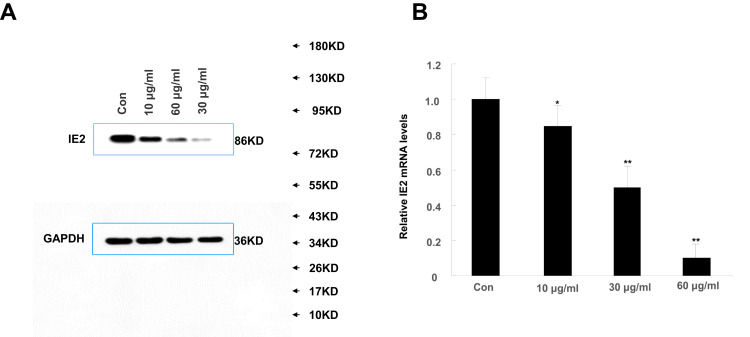
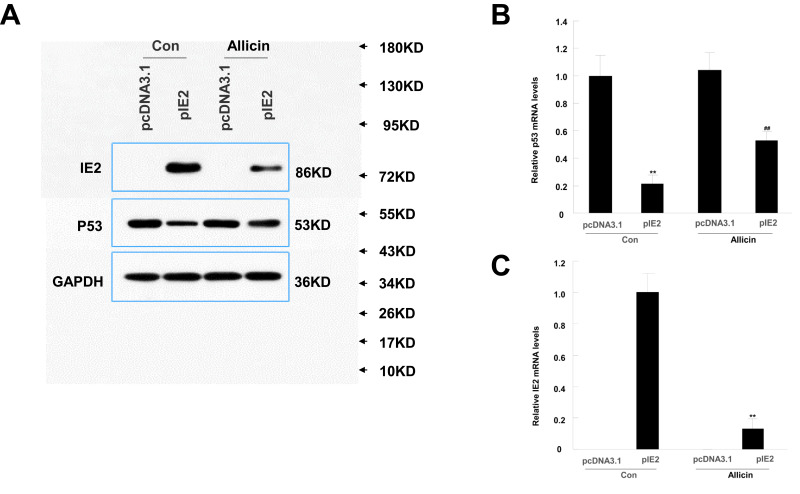
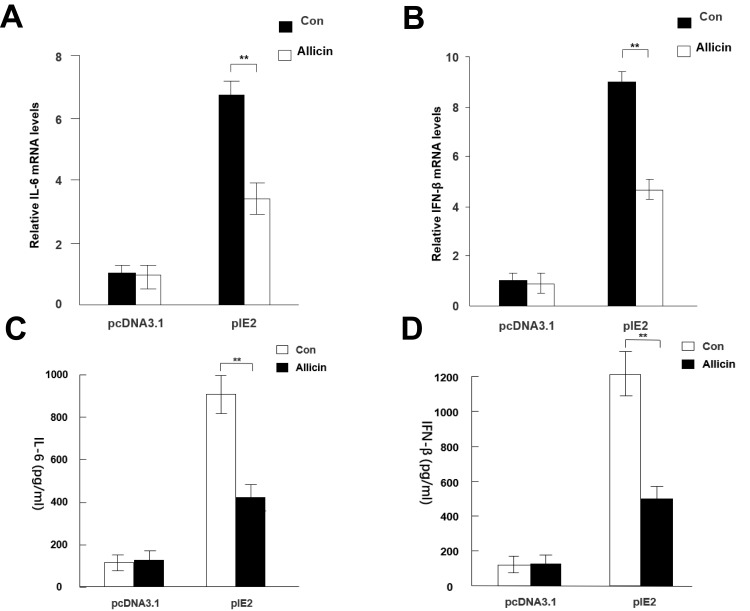
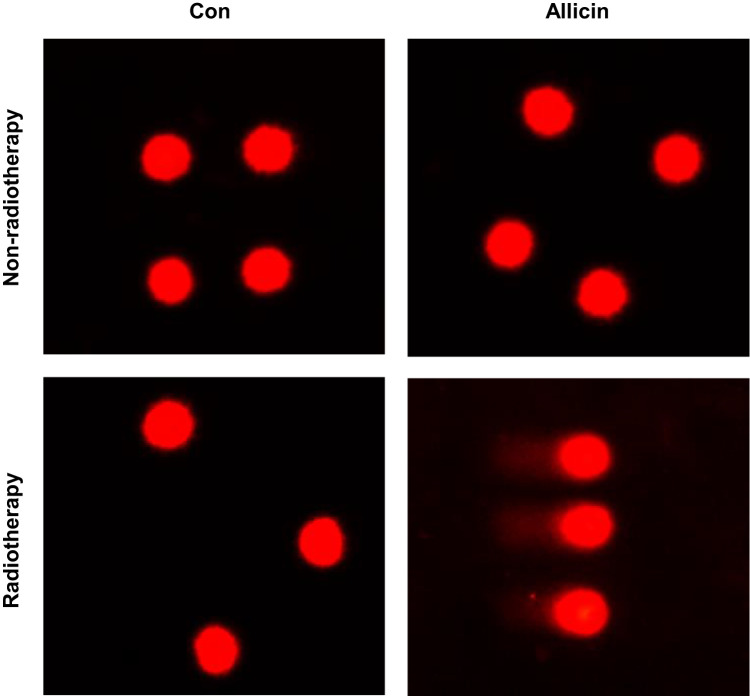
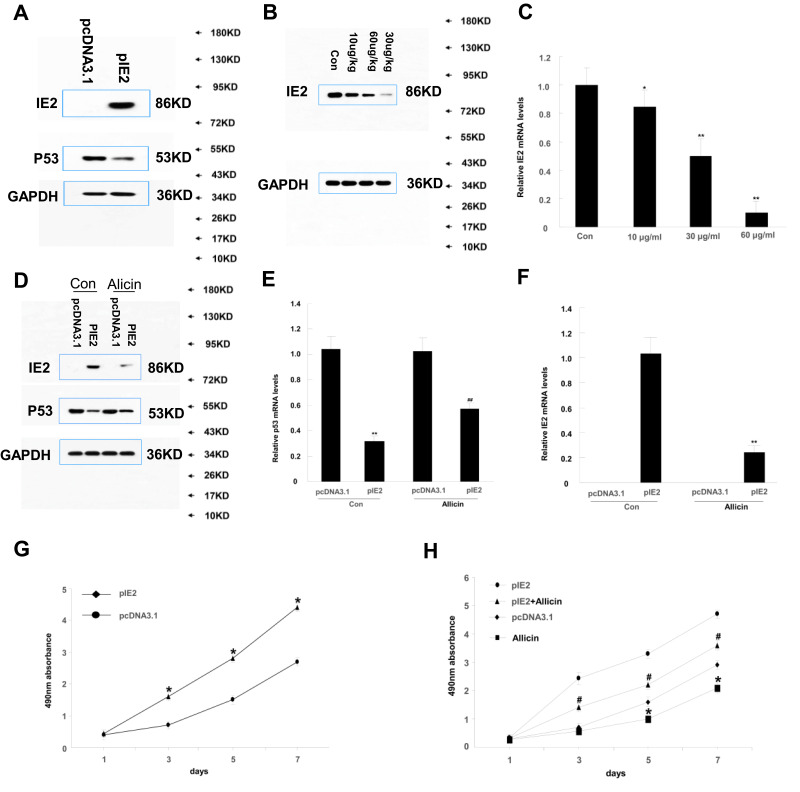
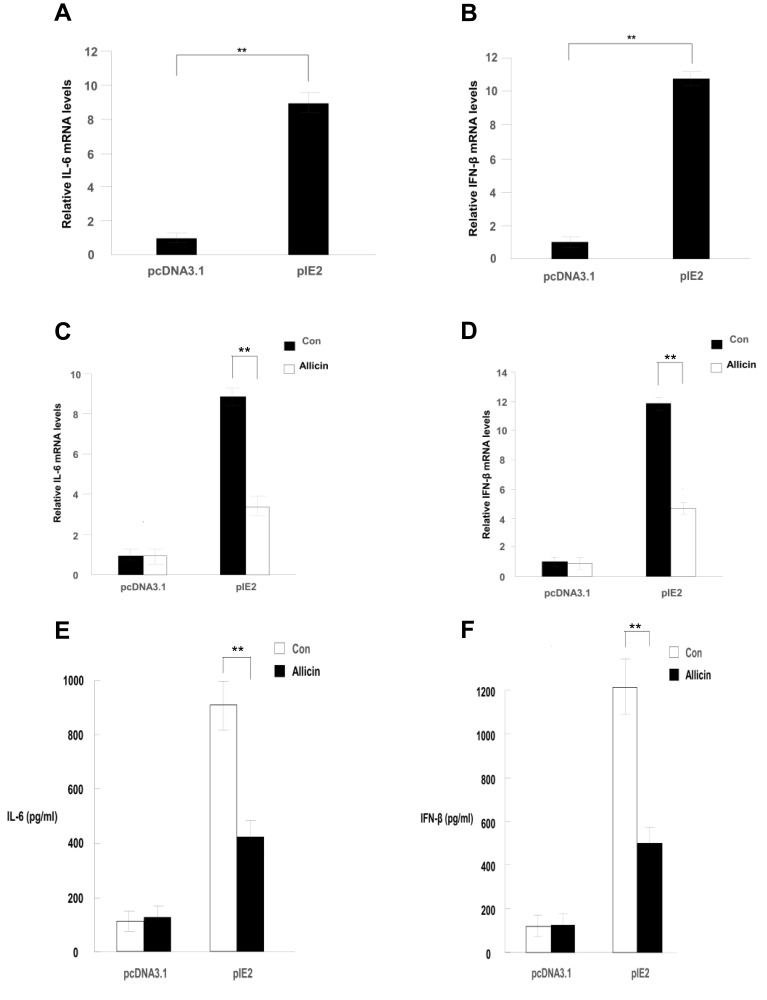
HCMV-infected glioblastoma was modeled by transfection of U87MG glioblastoma cells with HMCV proteins. MTT assay was used to assess the effect of allicin on the proliferation of glioma cells. Western blot analysis was used to detect the effect of allicin on the expression of intermediate-early gene 2 (IE2) and p53. Reverse transcription-quantitative polymerase chain reaction was used to assess and the levels of interleukin (IL)-6 and interferon (IFN)-β. Single cell gel electrophoresis was used to analyze changes in radiotherapy-induced DNA damage.
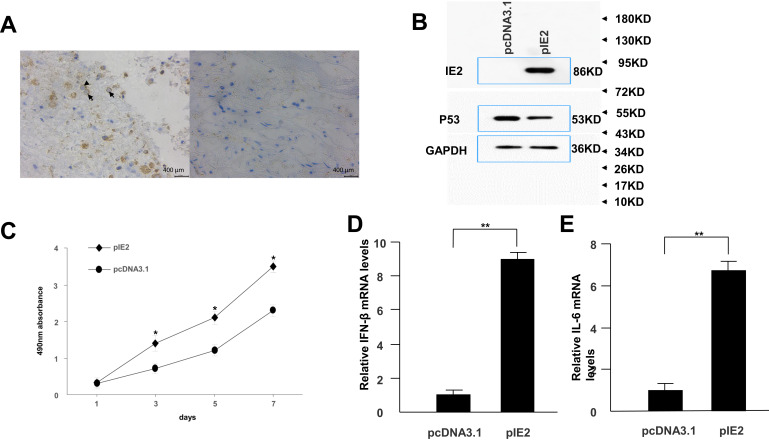
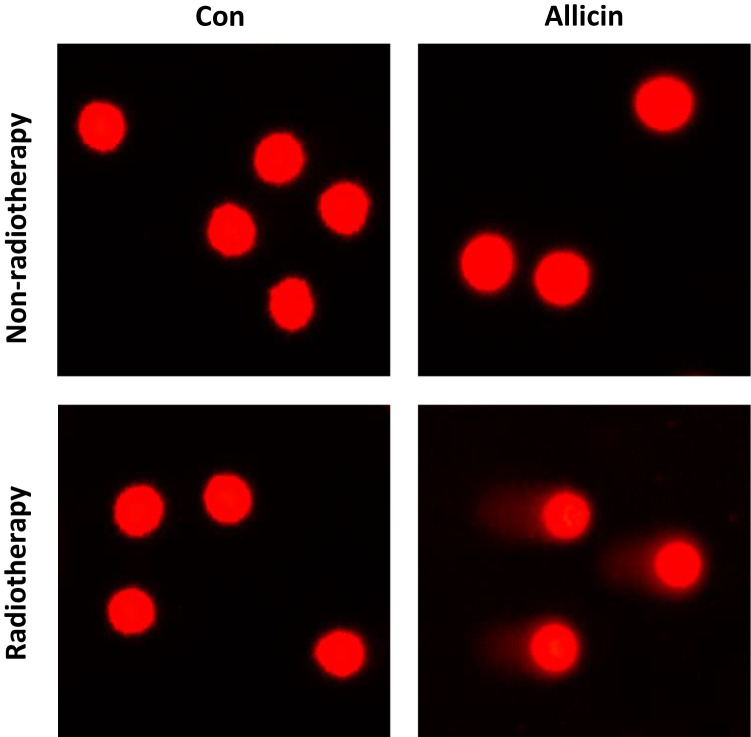
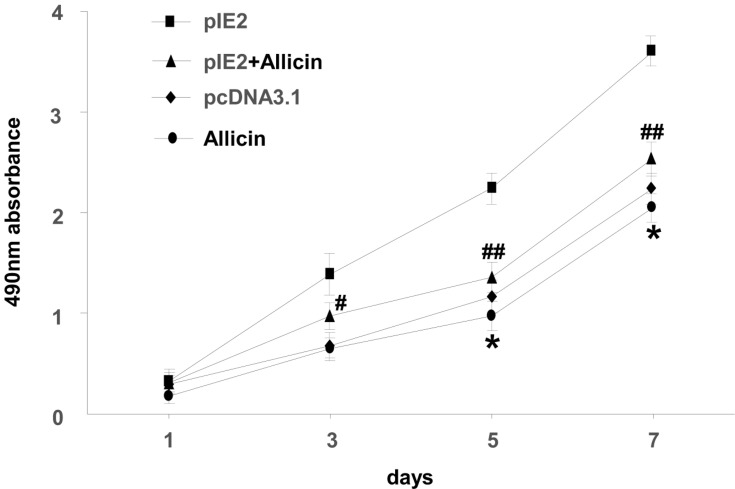
Transfection of the IE2 protein led to decreased p53 expression and increased glioblastoma cell proliferation. Allicin inhibited this proliferation in a dose- and time-dependent manner. An inhibitory effect on cytokine release was observed in GBM cells treated with allicin. After treatment with allicin, p53 levels increased significantly, whereas expression of the inflammatory factors such as IL-6 and IFN-β decreased. U87MG cells treated with allicin and 10 Gy irradiation had increased intracellular DNA damage compared to either treatment alone.
Allicin inhibited proliferation of glioblastoma cells in vitro. Allicin also inhibited cytokine release, upregulated p53 activity, and increased the sensitivity of glioblastoma to radiotherapy. These results suggest that allicin is effective against HCMV-infected glioblastomas.
大蒜素是大蒜的提取物,对多种肿瘤类型具有抗肿瘤作用。然而,大蒜素治疗胶质母细胞瘤的疗效尚未得到研究。本研究检测了大蒜素对人巨细胞病毒(HCMV)感染的多形性胶质母细胞瘤(GBM)的抗肿瘤作用及其在细胞因子信号传导中的作用。
通过用HMCV蛋白转染U87MG胶质母细胞瘤细胞建立HCMV感染的胶质母细胞瘤模型。采用MTT法评估大蒜素对胶质瘤细胞增殖的影响。蛋白质免疫印迹分析用于检测大蒜素对早期中间基因2(IE2)和p53表达的影响。逆转录定量聚合酶链反应用于评估白细胞介素(IL)-6和干扰素(IFN)-β的水平。单细胞凝胶电泳用于分析放疗诱导的DNA损伤变化。
IE2蛋白转染导致p53表达降低和胶质母细胞瘤细胞增殖增加。大蒜素以剂量和时间依赖性方式抑制这种增殖。在用大蒜素处理的GBM细胞中观察到对细胞因子释放的抑制作用。用大蒜素处理后,p53水平显著升高,而IL-6和IFN-β等炎性因子的表达降低。与单独的任何一种处理相比,用大蒜素和10 Gy照射处理的U87MG细胞的细胞内DNA损伤增加。
大蒜素在体外抑制胶质母细胞瘤细胞的增殖。大蒜素还抑制细胞因子释放,上调p53活性,并增加胶质母细胞瘤对放疗的敏感性。这些结果表明大蒜素对HCMV感染的胶质母细胞瘤有效。