Rafi Aboobacker Mohammed, Varghese Pulikkottil Raphael, Kuttichira Praveenlal
Department of Transfusion Medicine & Clinical Lab, Jubilee Mission Medical College & Research Institute, Thrissur, Kerala, India.
Jubilee Centre for Medical Research, Jubilee Mission Medical College & Research Institute, Thrissur, Kerala, India.
J Med Educ Curric Dev. 2020 Aug 19;7:2382120520951795. doi: 10.1177/2382120520951795. eCollection 2020 Jan-Dec.
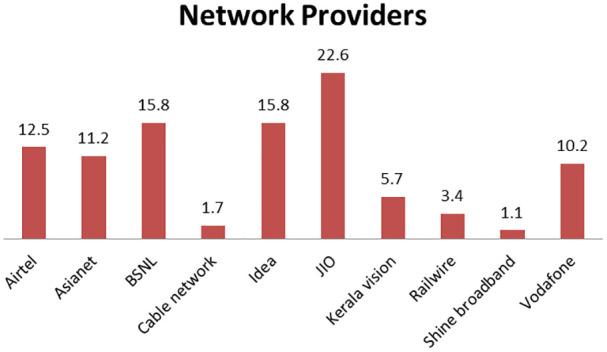
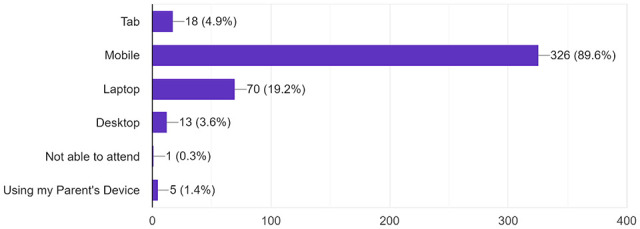
Owing to COVID 19 pandemic, all educational institutions including medical colleges were closed by the second week of March 2020 in Kerala, India. This college started online classes using various e-platforms by the third week of March. In this study, we report the barriers and perceptions of undergraduate students by an online questionnaire after 2.5 months of e-classes. The study participants were 364 students who responded in a week's time. Most of the faculty used platforms like Google class room or recorded YouTube videos. The department of Physiology used the Impartus platform. Among the respondents 72.8% were using mobile data and 17.8% were using broadband facilities. Among network providers Jio was the most used. Only first year students were exposed to 3 different online platforms. Among those students, 63.6% reported in favor of Impartus, followed by YouTube and Google class room. Most of the students preferred recorded classes (69.2%) over live classes (33.5%). Submissions were mainly through the online platform itself (69.5%), email submission to the department (17%) or to the faculty (13.5%). Forty seven percent of the students wanted the classes to be of 30 to 45 minutes duration and 42% felt that the classes should be short and below 30 minutes. Only 28.3% of the students favored centralized online class by the university. Providing education to students cannot be discontinued for long. In the present study students are able to follow the online classes and have good learning experience on in the Didactic part. The medical educators could rise up to the challenge of continuing to teach even in times of crisis.
由于新冠疫情,包括医学院在内的所有教育机构于2020年3月的第二周在印度喀拉拉邦关闭。该学院于3月的第三周开始使用各种电子平台开展在线课程。在本研究中,我们通过一份在线问卷报告了电子课程开展2.5个月后本科学生面临的障碍和看法。研究参与者为364名在一周内做出回应的学生。大多数教师使用谷歌课堂或YouTube录制视频等平台。生理学系使用了Impartus平台。在受访者中,72.8%使用移动数据,17.8%使用宽带设施。在网络供应商中,Jio是使用最多的。只有一年级学生接触过3种不同的在线平台。在这些学生中,63.6%表示支持Impartus,其次是YouTube和谷歌课堂。大多数学生更喜欢录制课程(69.2%)而不是直播课程(33.5%)。作业提交主要通过在线平台本身(69.5%)、通过电子邮件提交给系里(17%)或提交给教师(13.5%)。47%的学生希望课程时长为30至45分钟,并认为课程应该简短,时长在30分钟以下。只有28.3%的学生支持大学集中开展在线课程。不能长期中断对学生的教育。在本研究中,学生能够跟上在线课程,并在教学部分有良好的学习体验。医学教育工作者能够应对即使在危机时期仍继续教学的挑战。