Ur Rehman Haneef, Nawaz Muhammad Asif, Pervez Sidra, Jamal Muhsin, Attaullah Mohammad, Aman Afsheen, Ul Qader Shah Ali
Department of Natural and Basic Science, University of Turbat, Kech, Balochistan, Pakistan.
Department of Biotechnology, Shaheed Benazir Bhutto University, Sheringal, Dir (Upper), Kyber Pakhtunkhwa, Pakistan.
Heliyon. 2020 Aug 13;6(8):e04578. doi: 10.1016/j.heliyon.2020.e04578. eCollection 2020 Aug.
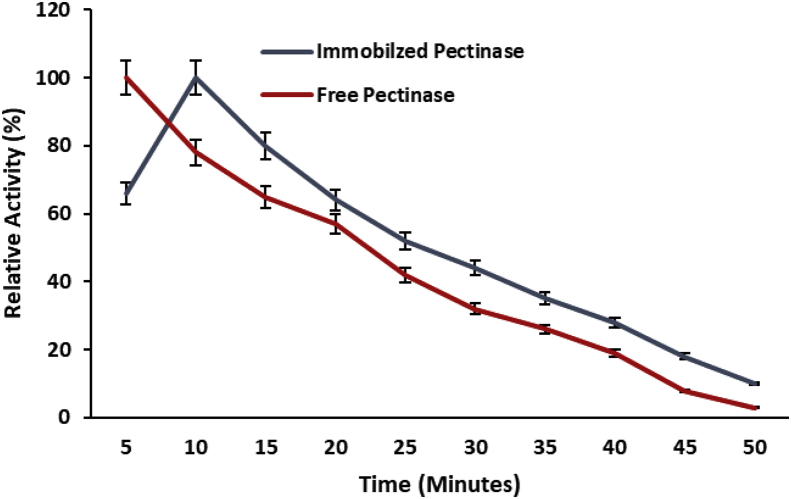
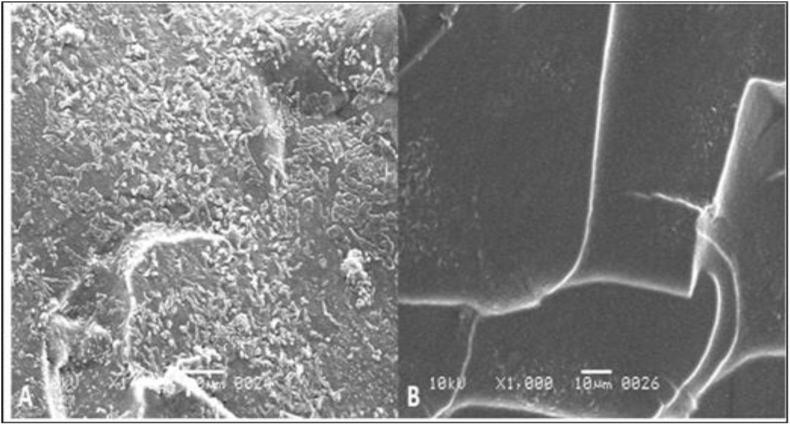
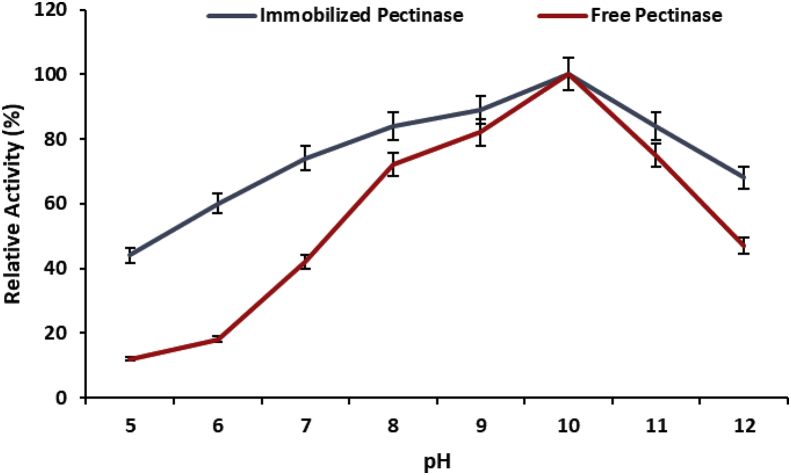
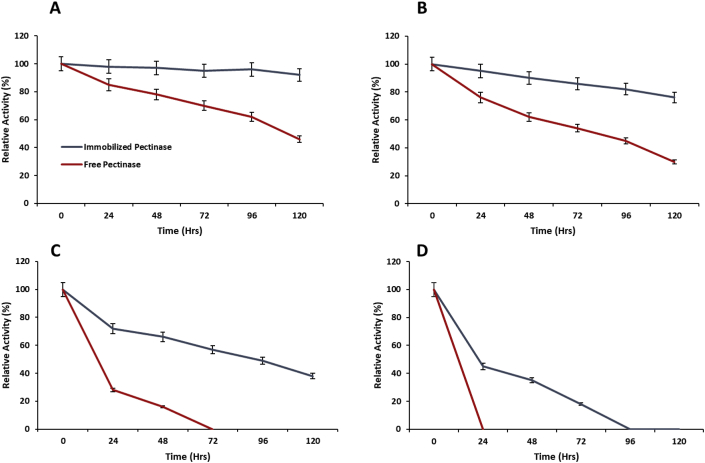
Pectinase as a biocatalyst play a significant role in food and textile industries. In this study, the pectinase was immobilized by encapsulation within polyacrylamide gel to enhance its catalytic properties and ensure the reusability for continuous industrial processes. 9.5% acrylamide and 0.5% N, N'- methylenebisacrylamide concentration gave high percentage of pectinase immobilization yield within gel. The catalytic properties of immobilized pectinase was determined with comparison of soluble pectinase. The immobilization of pectinase within polyacrylamide gel didn't effect catalytic properties of pectinase and both the free and immobilized pectinase showed maximum pectinolytic activity at 45 °C and pH 10. The Michaelis-Menten kinetic behavior of pectinase was slightly changed after immobilization and immobilized pectinase showed somewhat higher K and lower V value as compared to soluble pectinase. Polyacrylamide gel encapsulation enhanced the thermal stability of pectinase and encapsulated pectinase showed higher thermal stability against various temperature ranging from ranging from 30 °C to 50 °C as compared free pectinase. Furthermore, the surface topography of polyacrylamide gel was analyzed using scanning electron microscopy and it was observed that the surface topography of polyacrylamide gel was changed after encapsulation. The encapsulation of pectinase within polyacrylamide gel enhanced the possibility of reutilization of pectinase in various industries and pectinase retained more than 50% of its initial activity even after seven batch of reactions.
果胶酶作为一种生物催化剂,在食品和纺织工业中发挥着重要作用。在本研究中,通过将果胶酶包封在聚丙烯酰胺凝胶中来固定化,以增强其催化性能,并确保其在连续工业过程中的可重复使用性。9.5%的丙烯酰胺和0.5%的N,N'-亚甲基双丙烯酰胺浓度在凝胶中产生了较高百分比的果胶酶固定化产率。通过与可溶性果胶酶比较来测定固定化果胶酶的催化性能。果胶酶在聚丙烯酰胺凝胶中的固定化不影响果胶酶的催化性能,游离和固定化的果胶酶在45℃和pH 10时均表现出最大的果胶分解活性。固定化后果胶酶的米氏动力学行为略有变化,与可溶性果胶酶相比,固定化果胶酶的K值略高,V值略低。聚丙烯酰胺凝胶包封提高了果胶酶的热稳定性,与游离果胶酶相比,包封的果胶酶在30℃至50℃的不同温度下表现出更高的热稳定性。此外,使用扫描电子显微镜分析了聚丙烯酰胺凝胶的表面形貌,观察到包封后聚丙烯酰胺凝胶的表面形貌发生了变化。将果胶酶包封在聚丙烯酰胺凝胶中提高了果胶酶在各种工业中重复利用的可能性,即使经过七批反应,果胶酶仍保留了其初始活性的50%以上。