• 文献检索
  • 文档翻译
  • 深度研究
  • 学术资讯
  • Suppr Zotero 插件Zotero 插件
  • 邀请有礼
  • 套餐&价格
  • 历史记录
应用&插件
Suppr Zotero 插件Zotero 插件浏览器插件Mac 客户端Windows 客户端微信小程序
定价
高级版会员购买积分包购买API积分包
服务
文献检索文档翻译深度研究API 文档MCP 服务
关于我们
关于 Suppr公司介绍联系我们用户协议隐私条款
关注我们

Suppr 超能文献

核心技术专利:CN118964589B侵权必究
粤ICP备2023148730 号-1Suppr @ 2026

文献检索

告别复杂PubMed语法,用中文像聊天一样搜索,搜遍4000万医学文献。AI智能推荐,让科研检索更轻松。

立即免费搜索

文件翻译

保留排版,准确专业,支持PDF/Word/PPT等文件格式,支持 12+语言互译。

免费翻译文档

深度研究

AI帮你快速写综述,25分钟生成高质量综述,智能提取关键信息,辅助科研写作。

立即免费体验

活性氧物质氧化 STING 并抑制干扰素的产生。

Reactive oxygen species oxidize STING and suppress interferon production.

机构信息

Department of Immunology, University of Texas Southwestern Medical Center, Dallas, United States.

Department of Biochemistry, University of Texas Southwestern Medical Center, Dallas, United States.

出版信息

Elife. 2020 Sep 4;9:e57837. doi: 10.7554/eLife.57837.

DOI:10.7554/eLife.57837
PMID:32886065
原文链接:https://pmc.ncbi.nlm.nih.gov/articles/PMC7473769/
Abstract

Reactive oxygen species (ROS) are by-products of cellular respiration that can promote oxidative stress and damage cellular proteins and lipids. One canonical role of ROS is to defend the cell against invading bacterial and viral pathogens. Curiously, some viruses, including herpesviruses, thrive despite the induction of ROS, suggesting that ROS are beneficial for the virus. However, the underlying mechanisms remain unclear. Here, we found that ROS impaired interferon response during murine herpesvirus infection and that the inhibition occurred downstream of cytoplasmic DNA sensing. We further demonstrated that ROS suppressed the type I interferon response by oxidizing Cysteine 147 on murine stimulator of interferon genes (STING), an ER-associated protein that mediates interferon response after cytoplasmic DNA sensing. This inhibited STING polymerization and activation of downstream signaling events. These data indicate that redox regulation of Cysteine 147 of mouse STING, which is equivalent to Cysteine 148 of human STING, controls interferon production. Together, our findings reveal that ROS orchestrates anti-viral immune responses, which can be exploited by viruses to evade cellular defenses.

摘要

活性氧 (ROS) 是细胞呼吸的副产物,可促进氧化应激并损害细胞蛋白质和脂质。ROS 的一个典型作用是抵抗入侵的细菌和病毒病原体。奇怪的是,一些病毒,包括疱疹病毒,尽管诱导了 ROS,但仍能茁壮成长,这表明 ROS 对病毒有益。然而,潜在的机制尚不清楚。在这里,我们发现在小鼠疱疹病毒感染过程中,ROS 损害了干扰素反应,并且这种抑制发生在细胞质 DNA 感应的下游。我们进一步证明,ROS 通过氧化 ER 相关蛋白干扰素基因刺激物 (STING) 上的半胱氨酸 147 来抑制 I 型干扰素反应,该蛋白在细胞质 DNA 感应后介导干扰素反应。这抑制了 STING 聚合和下游信号事件的激活。这些数据表明,半胱氨酸 147 的氧化还原调节,相当于人类 STING 上的半胱氨酸 148,控制干扰素的产生。总之,我们的研究结果表明,ROS 协调抗病毒免疫反应,而病毒可以利用这些反应来逃避细胞防御。

https://cdn.ncbi.nlm.nih.gov/pmc/blobs/dfe6/7473769/279c65edc10d/elife-57837-fig7.jpg
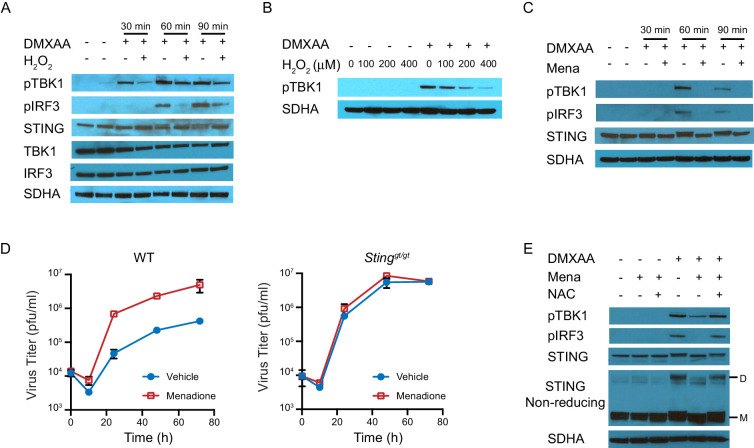
https://cdn.ncbi.nlm.nih.gov/pmc/blobs/dfe6/7473769/85792786c5b3/elife-57837-fig1.jpg
https://cdn.ncbi.nlm.nih.gov/pmc/blobs/dfe6/7473769/d906fdfc20ef/elife-57837-fig2.jpg
https://cdn.ncbi.nlm.nih.gov/pmc/blobs/dfe6/7473769/b49543ef33c4/elife-57837-fig2-figsupp1.jpg
https://cdn.ncbi.nlm.nih.gov/pmc/blobs/dfe6/7473769/0ec402f8eec5/elife-57837-fig2-figsupp2.jpg
https://cdn.ncbi.nlm.nih.gov/pmc/blobs/dfe6/7473769/dae78ce5f18a/elife-57837-fig2-figsupp3.jpg
https://cdn.ncbi.nlm.nih.gov/pmc/blobs/dfe6/7473769/54ad88d68fe2/elife-57837-fig3.jpg
https://cdn.ncbi.nlm.nih.gov/pmc/blobs/dfe6/7473769/34efe22c42ec/elife-57837-fig3-figsupp1.jpg
https://cdn.ncbi.nlm.nih.gov/pmc/blobs/dfe6/7473769/c85fa4d87fe4/elife-57837-fig4.jpg
https://cdn.ncbi.nlm.nih.gov/pmc/blobs/dfe6/7473769/988e0d24d8fb/elife-57837-fig4-figsupp1.jpg
https://cdn.ncbi.nlm.nih.gov/pmc/blobs/dfe6/7473769/ac50c6ea9ba3/elife-57837-fig4-figsupp2.jpg
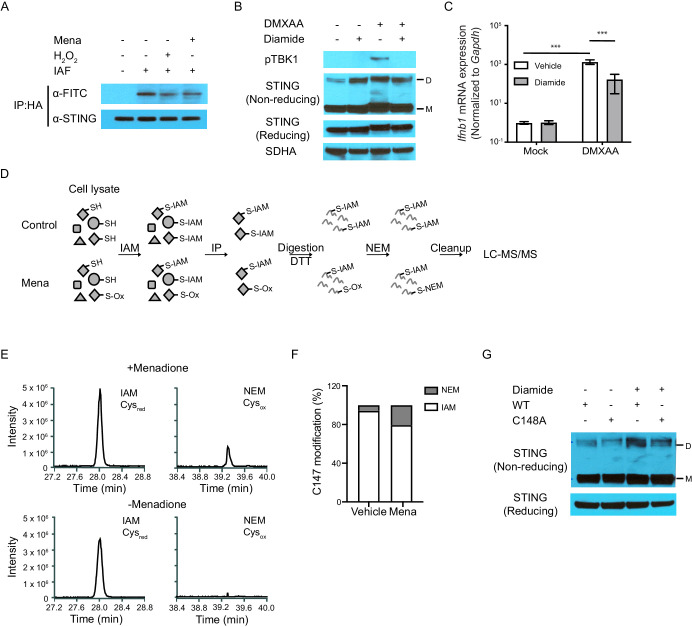
https://cdn.ncbi.nlm.nih.gov/pmc/blobs/dfe6/7473769/18fc017b5335/elife-57837-fig5.jpg
https://cdn.ncbi.nlm.nih.gov/pmc/blobs/dfe6/7473769/3489d04033a9/elife-57837-fig5-figsupp1.jpg
https://cdn.ncbi.nlm.nih.gov/pmc/blobs/dfe6/7473769/9e517c5716e6/elife-57837-fig5-figsupp2.jpg
https://cdn.ncbi.nlm.nih.gov/pmc/blobs/dfe6/7473769/2a95c38cb2b2/elife-57837-fig6.jpg
https://cdn.ncbi.nlm.nih.gov/pmc/blobs/dfe6/7473769/279c65edc10d/elife-57837-fig7.jpg
https://cdn.ncbi.nlm.nih.gov/pmc/blobs/dfe6/7473769/85792786c5b3/elife-57837-fig1.jpg
https://cdn.ncbi.nlm.nih.gov/pmc/blobs/dfe6/7473769/d906fdfc20ef/elife-57837-fig2.jpg
https://cdn.ncbi.nlm.nih.gov/pmc/blobs/dfe6/7473769/b49543ef33c4/elife-57837-fig2-figsupp1.jpg
https://cdn.ncbi.nlm.nih.gov/pmc/blobs/dfe6/7473769/0ec402f8eec5/elife-57837-fig2-figsupp2.jpg
https://cdn.ncbi.nlm.nih.gov/pmc/blobs/dfe6/7473769/dae78ce5f18a/elife-57837-fig2-figsupp3.jpg
https://cdn.ncbi.nlm.nih.gov/pmc/blobs/dfe6/7473769/54ad88d68fe2/elife-57837-fig3.jpg
https://cdn.ncbi.nlm.nih.gov/pmc/blobs/dfe6/7473769/34efe22c42ec/elife-57837-fig3-figsupp1.jpg
https://cdn.ncbi.nlm.nih.gov/pmc/blobs/dfe6/7473769/c85fa4d87fe4/elife-57837-fig4.jpg
https://cdn.ncbi.nlm.nih.gov/pmc/blobs/dfe6/7473769/988e0d24d8fb/elife-57837-fig4-figsupp1.jpg
https://cdn.ncbi.nlm.nih.gov/pmc/blobs/dfe6/7473769/ac50c6ea9ba3/elife-57837-fig4-figsupp2.jpg
https://cdn.ncbi.nlm.nih.gov/pmc/blobs/dfe6/7473769/18fc017b5335/elife-57837-fig5.jpg
https://cdn.ncbi.nlm.nih.gov/pmc/blobs/dfe6/7473769/3489d04033a9/elife-57837-fig5-figsupp1.jpg
https://cdn.ncbi.nlm.nih.gov/pmc/blobs/dfe6/7473769/9e517c5716e6/elife-57837-fig5-figsupp2.jpg
https://cdn.ncbi.nlm.nih.gov/pmc/blobs/dfe6/7473769/2a95c38cb2b2/elife-57837-fig6.jpg
https://cdn.ncbi.nlm.nih.gov/pmc/blobs/dfe6/7473769/279c65edc10d/elife-57837-fig7.jpg

相似文献

1
Reactive oxygen species oxidize STING and suppress interferon production.活性氧物质氧化 STING 并抑制干扰素的产生。
Elife. 2020 Sep 4;9:e57837. doi: 10.7554/eLife.57837.
2
Redox homeostasis maintained by GPX4 facilitates STING activation.谷胱甘肽过氧化物酶 4 维持的氧化还原平衡有助于 STING 的激活。
Nat Immunol. 2020 Jul;21(7):727-735. doi: 10.1038/s41590-020-0699-0. Epub 2020 Jun 15.
3
Interferon-Independent Activities of Mammalian STING Mediate Antiviral Response and Tumor Immune Evasion.哺乳动物 STING 的干扰素非依赖性活性介导抗病毒反应和肿瘤免疫逃逸。
Immunity. 2020 Jul 14;53(1):115-126.e5. doi: 10.1016/j.immuni.2020.06.009. Epub 2020 Jul 7.
4
Interferon-independent STING signaling promotes resistance to HSV-1 in vivo.干扰素非依赖性 STING 信号转导促进体内抵抗 HSV-1。
Nat Commun. 2020 Jul 7;11(1):3382. doi: 10.1038/s41467-020-17156-x.
5
A STING-dependent innate-sensing pathway mediates resistance to corneal HSV-1 infection via upregulation of the antiviral effector tetherin.一种依赖于STING的固有传感途径通过上调抗病毒效应分子束缚素介导对角膜单纯疱疹病毒1型感染的抗性。
Mucosal Immunol. 2016 Jul;9(4):1065-75. doi: 10.1038/mi.2015.124. Epub 2015 Dec 2.
6
STING regulates intracellular DNA-mediated, type I interferon-dependent innate immunity.干扰素基因刺激蛋白(STING)调节细胞内DNA介导的、依赖I型干扰素的固有免疫。
Nature. 2009 Oct 8;461(7265):788-92. doi: 10.1038/nature08476. Epub 2009 Sep 23.
7
Herpes Simplex Virus 1 Abrogates the cGAS/STING-Mediated Cytosolic DNA-Sensing Pathway via Its Virion Host Shutoff Protein, UL41.单纯疱疹病毒1型通过其病毒体宿主关闭蛋白UL41消除cGAS/STING介导的胞质DNA感应途径。
J Virol. 2017 Feb 28;91(6). doi: 10.1128/JVI.02414-16. Print 2017 Mar 15.
8
Herpes Simplex Virus 1 Infection of Neuronal and Non-Neuronal Cells Elicits Specific Innate Immune Responses and Immune Evasion Mechanisms.单纯疱疹病毒 1 感染神经元和非神经元细胞会引发特定的先天免疫反应和免疫逃避机制。
Front Immunol. 2021 May 31;12:644664. doi: 10.3389/fimmu.2021.644664. eCollection 2021.
9
The Ca sensor STIM1 regulates the type I interferon response by retaining the signaling adaptor STING at the endoplasmic reticulum.钙传感器 STIM1 通过将信号适配器 STING 保留在内质网上来调节 I 型干扰素反应。
Nat Immunol. 2019 Feb;20(2):152-162. doi: 10.1038/s41590-018-0287-8. Epub 2019 Jan 14.
10
Type I interferon production during herpes simplex virus infection is controlled by cell-type-specific viral recognition through Toll-like receptor 9, the mitochondrial antiviral signaling protein pathway, and novel recognition systems.单纯疱疹病毒感染期间I型干扰素的产生通过Toll样受体9、线粒体抗病毒信号蛋白途径以及新型识别系统受细胞类型特异性病毒识别的控制。
J Virol. 2007 Dec;81(24):13315-24. doi: 10.1128/JVI.01167-07. Epub 2007 Oct 3.

引用本文的文献

1
Sofalcone Suppresses Dengue Virus Replication by Activating Heme Oxygenase-1-Mediated Antiviral Interferon Responses.索法酮通过激活血红素加氧酶-1介导的抗病毒干扰素反应抑制登革病毒复制。
Int J Mol Sci. 2025 Jun 20;26(13):5921. doi: 10.3390/ijms26135921.
2
Cysteine allostery and autoinhibition govern human STING oligomer functionality.半胱氨酸变构调节和自身抑制作用决定了人类干扰素基因刺激蛋白(STING)寡聚体的功能。
Nat Chem Biol. 2025 Jul 3. doi: 10.1038/s41589-025-01951-y.
3
Effects of oxidative stress on viral infections: an overview.氧化应激对病毒感染的影响:综述

本文引用的文献

1
Pinpointing cysteine oxidation sites by high-resolution proteomics reveals a mechanism of redox-dependent inhibition of human STING.通过高分辨率蛋白质组学精确定位半胱氨酸氧化位点揭示了依赖氧化还原的人 STING 抑制机制。
Sci Signal. 2021 Apr 27;14(680):eaaw4673. doi: 10.1126/scisignal.aaw4673.
2
Redox homeostasis maintained by GPX4 facilitates STING activation.谷胱甘肽过氧化物酶 4 维持的氧化还原平衡有助于 STING 的激活。
Nat Immunol. 2020 Jul;21(7):727-735. doi: 10.1038/s41590-020-0699-0. Epub 2020 Jun 15.
3
Hydrogen peroxide sensor HPCA1 is an LRR receptor kinase in Arabidopsis.
Npj Viruses. 2025 Apr 12;3(1):27. doi: 10.1038/s44298-025-00110-3.
4
Unveiling the crossroads of STING signaling pathway and metabolic reprogramming: the multifaceted role of the STING in the TME and new prospects in cancer therapies.揭示STING信号通路与代谢重编程的交叉点:STING在肿瘤微环境中的多面作用及癌症治疗新前景
Cell Commun Signal. 2025 Apr 7;23(1):171. doi: 10.1186/s12964-025-02169-0.
5
Mitochondrial Dysfunction and Metabolic Disturbances Induced by Viral Infections.病毒感染诱导的线粒体功能障碍和代谢紊乱。
Cells. 2024 Oct 29;13(21):1789. doi: 10.3390/cells13211789.
6
The STING signaling pathways and bacterial infection.干扰素基因刺激蛋白(STING)信号通路与细菌感染
Apoptosis. 2025 Feb;30(1-2):389-400. doi: 10.1007/s10495-024-02031-7. Epub 2024 Oct 20.
7
Uncovering strain- and age-dependent innate immune responses to SARS-CoV-2 infection in air-liquid-interface cultured nasal epithelia.揭示气液界面培养的鼻上皮细胞对SARS-CoV-2感染的菌株和年龄依赖性固有免疫反应。
iScience. 2024 May 17;27(6):110009. doi: 10.1016/j.isci.2024.110009. eCollection 2024 Jun 21.
8
DNA sensing of dendritic cells in cancer immunotherapy.癌症免疫疗法中树突状细胞的DNA传感
Front Mol Biosci. 2024 May 22;11:1391046. doi: 10.3389/fmolb.2024.1391046. eCollection 2024.
9
Leucoverdazyls as Novel Potent Inhibitors of Enterovirus Replication.白细胞覆盖素作为肠道病毒复制的新型强效抑制剂
Pathogens. 2024 May 15;13(5):410. doi: 10.3390/pathogens13050410.
10
Inhibition of NADPH oxidase 2 enhances resistance to viral neuroinflammation by facilitating M1-polarization of macrophages at the extraneural tissues.抑制 NADPH 氧化酶 2 可通过促进神经外组织中巨噬细胞的 M1 极化来增强对病毒神经炎症的抵抗力。
J Neuroinflammation. 2024 May 2;21(1):115. doi: 10.1186/s12974-024-03078-8.
过氧化氢传感器 HPCA1 是拟南芥中的一个 LRR 受体激酶。
Nature. 2020 Feb;578(7796):577-581. doi: 10.1038/s41586-020-2032-3. Epub 2020 Feb 19.
4
Diabetes as a risk factor for herpes zoster in adults: A synthetic literature review.糖尿病作为成年人带状疱疹的风险因素:综合文献综述。
Diabetes Res Clin Pract. 2020 Jan;159:107983. doi: 10.1016/j.diabres.2019.107983. Epub 2019 Dec 14.
5
Nrf2 Negatively Regulates Type I Interferon Responses and Increases Susceptibility to Herpes Genital Infection in Mice.Nrf2 负调控 I 型干扰素应答反应,增加小鼠生殖器疱疹感染易感性。
Front Immunol. 2019 Sep 6;10:2101. doi: 10.3389/fimmu.2019.02101. eCollection 2019.
6
DNA sensing by the cGAS-STING pathway in health and disease.cGAS-STING 通路在健康和疾病中的 DNA 感应。
Nat Rev Genet. 2019 Nov;20(11):657-674. doi: 10.1038/s41576-019-0151-1. Epub 2019 Jul 29.
7
Self-defense of macrophages against oxidative injury: Fighting for their own survival.巨噬细胞的抗氧化损伤自我防御:为生存而战。
Redox Biol. 2019 Sep;26:101261. doi: 10.1016/j.redox.2019.101261. Epub 2019 Jun 28.
8
STING Polymer Structure Reveals Mechanisms for Activation, Hyperactivation, and Inhibition.STING 聚合物结构揭示了激活、超激活和抑制的机制。
Cell. 2019 Jul 11;178(2):290-301.e10. doi: 10.1016/j.cell.2019.05.036. Epub 2019 Jun 20.
9
Cryo-EM structures of STING reveal its mechanism of activation by cyclic GMP-AMP.冷冻电镜结构揭示了 STING 通过环鸟苷酸-腺苷酸激活的机制。
Nature. 2019 Mar;567(7748):389-393. doi: 10.1038/s41586-019-0998-5. Epub 2019 Mar 6.
10
Structural basis of STING binding with and phosphorylation by TBK1.STING 与 TBK1 结合及磷酸化的结构基础。
Nature. 2019 Mar;567(7748):394-398. doi: 10.1038/s41586-019-1000-2. Epub 2019 Mar 6.