Department of Medical Microbiology, College of Health Sciences, Makerere University School of Biomedical Sciences, P.O Box 7072, Kampala, Uganda.
Department of Microbiology and Immunology, Faculty of Health Sciences, Busitema University, Mbale, Uganda.
Sci Rep. 2020 Sep 7;10(1):14737. doi: 10.1038/s41598-020-70517-w.
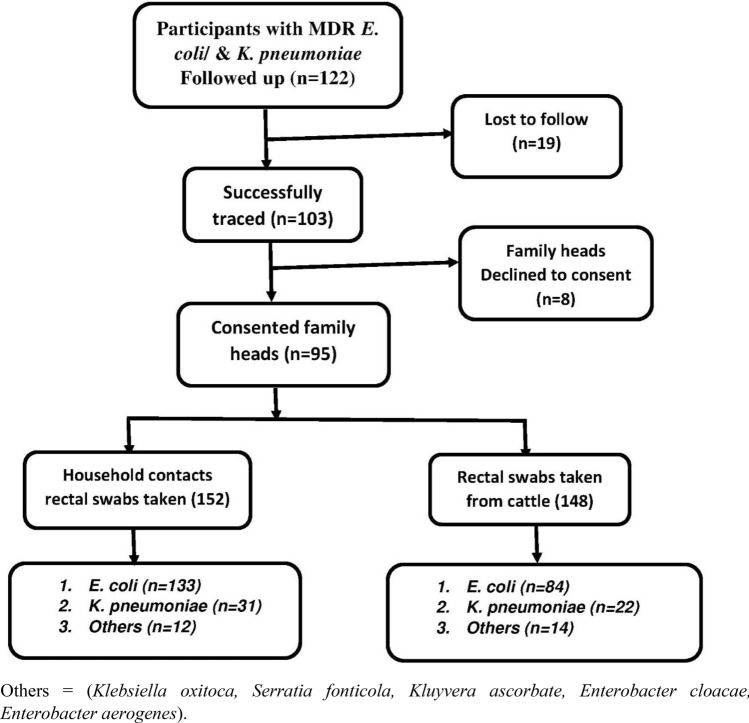
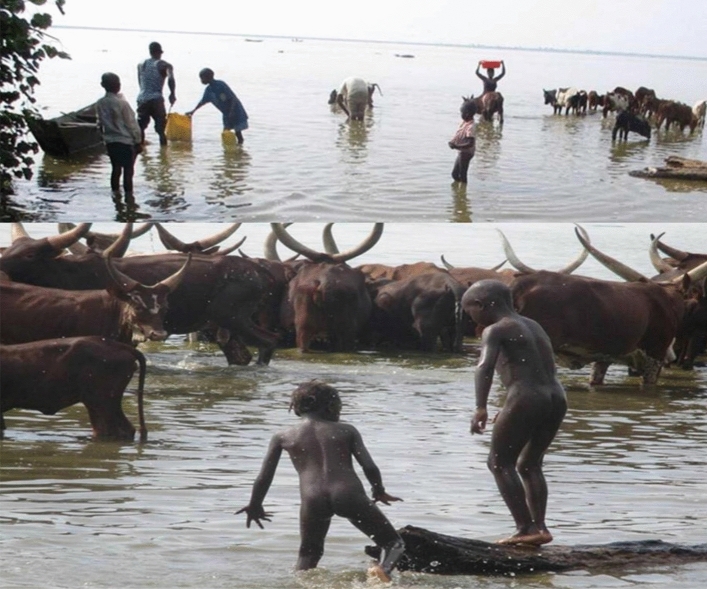
Intensive usage of antimicrobials in the management of animal diseases leads to selection for resistance among microorganisms. This study aimed to assess antimicrobial use and to describe factors associated with the transmission of antimicrobial resistance between humans and animals in pastoralist communities of Kasese district. A mixed-methods approach was employed in this study. Rectal swabs were collected from the participants and cattle and transported in Carry-Blaire transport medium to the laboratory within 24 h of collection for culture and sensitivity to confirm carriage of multi-drug resistant bacteria. In-depth interviews were conducted among veterinary officers, veterinary drug vendors, human health facility in-charges in both public and private health facilities, and operators of human pharmacies and drug shops. Carriage of multi-drug resistant bacteria among humans was 88 (93%) and 76(80%) among cattle. Consumption of lakeshore water and carriage of multi-drug resistant bacteria in cattle were associated with carriage of multi-drug resistant bacteria in the human population. The prevalence of multi-drug resistance among organisms Isolated from both humans and animals was high. There is a high likelihood of transmission of multi-drug resistance between humans and animals.
在动物疾病管理中密集使用抗生素会导致微生物产生耐药性。本研究旨在评估抗生素的使用情况,并描述卡塞塞区牧民社区中人与动物之间抗生素耐药性传播的相关因素。本研究采用混合方法。从参与者和牛身上采集直肠拭子,并在采集后 24 小时内用 Carry-Blaire 运输培养基运输到实验室,进行培养和药敏试验,以确认是否携带多药耐药菌。对兽医官员、兽医药品供应商、公立和私立卫生机构的卫生设施负责人以及人类药店和药房经营者进行了深入访谈。人类中携带多药耐药菌的比例为 88(93%),牛中为 76(80%)。人类携带多药耐药菌与牛饮用湖滨水和携带多药耐药菌有关。从人和动物身上分离出的病原体的多药耐药性发生率很高。人与动物之间多药耐药性传播的可能性很大。