Dong Zhe, Guo Shuai, Wang Yue, Zhang Jun, Luo Haojie, Zheng Guoliang, Yang Dong, Zhang Tao, Yan Liucun, Song Li, Liu Kejia, Sun Zhe, Meng Xiangyu, Zheng Zhichao, Zhang Jianjun, Zhao Yan
Postgraduate School of China Medical University, Shenyang 110001, Liaoning Province, People's Republic of China.
Department of Stomach Surgery, Cancer Hospital of China Medical University (Liaoning Cancer Hospital and Institute), Shenyang 110042, Liaoning Province, People's Republic of China.
Onco Targets Ther. 2020 Aug 24;13:8495-8510. doi: 10.2147/OTT.S240543. eCollection 2020.
To investigate the clinical significance of ubiquitin-specific peptidase 19 (USP19) expression in gastric cancer (GC) compared with that in normal tissues and gastric cell lines.
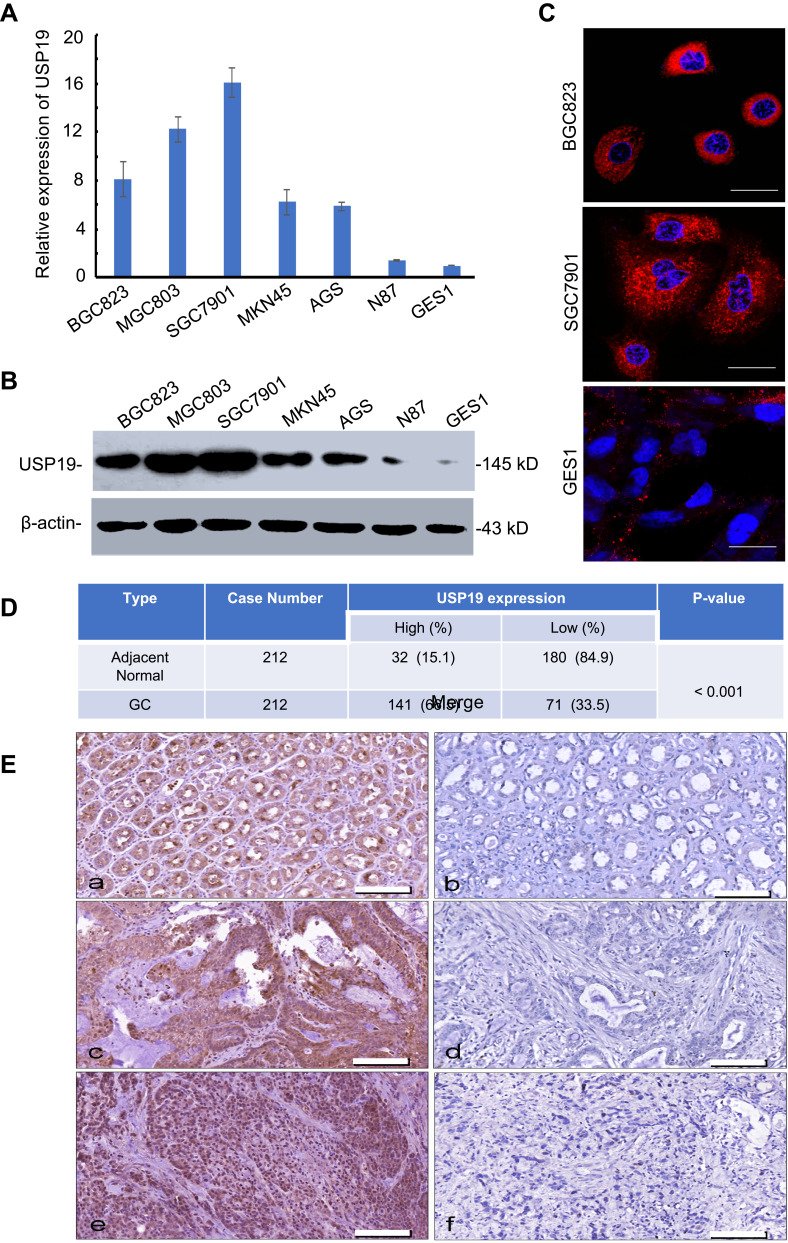
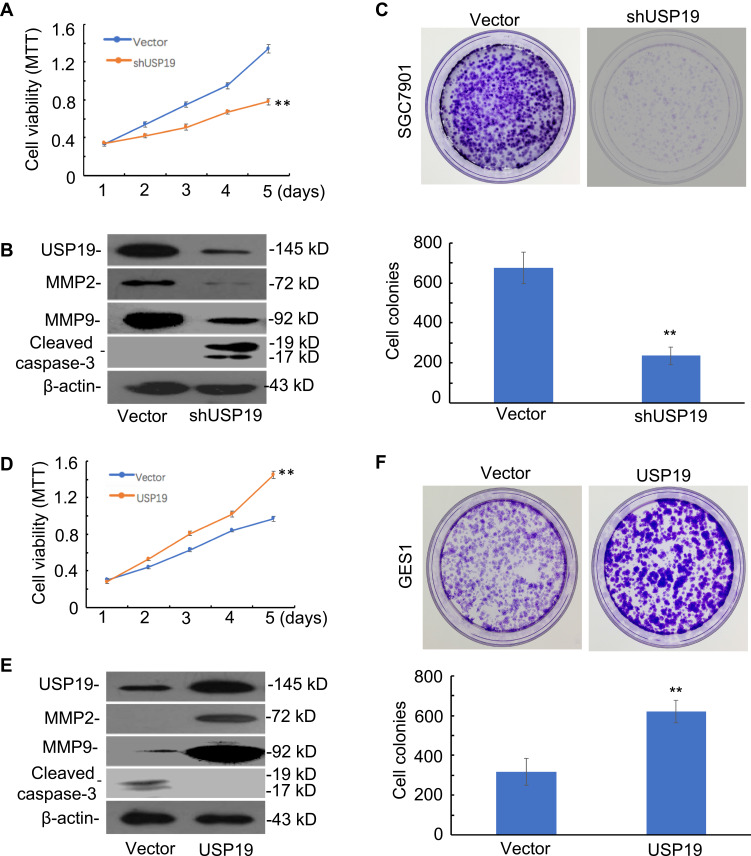
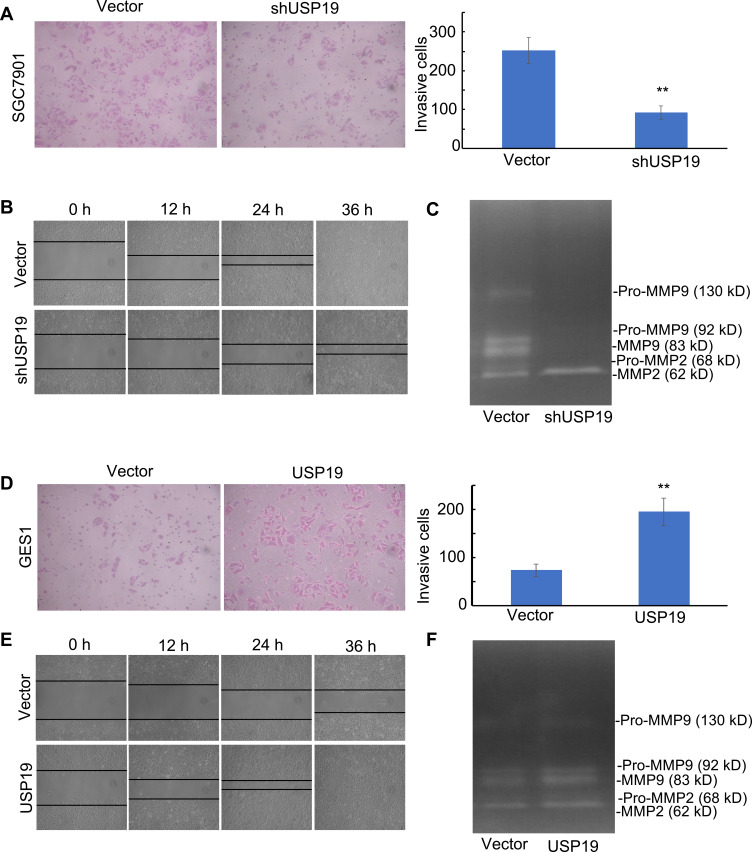
USP19 protein expression was analyzed in 212 paired GC samples using immunohistochemical staining. Quantitative real-time PCR (qRT-PCR) and Western blotting were used to detect the level of USP19 in gastric cell lines. The biological functions of USP19 were investigated by MTT assay, colony-forming assay, wound healing assay and gelatin zymography, and apoptotic cells were detected by immunohistochemistry assays in SGC7901 xenograft models.
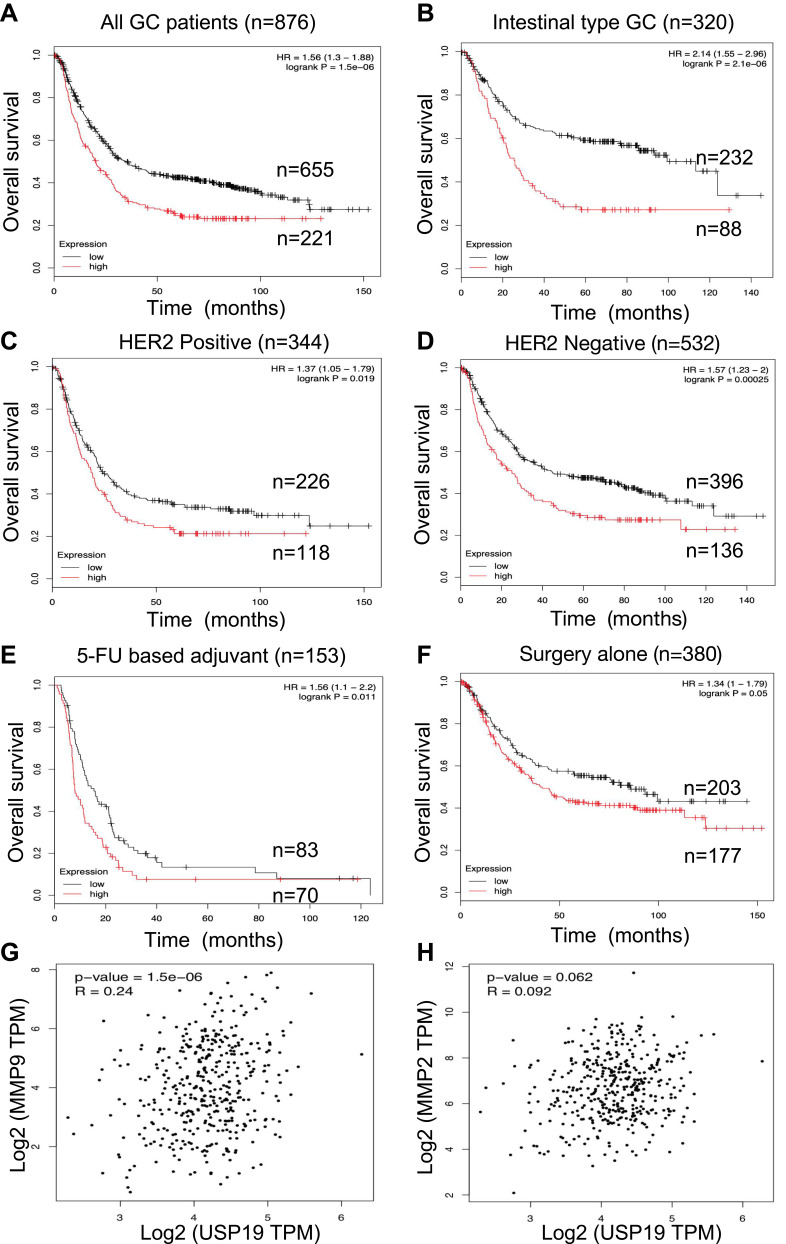
USP19 expression was significantly increased in GC cells and tissues, and the high level of USP19 expression was positively correlated with the Lauren's classification and poor prognosis. Moreover, USP19 was identified as a novel independent prognostic biomarker in GC patients. Enhanced USP19 expression promoted GC cell proliferation and metastasis through reduced cleaved caspase-3 and increased MMP2/MMP9 expression and promoted enzyme activity in the study, and verified the results through The Cancer Genome Atlas (TCGA) and bioinformatic websites from the Kaplan-Meier plotter (http://kmplot.com) and GEPIA (http://gepia2.cancer-pku.cn.).
Our study suggests that USP19 promoted tumor progression by inducing MMP2/MMP9 expression and related enzyme activity. Hence, USP19 may be a valuable prognostic predictor for GC, and the USP19-MMP2/MMP9 axis could serve as a therapeutic target.
研究泛素特异性肽酶19(USP19)在胃癌(GC)中的表达与正常组织和胃细胞系中的表达相比的临床意义。
采用免疫组织化学染色分析212对GC样本中USP19蛋白的表达。运用定量实时聚合酶链反应(qRT-PCR)和蛋白质免疫印迹法检测胃细胞系中USP19的水平。通过MTT法、集落形成试验、伤口愈合试验和明胶酶谱法研究USP19的生物学功能,并在SGC7901异种移植模型中通过免疫组织化学试验检测凋亡细胞。
USP19在GC细胞和组织中的表达显著增加,且USP19的高表达与劳伦分类和不良预后呈正相关。此外,USP19被确定为GC患者一种新的独立预后生物标志物。在该研究中,增强的USP19表达通过降低裂解的半胱天冬酶-3和增加MMP2/MMP9表达促进GC细胞增殖和转移,并促进酶活性,并通过癌症基因组图谱(TCGA)以及来自Kaplan-Meier plotter(http://kmplot.com)和GEPIA(http://gepia2.cancer-pku.cn.)的生物信息学网站验证了结果。
我们的研究表明,USP19通过诱导MMP2/MMP9表达和相关酶活性促进肿瘤进展。因此,USP19可能是GC的一个有价值的预后预测指标,且USP19-MMP2/MMP9轴可作为治疗靶点。