MMWR Morb Mortal Wkly Rep. 2020 Sep 11;69(36):1238-1243. doi: 10.15585/mmwr.mm6936a2.
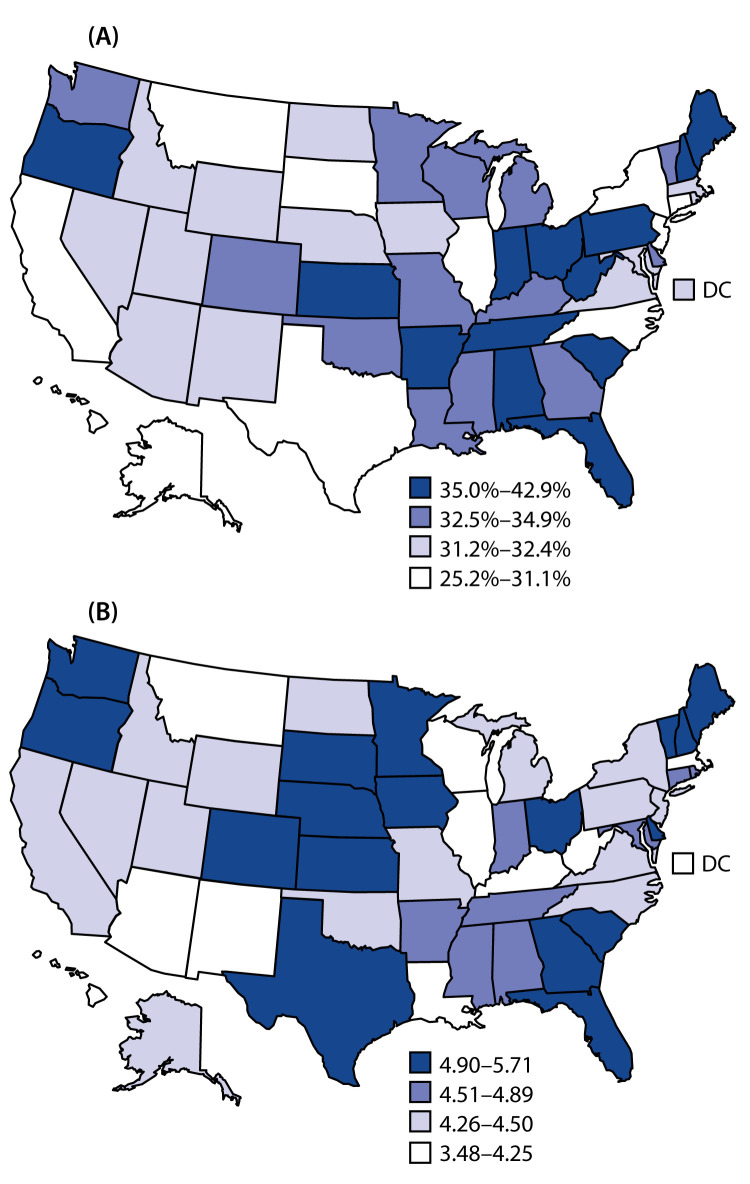
Frequent mental distress, defined as 14 or more self-reported mentally unhealthy days in the past 30 days,* is associated with adverse health behaviors, increased use of health services, mental disorders (e.g., diagnosis of major depressive disorder), chronic diseases, and functional limitations (1). Adults with disabilities more often report depression and anxiety (2), reduced health care access (3), and health-related risk behaviors (4) than do adults without disabilities. CDC analyzed 2018 Behavioral Risk Factor Surveillance System (BRFSS) data to compare the prevalence of frequent mental distress among adults with disabilities with that among adults without disabilities and to identify factors associated with mental distress among those with disabilities. Nationwide, an estimated 17.4 million adults with disabilities reported frequent mental distress; the prevalence of reported mental distress among those with disabilities (32.9%) was 4.6 times that of those without disabilities (7.2%). Among adults with disabilities, those with both cognitive and mobility disabilities most frequently reported mental distress (55.6%). Adults with disabilities who reported adverse health-related characteristics (e.g., cigarette smoking, physical inactivity, insufficient sleep, obesity, or depressive disorders) or an unmet health care need because of cost also reported experiencing more mental distress than did those with disabilities who did not have these characteristics. Adults living below the federal poverty level reported mental distress 70% more often than did adults in higher income households. Among states, age-adjusted prevalence of mental distress among adults with disabilities ranged from 25.2% (Alaska) to 42.9% (New Hampshire). Understanding the prevalence of mental distress among adults with disabilities could help health care providers, public health professionals, and policy makers target interventions and inform programs and policies to ensure receipt of mental health screening, care, and support services to reduce mental distress among adults with disabilities.
频繁的精神困扰,定义为过去 30 天内报告有 14 天或以上精神不健康的日子*,与不良健康行为、增加卫生服务使用、精神障碍(例如,重度抑郁症诊断)、慢性疾病和功能限制有关。与无残疾的成年人相比,残疾成年人更常报告抑郁和焦虑症 (2)、减少医疗保健获取 (3) 和与健康相关的危险行为 (4)。CDC 分析了 2018 年行为风险因素监测系统(BRFSS)数据,以比较残疾成年人中频繁精神困扰的流行率与无残疾成年人中的流行率,并确定与残疾成年人精神困扰相关的因素。在全国范围内,估计有 1740 万残疾成年人报告频繁的精神困扰;残疾成年人报告的精神困扰患病率(32.9%)是无残疾成年人(7.2%)的 4.6 倍。在残疾成年人中,同时患有认知和行动障碍的成年人最常报告精神困扰(55.6%)。报告有不良健康相关特征(例如,吸烟、缺乏身体活动、睡眠不足、肥胖或抑郁障碍)或因费用而无法获得医疗保健的残疾成年人比没有这些特征的残疾成年人报告更多的精神困扰。生活在联邦贫困线以下的成年人报告精神困扰的频率比收入较高家庭的成年人高 70%。在各州中,残疾成年人的精神困扰调整年龄后流行率从 25.2%(阿拉斯加)到 42.9%(新罕布什尔州)不等。了解残疾成年人中精神困扰的流行率可以帮助医疗保健提供者、公共卫生专业人员和政策制定者确定干预措施,并为确保获得精神健康筛查、护理和支持服务提供信息,以减少残疾成年人的精神困扰。