Department of Microbiology, University of Texas Southwestern Medical Center, Dallas, TX, USA; Department of Biochemistry, University of Texas Southwestern Medical Center, Dallas, TX, USA.
Department of Microbiology, University of Texas Southwestern Medical Center, Dallas, TX, USA; Department of Biochemistry, University of Texas Southwestern Medical Center, Dallas, TX, USA.
Curr Opin Microbiol. 2020 Oct;57:78-86. doi: 10.1016/j.mib.2020.08.001. Epub 2020 Sep 8.
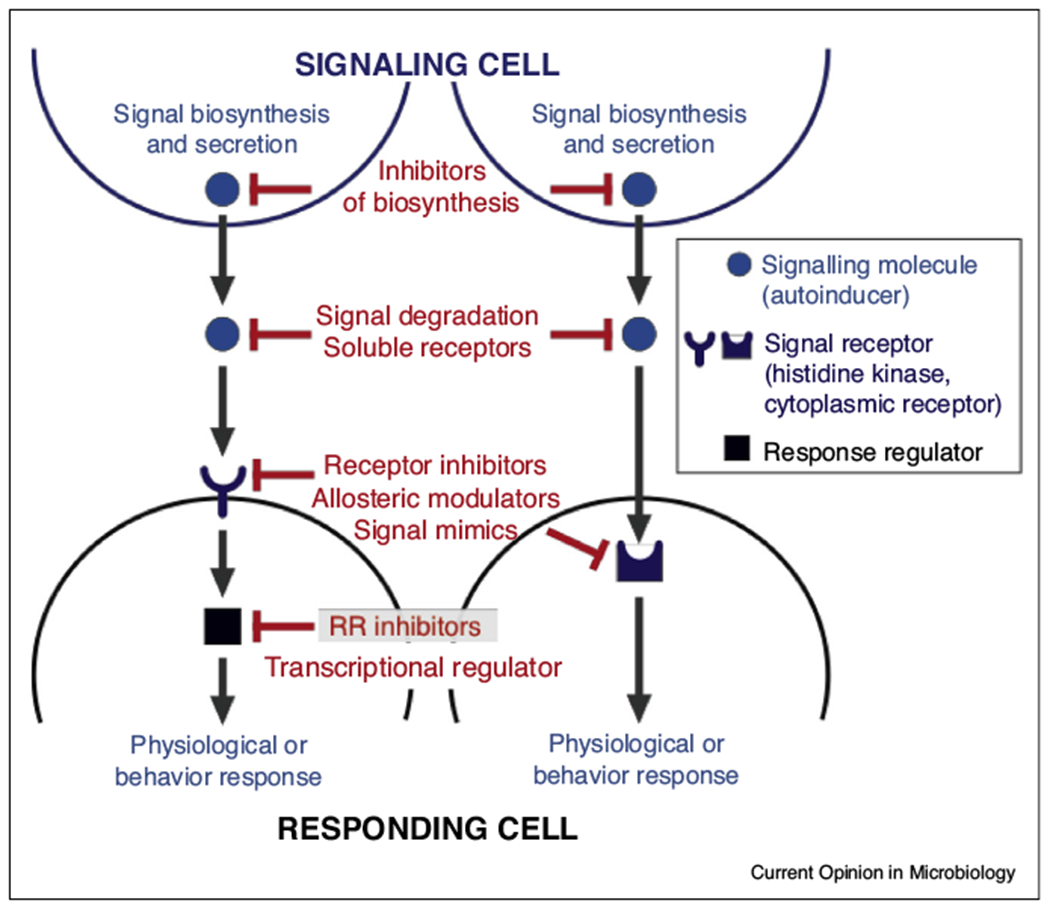
Antibiotics profoundly reduced worldwide mortality. However, the emergence of resistance to the growth inhibiting effects of these drugs occurred. New approaches to treat infectious disease that reduce the likelihood for resistance are needed. In bacterial pathogens, complex signaling networks regulate virulence. Anti-virulence therapies aim to disrupt these networks to attenuate virulence without affecting growth. Quorum-sensing, a cell-to-cell communication system, represents an attractive anti-virulence target because it often activates virulence. The challenge is to identify druggable targets that inhibit virulence, while also minimizing the likelihood of mutations promoting resistance. Moreover, given the ubiquity of quorum-sensing systems in commensals, any potential effects of anti-virulence therapies on microbiome function should also be considered. Here we highlight the efficacy and drawbacks of anti-virulence approaches.
抗生素显著降低了全球死亡率。然而,这些药物的生长抑制作用出现了耐药性。因此,需要新的方法来治疗传染病,以降低耐药性的可能性。在细菌病原体中,复杂的信号网络调节毒力。抗毒力疗法旨在破坏这些网络,以减弱毒力而不影响生长。群体感应是一种细胞间通讯系统,它是一种有吸引力的抗毒力靶点,因为它通常会激活毒力。挑战在于确定可抑制毒力的药物靶点,同时最大限度地减少促进耐药性突变的可能性。此外,鉴于群体感应系统在共生菌中的普遍性,还应考虑抗毒力疗法对微生物组功能的任何潜在影响。在这里,我们强调了抗毒力方法的功效和缺点。