Department of Genetics and Genomic Sciences, Icahn School of Medicine at Mount Sinai, New York, NY, USA.
Charles Bronfman Institute for Personalized Medicine, Icahn School of Medicine at Mount Sinai, New York, NY, USA.
Sci Adv. 2020 Sep 10;6(37). doi: 10.1126/sciadv.abb6242. Print 2020 Sep.
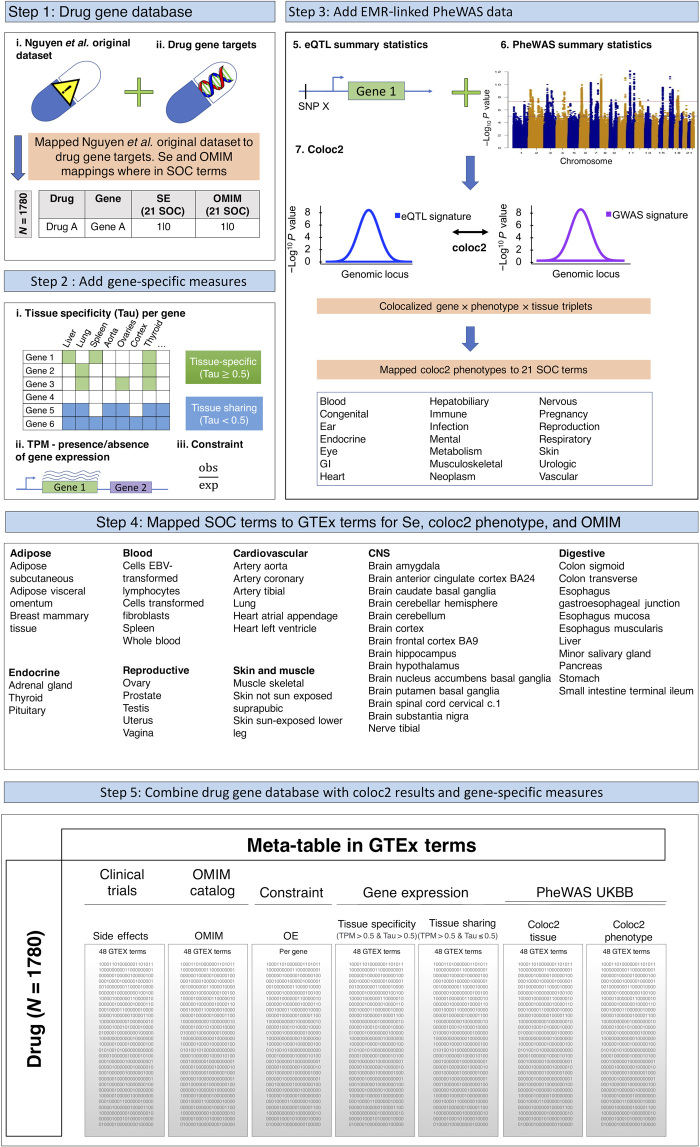
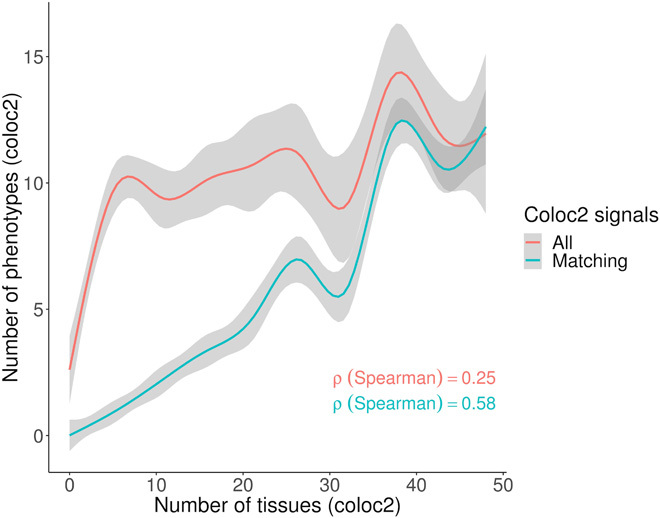
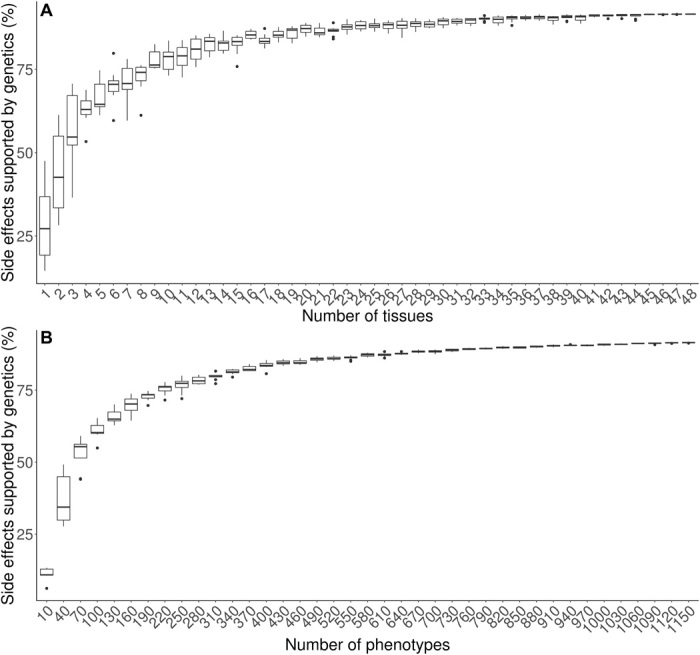
Adverse side effects often account for the failure of drug clinical trials. We evaluated whether a phenome-wide association study (PheWAS) of 1167 phenotypes in >360,000 U.K. Biobank individuals, in combination with gene expression and expression quantitative trait loci (eQTL) in 48 tissues, can inform prediction of drug side effects in clinical trials. We determined that drug target genes with five genetic features-tissue specificity of gene expression, Mendelian associations, phenotype- and tissue-level effects of genome-wide association (GWA) loci driven by eQTL, and genetic constraint-confer a 2.6-fold greater risk of side effects, compared to genes without such features. The presence of eQTL in multiple tissues resulted in more unique phenotypes driven by GWA loci, suggesting that drugs delivered to multiple tissues can induce several side effects. We demonstrate the utility of PheWAS and eQTL data from multiple tissues for informing drug side effect prediction and highlight the need for tissue-specific drug delivery.
不良反应往往是药物临床试验失败的原因。我们评估了在超过 36 万英国生物样本库个体中进行的 1167 种表型的全基因组关联研究(PheWAS),结合 48 种组织中的基因表达和表达数量性状基因座(eQTL),是否可以为临床试验中的药物不良反应预测提供信息。我们确定,与没有这些特征的基因相比,具有五个遗传特征的药物靶基因——组织特异性基因表达、孟德尔关联、表型和组织水平的全基因组关联(GWA)位点效应,以及遗传限制——会使药物产生不良反应的风险增加 2.6 倍。在多个组织中存在 eQTL 会导致由 GWA 位点驱动的更多独特表型,这表明输送到多个组织的药物可以引起多种不良反应。我们展示了来自多个组织的 PheWAS 和 eQTL 数据在药物不良反应预测中的效用,并强调了需要进行组织特异性药物输送。