Centre for Culture and Technology, School of Media, Creative Arts and Social Inquiry, Curtin University, Perth, Australia.
Curtin Institute for Computation, Curtin University, Perth, Australia.
Elife. 2020 Sep 14;9:e57067. doi: 10.7554/eLife.57067.
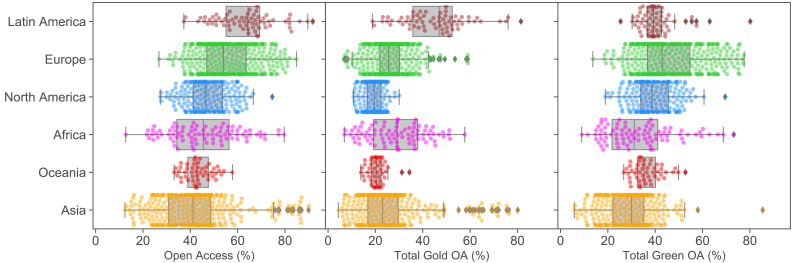
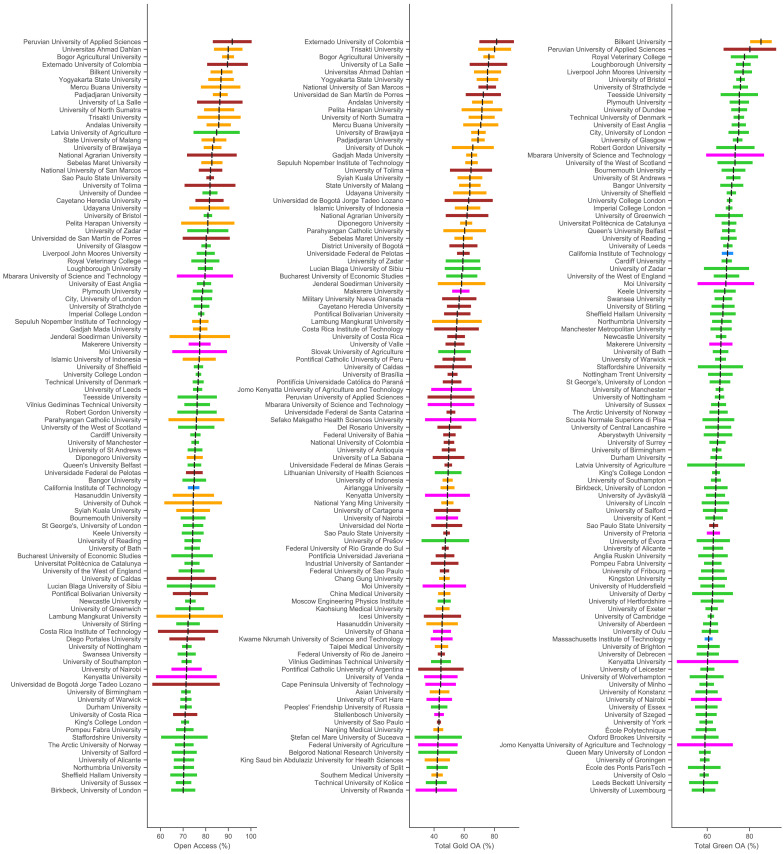
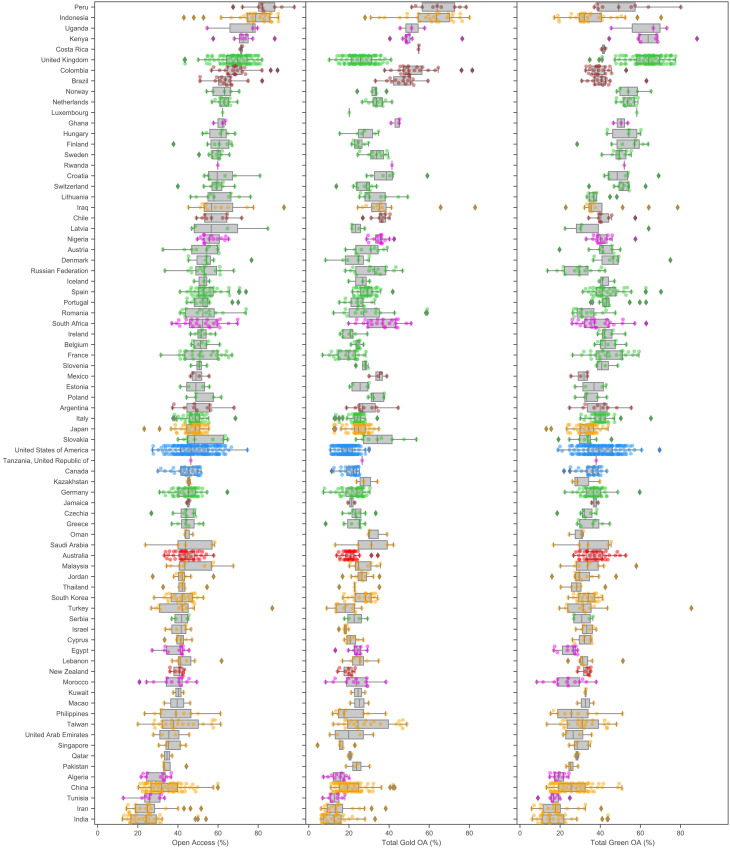
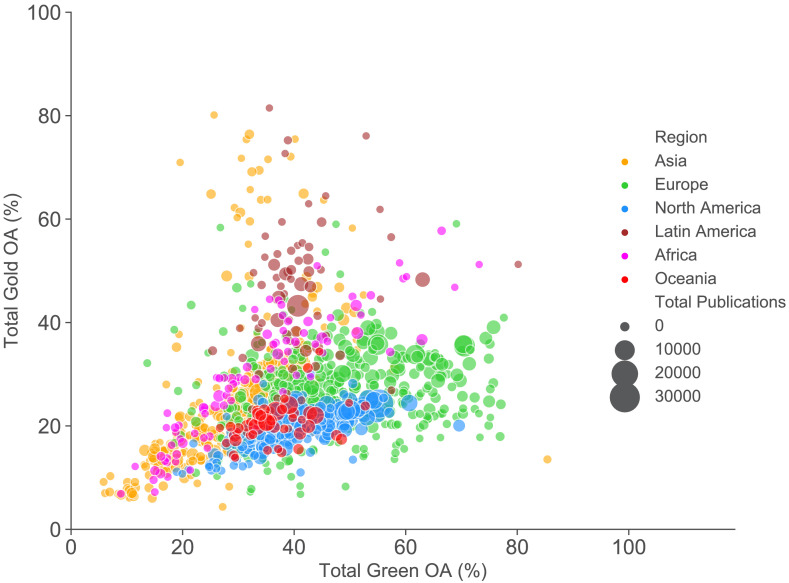
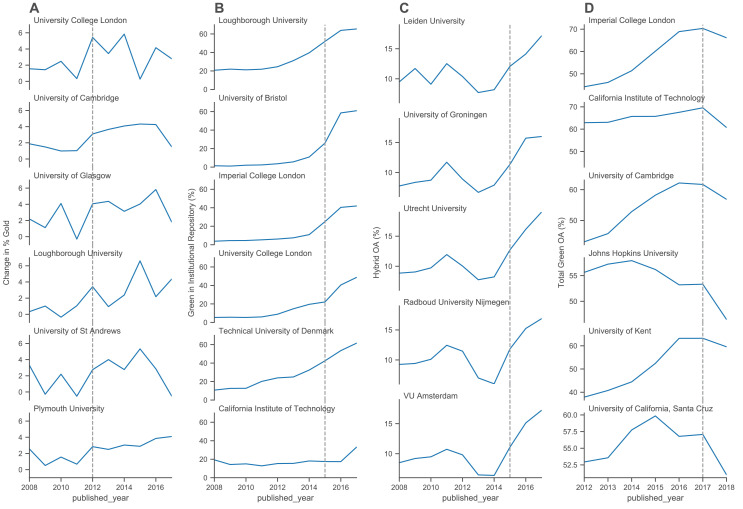
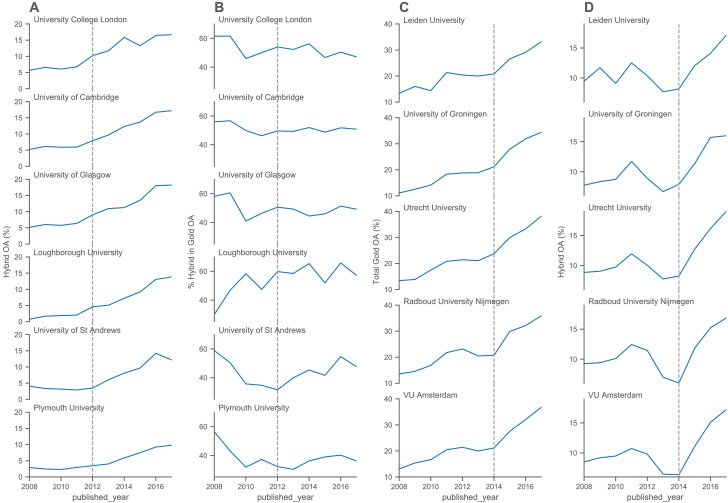
The proportion of research outputs published in open access journals or made available on other freely-accessible platforms has increased over the past two decades, driven largely by funder mandates, institutional policies, grass-roots advocacy, and changing attitudes in the research community. However, the relative effectiveness of these different interventions has remained largely unexplored. Here we present a robust, transparent and updateable method for analysing how these interventions affect the open access performance of individual institutes. We studied 1,207 institutions from across the world, and found that, in 2017, the top-performing universities published around 80-90% of their research open access. The analysis also showed that publisher-mediated (gold) open access was popular in Latin American and African universities, whereas the growth of open access in Europe and North America has mostly been driven by repositories.
在过去的二十年中,发表在开放获取期刊上的研究成果或在其他免费获取平台上提供的研究成果的比例有所增加,这主要是由于资助者的要求、机构政策、基层倡导以及研究界态度的变化所致。然而,这些不同干预措施的相对效果在很大程度上仍未得到探索。在这里,我们提出了一种稳健、透明和可更新的方法,用于分析这些干预措施如何影响各个机构的开放获取绩效。我们研究了来自世界各地的 1207 个机构,发现 2017 年,表现最好的大学发表的研究成果约有 80-90%是开放获取的。分析还表明,出版商介导的(金色)开放获取在拉丁美洲和非洲的大学中很受欢迎,而欧洲和北美的开放获取的增长主要是由存储库推动的。