Department of Medical Biotechnology and Laboratory Science, College of Medicine, Chang Gung University, Gueishan, Taoyuan, 33302, Taiwan, China.
Department of Respiratory Therapy, Fu Jen Catholic University, New Taipei City, 24205, Taiwan, China.
Protein Cell. 2021 May;12(5):394-410. doi: 10.1007/s13238-020-00784-w. Epub 2020 Sep 15.
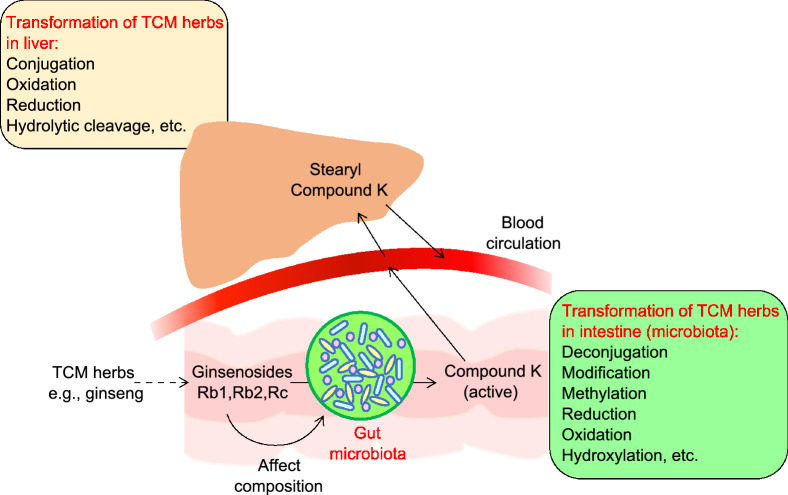
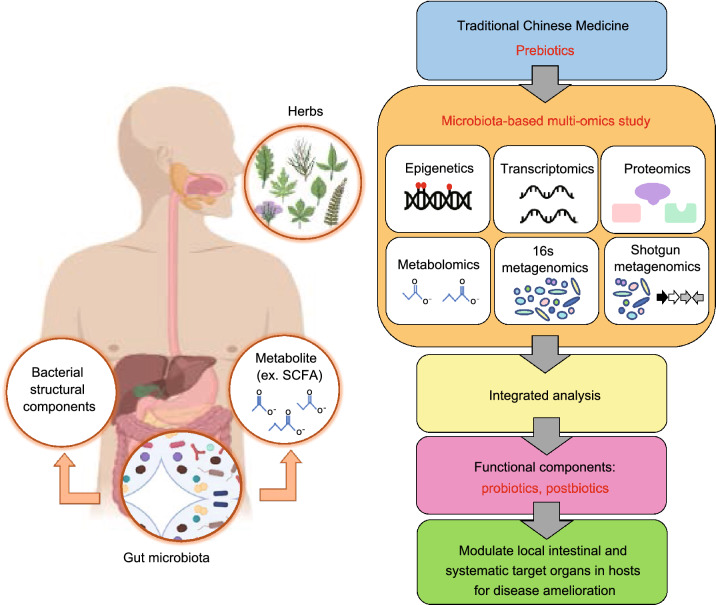
Traditional Chinese Medicine (TCM) has been extensively used to ameliorate diseases in Asia for over thousands of years. However, owing to a lack of formal scientific validation, the absence of information regarding the mechanisms underlying TCMs restricts their application. After oral administration, TCM herbal ingredients frequently are not directly absorbed by the host, but rather enter the intestine to be transformed by gut microbiota. The gut microbiota is a microbial community living in animal intestines, and functions to maintain host homeostasis and health. Increasing evidences indicate that TCM herbs closely affect gut microbiota composition, which is associated with the conversion of herbal components into active metabolites. These may significantly affect the therapeutic activity of TCMs. Microbiota analyses, in conjunction with modern multiomics platforms, can together identify novel functional metabolites and form the basis of future TCM research.
中医药在亚洲被广泛用于治疗疾病已有数千年的历史。然而,由于缺乏正式的科学验证,有关中医药作用机制的信息缺失限制了它们的应用。中药经口服给药后,通常不会被宿主直接吸收,而是进入肠道,由肠道微生物群进行转化。肠道微生物群是生活在动物肠道内的微生物群落,其功能是维持宿主的内环境平衡和健康。越来越多的证据表明,中药草药会密切影响肠道微生物群的组成,这与草药成分转化为活性代谢物有关。这些可能会显著影响中药的治疗活性。微生物组分析与现代多组学平台相结合,可以共同鉴定新的功能代谢物,并为未来的中药研究奠定基础。