Parisi Maria Giovanna, Parrinello Daniela, Stabili Loredana, Cammarata Matteo
Department of Earth and Marine Sciences, University of Palermo, 90128 Palermo, Italy.
Department of Biological and Environmental Sciences and Technologies, University of Salento, 73100 Lecce, Italy.
Biology (Basel). 2020 Sep 11;9(9):283. doi: 10.3390/biology9090283.
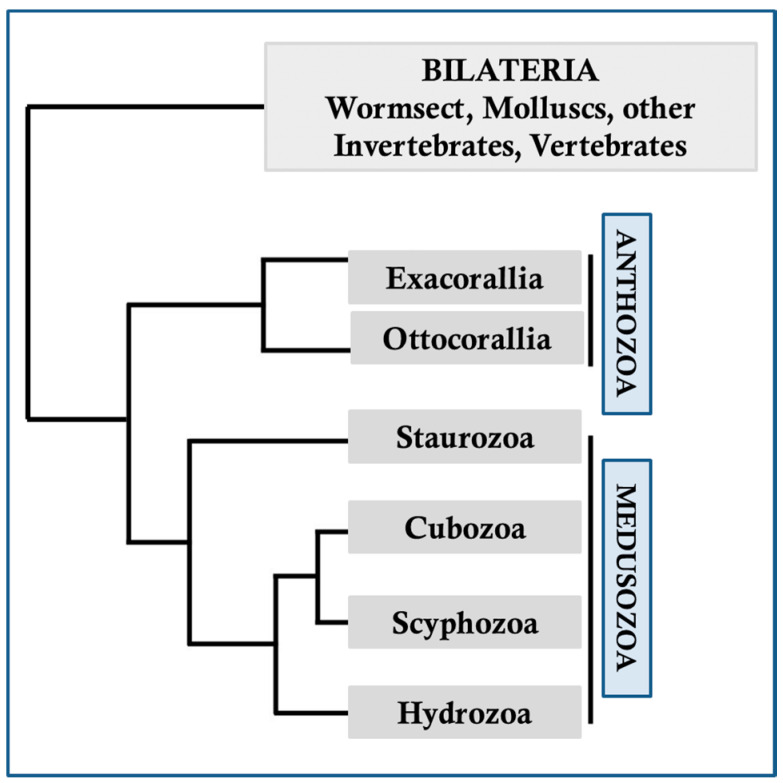
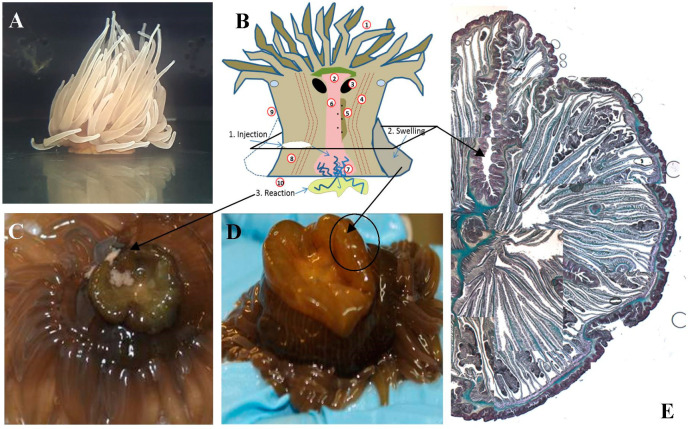
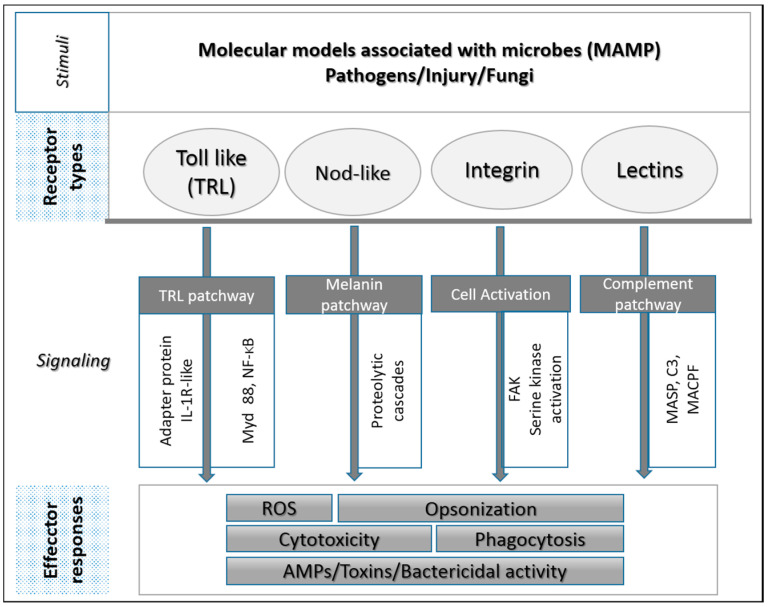
Anthozoa is the most specious class of the phylum Cnidaria that is phylogenetically basal within the Metazoa. It is an interesting group for studying the evolution of mutualisms and immunity, for despite their morphological simplicity, Anthozoans are unexpectedly immunologically complex, with large genomes and gene families similar to those of the Bilateria. Evidence indicates that the Anthozoan innate immune system is not only involved in the disruption of harmful microorganisms, but is also crucial in structuring tissue-associated microbial communities that are essential components of the cnidarian holobiont and useful to the animal's health for several functions including metabolism, immune defense, development, and behavior. Here, we report on the current state of the art of Anthozoan immunity. Like other invertebrates, Anthozoans possess immune mechanisms based on self/non-self-recognition. Although lacking adaptive immunity, they use a diverse repertoire of immune receptor signaling pathways (PRRs) to recognize a broad array of conserved microorganism-associated molecular patterns (MAMP). The intracellular signaling cascades lead to gene transcription up to endpoints of release of molecules that kill the pathogens, defend the self by maintaining homeostasis, and modulate the wound repair process. The cells play a fundamental role in immunity, as they display phagocytic activities and secrete mucus, which acts as a physicochemical barrier preventing or slowing down the proliferation of potential invaders. Finally, we describe the current state of knowledge of some immune effectors in Anthozoan species, including the potential role of toxins and the inflammatory response in the Mediterranean Anthozoan following injection of various foreign particles differing in type and dimensions, including pathogenetic bacteria.
珊瑚纲是刺胞动物门中种类最为繁多的一个纲,在系统发育上处于后生动物的基部。它是研究共生关系和免疫进化的一个有趣的类群,因为尽管珊瑚纲动物形态简单,但它们在免疫方面却出人意料地复杂,拥有与两侧对称动物相似的大基因组和基因家族。有证据表明,珊瑚纲动物的先天免疫系统不仅参与破坏有害微生物,而且在构建与组织相关的微生物群落方面也至关重要,这些微生物群落是刺胞动物全生物的重要组成部分,对动物的健康具有多种功能,包括新陈代谢、免疫防御、发育和行为。在此,我们报告珊瑚纲动物免疫的当前研究现状。与其他无脊椎动物一样,珊瑚纲动物拥有基于自我/非自我识别的免疫机制。虽然缺乏适应性免疫,但它们利用多种免疫受体信号通路(模式识别受体)来识别广泛的保守微生物相关分子模式。细胞内信号级联反应导致基因转录,直至释放出杀死病原体、通过维持体内平衡来保护自身以及调节伤口修复过程的分子。细胞在免疫中发挥着基本作用,因为它们表现出吞噬活性并分泌黏液,黏液作为一种物理化学屏障,可防止或减缓潜在入侵者的增殖。最后,我们描述了目前对珊瑚纲动物中一些免疫效应分子的了解情况,包括毒素的潜在作用以及在地中海珊瑚纲动物中注射各种类型和尺寸不同的外来颗粒(包括致病细菌)后引发的炎症反应。