Department of General and Visceral Surgery, Surgery Center; Ulm University Medical Center, Albert-Einstein-Allee 23, 89081, Ulm, Germany.
Department of Biology, School of Sciences and Humanities, Nazarbayev University, Kabanbay Batyr Ave., 53, Nur-Sultan, 010000, Republic of Kazakhstan.
Respir Res. 2020 Sep 17;21(1):238. doi: 10.1186/s12931-020-01502-0.
Previously, it has been shown that obesity is a risk factor for recovery, regeneration, and tissue repair after blunt trauma and can affect the rate of muscle recovery and collagen deposition after trauma. To date, lung tissue regeneration and extracellular matrix regulation in obese mice after injury has not been investigated in detail yet.
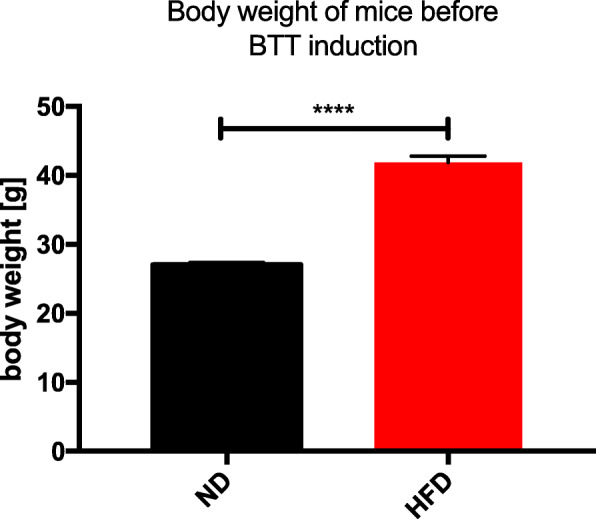
This study uses an established blunt thorax trauma model to analyze morphological changes and alterations on gene and protein level in lean or obese (diet-induced obesity for 16 ± 1 week) male C57BL/6 J mice at various time-points after trauma induction (1 h, 6 h, 24 h, 72 h and 192 h).
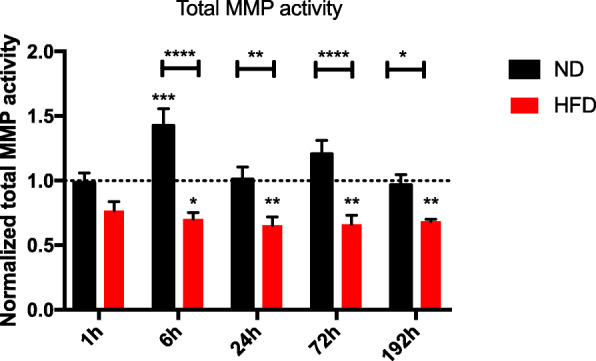
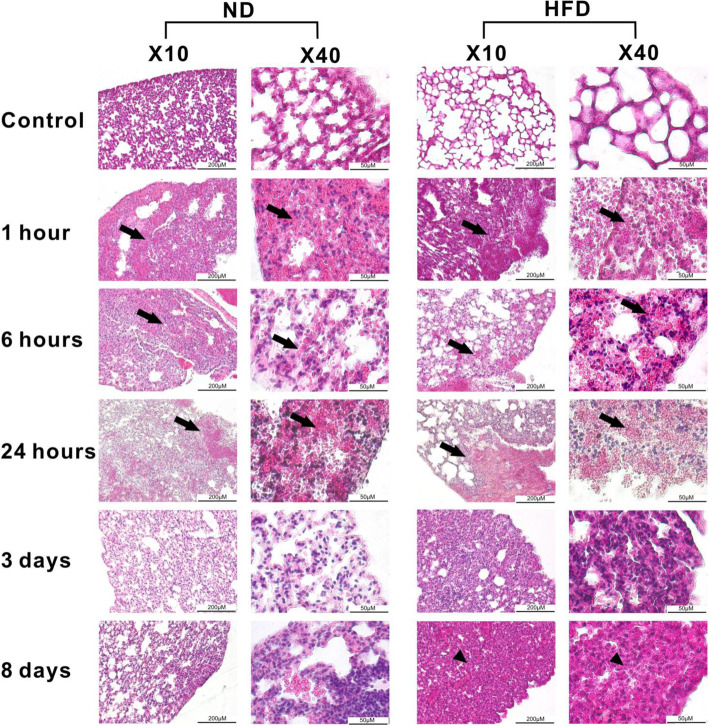
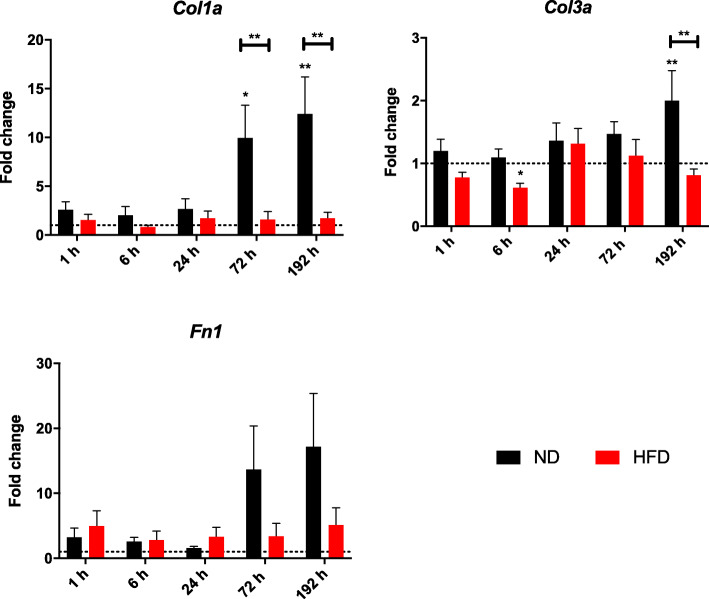
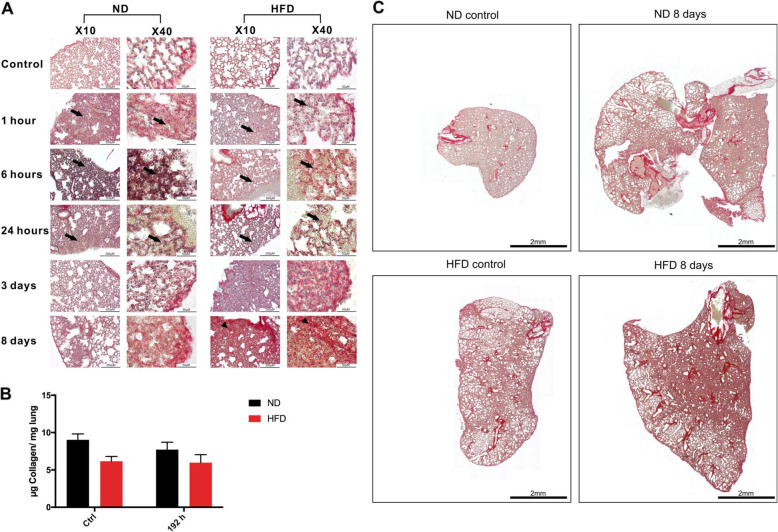
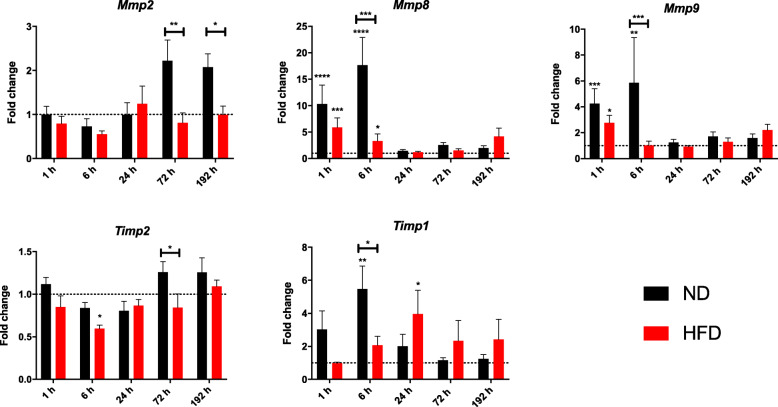
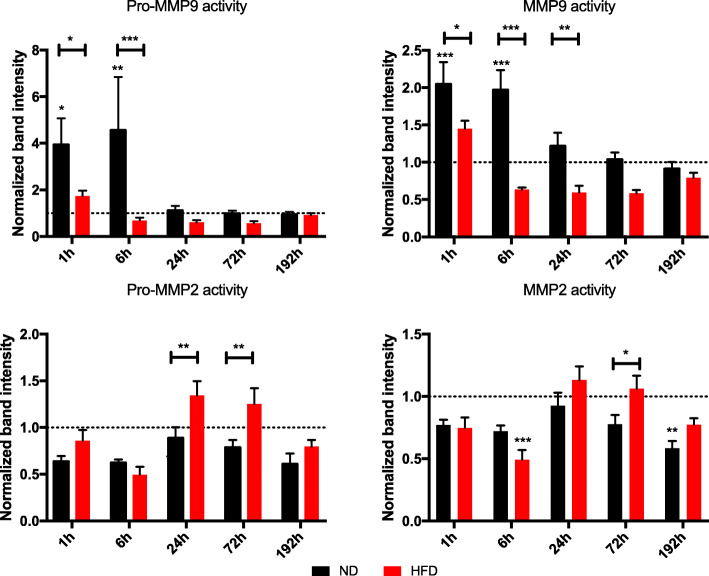
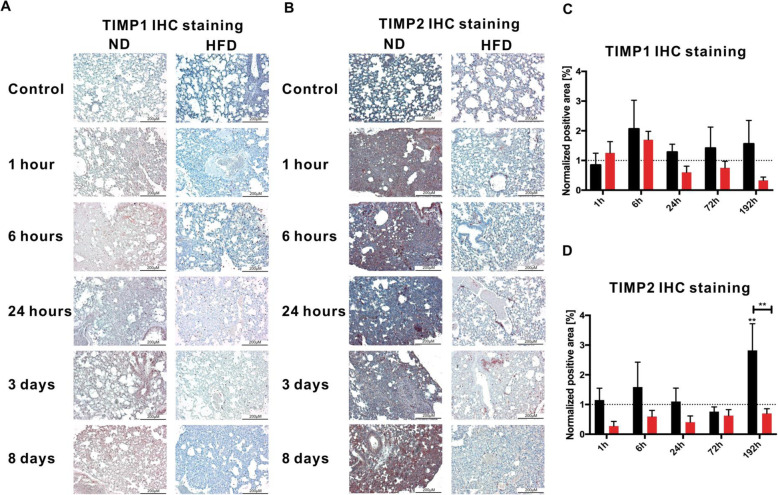
Morphological analysis after injury showed lung parenchyma damage at early time-points in both lean and obese mice. At later time-points a better regenerative capacity of lean mice was observed, since obese animals still exhibited alveoli collapse, wall thickness as well as remaining filled alveoli structures. Although lean mice showed significantly increased collagen and fibronectin gene levels, analysis of collagen deposition showed no difference based on colorimetric quantification of collagen and visual assessment of Sirius red staining. When investigating the organization of the ECM on gene level, a decreased response of obese mice after trauma regarding extracellular matrix composition and organization was detectable. Differences in the lung tissue between the diets regarding early responding MMPs (MMP8/9) and late responding MMPs (MMP2) could be observed on gene and protein level. Obese mice show differences in regulation of extracellular matrix components compared to normal weight mice, which results in a decreased total MMP activity in obese animals during the whole regeneration phase. Starting at 6 h post traumatic injury, lean mice show a 50% increase in total MMP activity compared to control animals, while MMP activity in obese mice drops to 50%.
In conclusion, abnormal regulation of the levels of extracellular matrix genes in the lung may contribute to an aberrant regeneration after trauma induction with a delay of repair and pathological changes of the lung tissue in obese mice.
此前已经表明,肥胖是钝性创伤后恢复、再生和组织修复的危险因素,并可能影响创伤后肌肉恢复和胶原蛋白沉积的速度。迄今为止,肥胖小鼠受伤后的肺组织再生和细胞外基质调节尚未得到详细研究。
本研究使用已建立的钝性胸部创伤模型,分析瘦鼠或肥胖鼠(饮食诱导肥胖 16±1 周)在创伤诱导后不同时间点(1 h、6 h、24 h、72 h 和 192 h)的基因和蛋白质水平的形态变化和改变。
损伤后的形态学分析显示,瘦鼠和肥胖鼠的肺实质在早期均有损伤。在后期,瘦鼠的再生能力更好,因为肥胖动物仍表现出肺泡塌陷、壁增厚和残留的充满肺泡结构。尽管瘦鼠的胶原和纤维连接蛋白基因水平显著增加,但基于胶原的比色定量和天狼星红染色的视觉评估,未发现胶原沉积存在差异。当研究 ECM 在基因水平上的组织时,可检测到肥胖小鼠在创伤后对细胞外基质组成和组织的反应性降低。在创伤后基因和蛋白水平上,观察到两种饮食之间的 MMP(MMP8/9 和 MMP2)的早期反应和晚期反应 MMP 之间存在差异。与正常体重小鼠相比,肥胖小鼠的细胞外基质成分调节存在差异,导致肥胖动物在整个再生阶段的总 MMP 活性降低。从创伤后 6 h 开始,与对照动物相比,瘦鼠的总 MMP 活性增加了 50%,而肥胖鼠的 MMP 活性下降到 50%。
总之,肺细胞外基质基因水平的异常调节可能导致创伤诱导后肺组织再生异常,肥胖小鼠的修复延迟和肺组织的病理性改变。