Department of Medical Biosciences, Pathology, Umeå University, Building 6M, 90185, Umeå, Sweden.
Department of Surgery, Sunderby Hospital, Luleå, Sweden.
Sci Rep. 2020 Sep 17;10(1):15250. doi: 10.1038/s41598-020-72132-1.
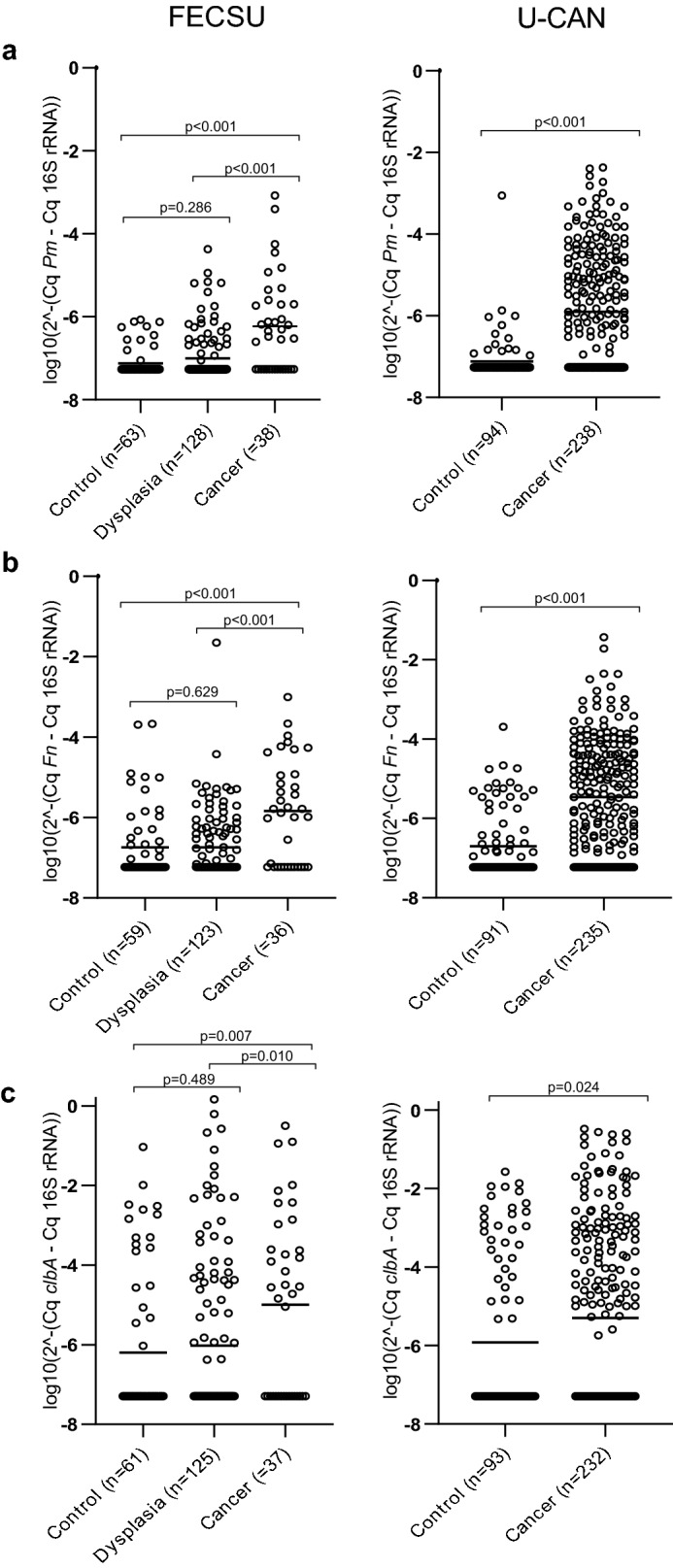
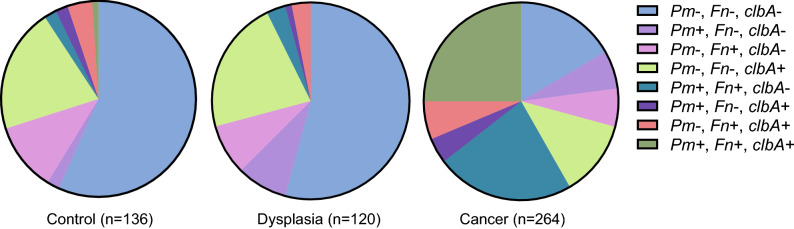
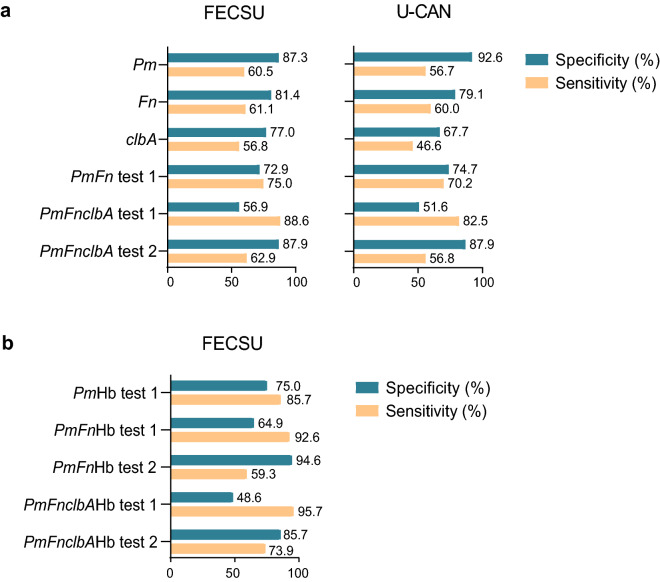
The use of faecal microbial markers as non-invasive biomarkers for colorectal cancer (CRC) has been suggested, but not fully elucidated. Here, we have evaluated the importance of Parvimonas micra as a potential non-invasive faecal biomarker in CRC and its relation to other microbial biomarkers. The levels of P. micra, F. nucleatum and clbA + bacteria were quantified using qPCR in faecal samples from a population-based cohort of patients undergoing colonoscopy due to symptoms from the large bowel. The study included 38 CRC patients, 128 patients with dysplasia and 63 controls. The results were validated in a second consecutive CRC cohort including faecal samples from 238 CRC patients and 94 controls. We found significantly higher levels of P. micra in faecal samples from CRC patients compared to controls. A test for P. micra could detect CRC with a specificity of 87.3% and a sensitivity of 60.5%. In addition, we found that combining P. micra with other microbial markers, could further enhance test sensitivity. Our findings support the potential use of P. micra as a non-invasive biomarker for CRC. Together with other microbial faecal markers, P. micra may identify patients with "high risk" microbial patterns, indicating increased risk and incidence of cancer.
粪便微生物标志物已被提议作为结直肠癌(CRC)的非侵入性生物标志物,但尚未完全阐明。在这里,我们评估了微小帕毛单胞菌作为 CRC 潜在非侵入性粪便生物标志物的重要性及其与其他微生物生物标志物的关系。使用 qPCR 定量检测了来自因大肠症状而行结肠镜检查的基于人群的患者队列的粪便样本中微小帕毛单胞菌、核梭杆菌和 clbA+细菌的水平。该研究包括 38 名 CRC 患者、128 名异型增生患者和 63 名对照。在包括 238 名 CRC 患者和 94 名对照的第二个连续 CRC 队列中验证了结果。我们发现 CRC 患者粪便样本中的微小帕毛单胞菌水平明显高于对照组。微小帕毛单胞菌检测可特异性为 87.3%,敏感性为 60.5%检测 CRC。此外,我们发现将微小帕毛单胞菌与其他微生物标志物结合使用可以进一步提高检测敏感性。我们的研究结果支持将微小帕毛单胞菌作为 CRC 的非侵入性生物标志物的潜在用途。微小帕毛单胞菌与其他粪便微生物标志物一起,可能会识别出具有“高风险”微生物模式的患者,表明癌症风险和发病率增加。