State Key Laboratory of Cotton Biology, Institute of Cotton Research of Chinese Academy of Agricultural Sciences, Anyang, 455000, Henan, China.
BMC Genomics. 2020 Sep 18;21(1):643. doi: 10.1186/s12864-020-07069-w.
Histone deacetylases (HDACs) catalyze histone deacetylation and suppress gene transcription during various cellular processes. Within the superfamily of HDACs, RPD3/HDA1-type HDACs are the most studied, and it is reported that RPD3 genes play crucial roles in plant growth and physiological processes. However, there is a lack of systematic research on the RPD3/HDA1 gene family in cotton.
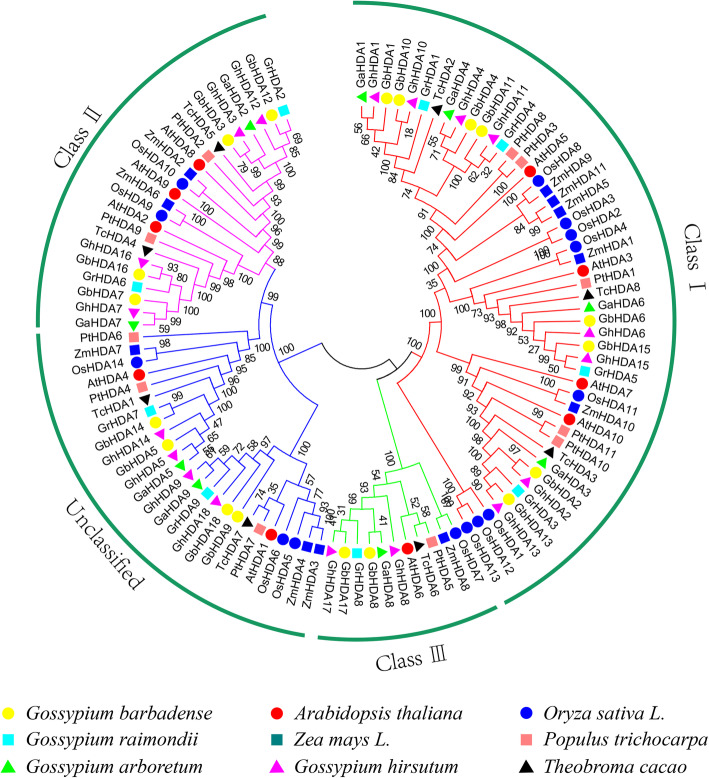
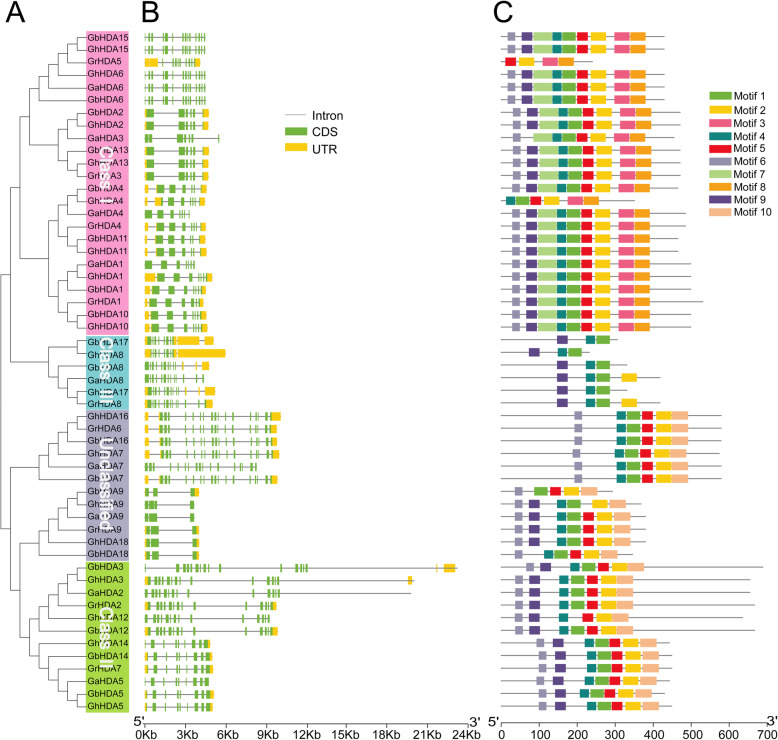
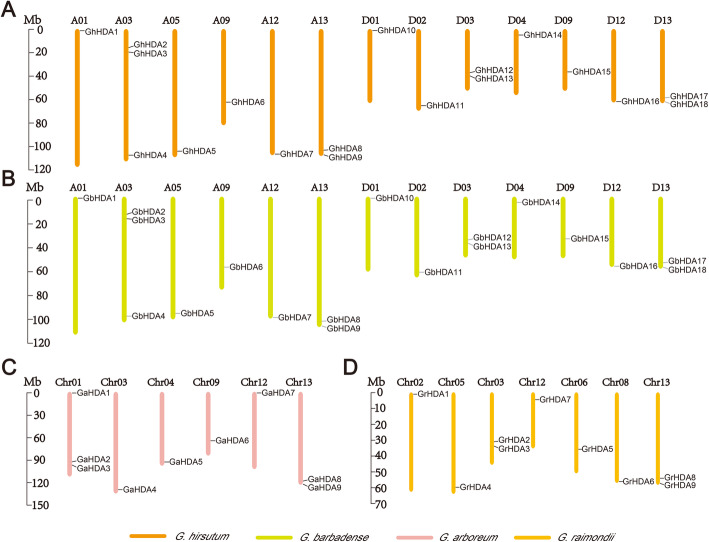
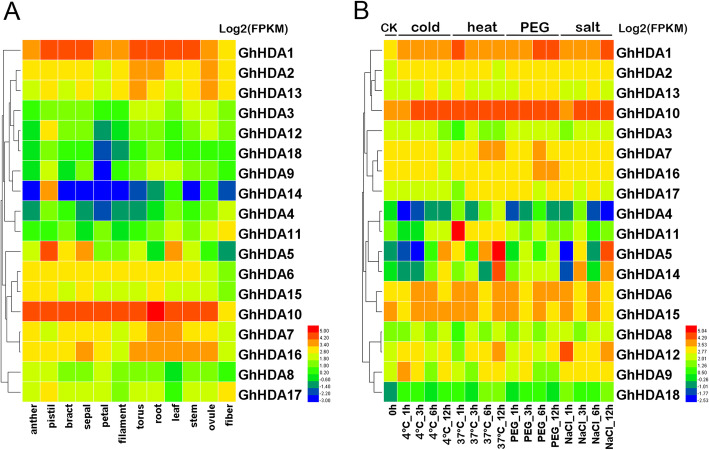
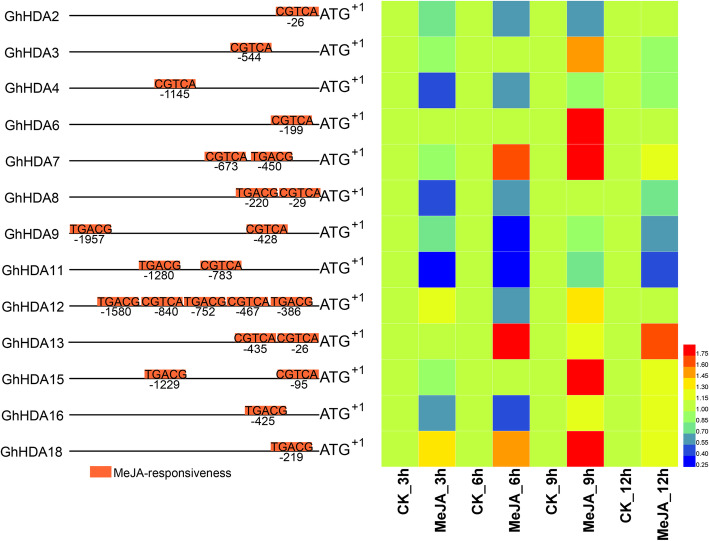
In this study, genome-wide analysis identified 9, 9, 18, and 18 RPD3 genes in Gossypium raimondii, G. arboreum, G. hirsutum, and G. barbadense, respectively. This gene family was divided into 4 subfamilies through phylogenetic analysis. The exon-intron structure and conserved motif analysis revealed high conservation in each branch of the cotton RPD3 genes. Collinearity analysis indicated that segmental duplication was the primary driving force during the expansion of the RPD3 gene family in cotton. There was at least one presumed cis-element related to plant hormones in the promoter regions of all GhRPD3 genes, especially MeJA- and ABA-responsive elements, which have more members than other hormone-relevant elements. The expression patterns showed that most GhRPD3 genes had relatively high expression levels in floral organs and performed higher expression in early-maturity cotton compared with late-maturity cotton during flower bud differentiation. In addition, the expression of GhRPD3 genes could be significantly induced by one or more abiotic stresses as well as exogenous application of MeJA or ABA.
Our findings reveal that GhRPD3 genes may be involved in flower bud differentiation and resistance to abiotic stresses, which provides a basis for further functional verification of GhRPD3 genes in cotton development and a foundation for breeding better early-maturity cotton cultivars in the future.
组蛋白去乙酰化酶(HDACs)在各种细胞过程中催化组蛋白去乙酰化并抑制基因转录。在 HDAC 超家族中,RPD3/HDA1 型 HDAC 是研究最多的,据报道,RPD3 基因在植物生长和生理过程中发挥着关键作用。然而,棉花中 RPD3/HDA1 基因家族的系统研究还很缺乏。
本研究通过全基因组分析,分别在海岛棉、亚洲棉、陆地棉和草棉中鉴定到 9、9、18 和 18 个 RPD3 基因。通过系统进化分析,该基因家族分为 4 个亚家族。外显子-内含子结构和保守基序分析表明,棉花 RPD3 基因在每个分支上都具有高度保守性。共线性分析表明,片段复制是棉花 RPD3 基因家族扩张的主要驱动力。在所有 GhRPD3 基因的启动子区域中,至少存在一个与植物激素相关的假定顺式元件,特别是 MeJA 和 ABA 响应元件,它们比其他激素相关元件有更多的成员。表达模式表明,大多数 GhRPD3 基因在花器官中具有相对较高的表达水平,并且在芽分化过程中,早期成熟棉花比晚期成熟棉花的表达水平更高。此外,GhRPD3 基因的表达可以被一种或多种非生物胁迫以及 MeJA 或 ABA 的外源应用显著诱导。
我们的研究结果表明,GhRPD3 基因可能参与花芽分化和对非生物胁迫的抗性,这为进一步在棉花发育中对 GhRPD3 基因进行功能验证提供了基础,并为未来培育更好的早熟棉花品种奠定了基础。