National & Local Joint Engineering Laboratory of Animal Peptide Drug Development, College of Life Sciences, Hunan Normal University, Changsha, China.
Center of Bioinformatics and Genomics, Tulane University School of Public Health and Tropical Medicine, New Orleans, LA, 70112, USA.
J Hum Genet. 2021 Mar;66(3):297-306. doi: 10.1038/s10038-020-00843-4. Epub 2020 Sep 18.
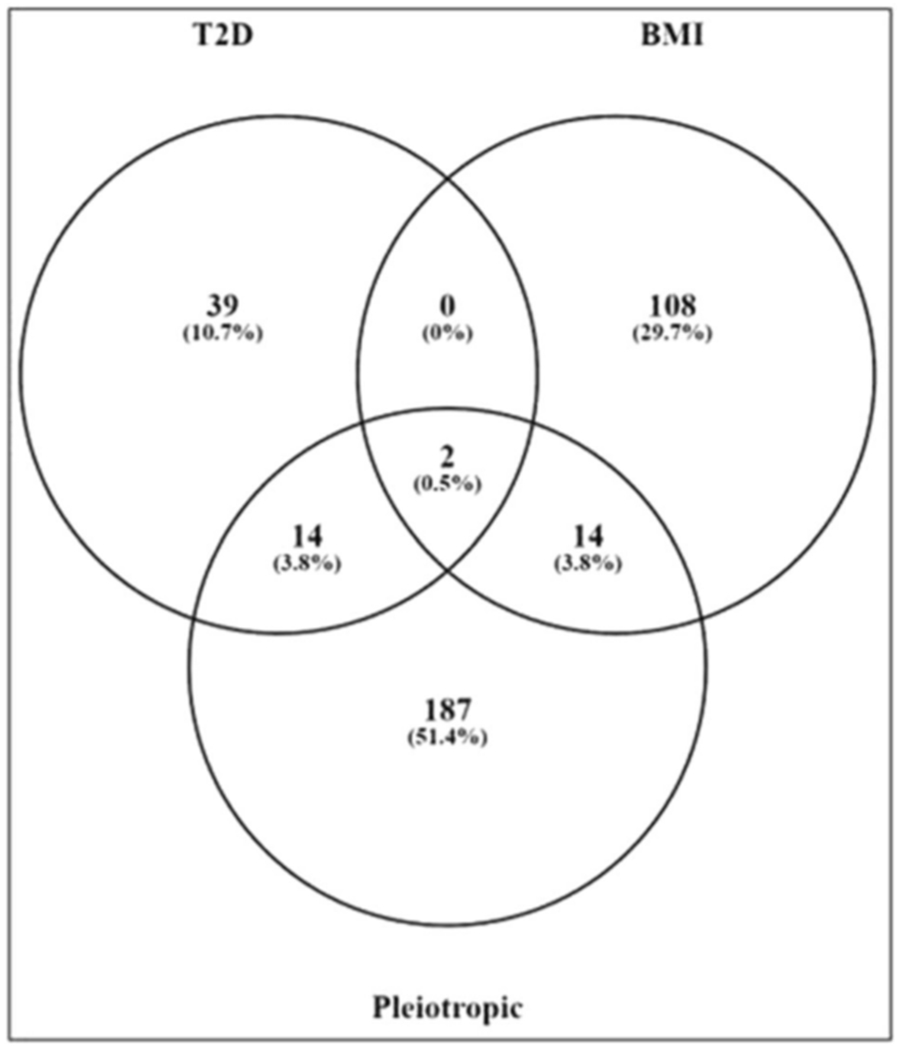
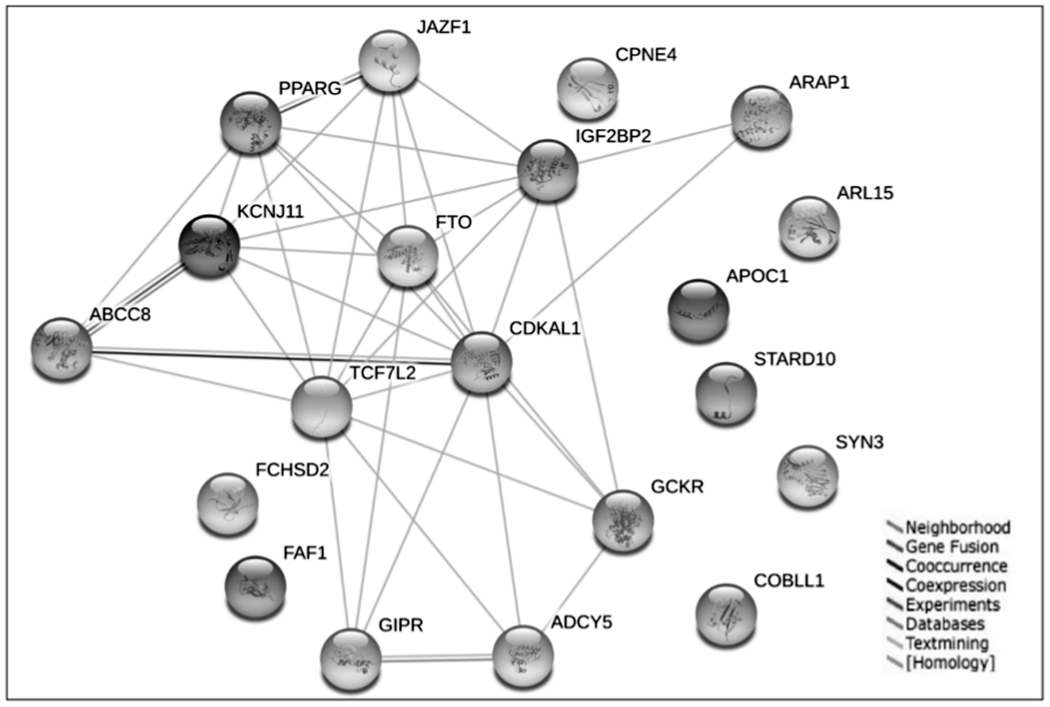
Metabolic syndrome is a cluster of symptoms including excessive body fat and insulin resistance which may lead to obesity and type 2 diabetes (T2D). The physiological and pathological cross-talk between T2D and obesity is crucial and complex, meanwhile, the genetic connection between T2D and obesity is largely unknown. The purpose of this study is to identify pleiotropic SNPs and genes between these two associated conditions by applying genetic analysis incorporating pleiotropy and annotation (GPA) on two large genome-wide association studies (GWAS) data sets: a body mass index (BMI) data set containing 339,224 subjects and a T2D data set containing 110,452 subjects. In all, 5182 SNPs showed pleiotropy in both T2D and obesity. After further prioritization based on suggested local false discovery rates (FDR) by the GPA model, 2146 SNPs corresponding to 217 unique genes are significantly associated with both traits (FDR < 0.2), among which 187 are newly identified pleiotropic genes compare with original GWAS in individual traits. Subsequently, gene enrichment and pathway analyses highlighted several pleiotropic SNPs including rs849135 (FDR = 0.0002), rs2119812 (FDR = 0.0018), rs4506565 (FDR = 1.23E-08), rs1558902 (7.23E-10) and corresponding genes JAZF1, SYN2, TCF7L2, FTO which may play crucial rol5es in the etiology of both T2D and obesity. Additional evidences from expression data analysis of pleiotropic genes strongly supports that the pleiotropic genes including JAZF1 (p = 1.39E-05 and p = 2.13E-05), SYN2 (p = 5.49E-03 and p = 5.27E-04), CDKN2C (p = 1.99E-12 and p = 6.27E-11), RABGAP1 (p = 3.08E-03 and p = 7.46E-03), and UBE2E2 (p = 1.83E-04 and p = 8.22E-03) play crucial roles in both obesity and T2D pathogenesis. Pleiotropic analysis integrated with functional network identified several novel and causal SNPs and genes involved in both BMI and T2D which may be ignored in single GWAS.
代谢综合征是一组症状,包括体脂过多和胰岛素抵抗,这些可能导致肥胖和 2 型糖尿病(T2D)。T2D 和肥胖之间的生理和病理相互作用至关重要且复杂,同时,T2D 和肥胖之间的遗传联系在很大程度上是未知的。本研究的目的是通过对两个大型全基因组关联研究(GWAS)数据集应用包含多效性和注释的遗传分析(GPA),确定这两种相关疾病之间的多效性 SNP 和基因。一个包含 339224 名受试者的体重指数(BMI)数据集和一个包含 110452 名受试者的 T2D 数据集。共有 5182 个 SNP 在 T2D 和肥胖中表现出多效性。在根据 GPA 模型建议的局部假发现率(FDR)进行进一步优先级排序后,对应于 217 个独特基因的 2146 个 SNP 与两种表型显著相关(FDR<0.2),其中 187 个是与个体表型的原始 GWAS 相比新发现的多效性基因。随后,基因富集和途径分析突出了几个多效性 SNP,包括 rs849135(FDR=0.0002)、rs2119812(FDR=0.0018)、rs4506565(FDR=1.23E-08)、rs1558902(7.23E-10)和相应的基因 JAZF1、SYN2、TCF7L2、FTO,它们可能在 T2D 和肥胖的病因学中发挥关键作用。多效性基因表达数据分析的额外证据强烈支持多效性基因,包括 JAZF1(p=1.39E-05 和 p=2.13E-05)、SYN2(p=5.49E-03 和 p=5.27E-04)、CDKN2C(p=1.99E-12 和 p=6.27E-11)、RABGAP1(p=3.08E-03 和 p=7.46E-03)和 UBE2E2(p=1.83E-04 和 p=8.22E-03),在肥胖和 T2D 发病机制中发挥关键作用。综合功能网络的多效性分析确定了几个涉及 BMI 和 T2D 的新的和因果 SNP 和基因,这些 SNP 和基因在单个 GWAS 中可能被忽略。