Benelli Giovanni, Pavoni Lucia, Zeni Valeria, Ricciardi Renato, Cosci Francesca, Cacopardo Gloria, Gendusa Saverio, Spinozzi Eleonora, Petrelli Riccardo, Cappellacci Loredana, Maggi Filippo, Pavela Roman, Bonacucina Giulia, Lucchi Andrea
Department of Agriculture, Food and Environment, University of Pisa, via del Borghetto 80, 56124 Pisa, Italy.
School of Pharmacy, University of Camerino, 62032 Camerino, Italy.
Nanomaterials (Basel). 2020 Sep 18;10(9):1867. doi: 10.3390/nano10091867.
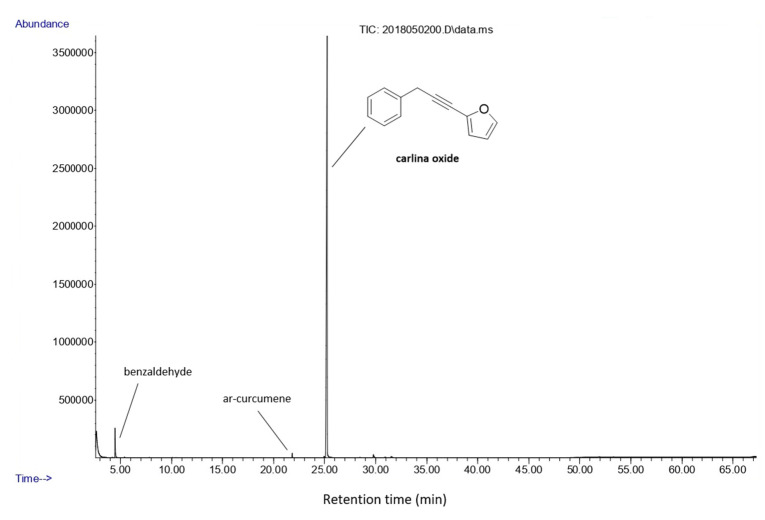
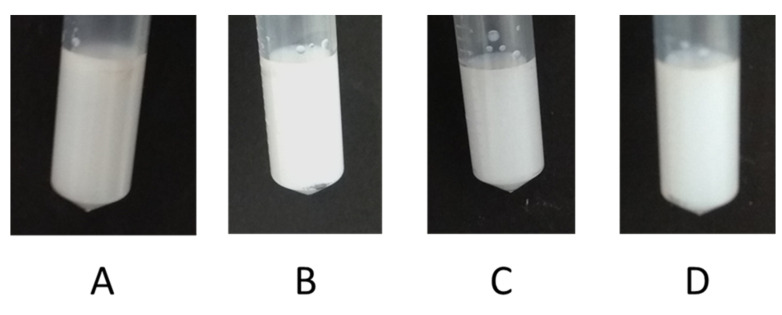
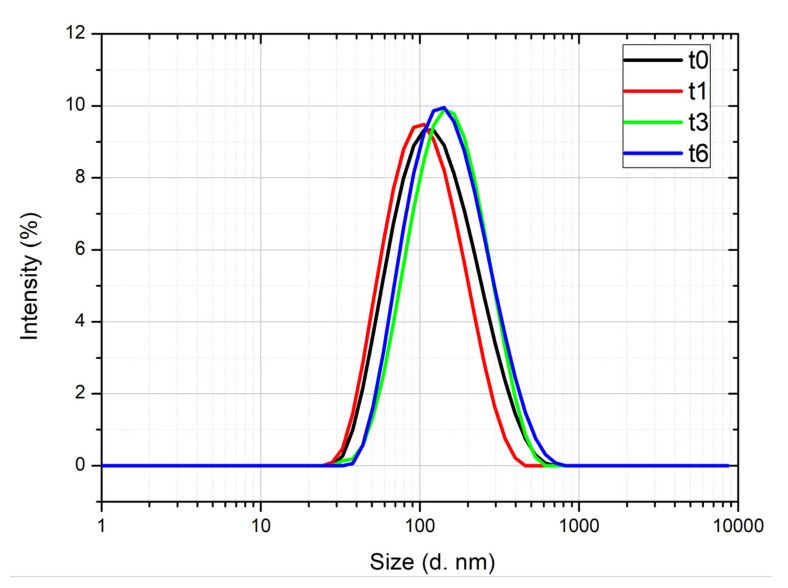
The growing interest in the development of green pest management strategies is leading to the exploitation of essential oils (EOs) as promising botanical pesticides. In this respect, nanotechnology could efficiently support the use of EOs through their encapsulation into stable nanoformulations, such as nanoemulsions (NEs), to improve their stability and efficacy. This technology assures the improvement of the chemical stability, hydrophilicity, and environmental persistence of EOs, giving an added value for the fabrication of natural insecticides effective against a wide spectrum of insect vectors and pests of public and agronomical importance. (Asteraceae) root EO has been recently proposed as a promising ingredient of a new generation of botanical insecticides. In the present study, a highly stable -based NE was developed. Interestingly, such a nanosystem was able to encapsulate 6% (/) of EO, showing a mean diameter of around 140 nm and a SOR (surfactant-to-oil ratio) of 0.6. Its stability was evaluated in a storage period of six months and corroborated by an accelerated stability study. Therefore, the EO and -based NE were evaluated for their toxicity against 1st instar larvae of the European grapevine moth (EGVM), (Denis & Schiffermüller, 1775) (Lepidoptera: Tortricidae), a major vineyard pest. The chemical composition of EO was investigated by gas chromatography-mass spectrometry (GC-MS) revealing carlina oxide, a polyacetylene, as the main constituent. In toxicity assays, both the EO and the -based NE were highly toxic to . larvae, with LC values of 7.299 and 9.044 µL/mL for EO and NE, respectively. The -based NE represents a promising option to develop highly stable botanical insecticides for pest management. To date, this study represents the first evidence about the insecticidal toxicity of EOs and EO-based NEs against this major grapevine pest.
对绿色害虫管理策略开发的兴趣日益浓厚,促使人们将精油(EOs)作为有前景的植物源杀虫剂加以利用。在这方面,纳米技术可以通过将精油包封到稳定的纳米制剂(如纳米乳液(NEs))中,有效地支持精油的使用,以提高其稳定性和功效。这项技术确保了精油化学稳定性、亲水性和环境持久性的提高,为制造对广泛的昆虫媒介以及具有公共和农业重要性的害虫有效的天然杀虫剂增添了价值。菊科植物根精油最近被提议作为新一代植物源杀虫剂的一种有前景的成分。在本研究中,开发了一种基于[具体物质]的高度稳定的纳米乳液。有趣的是,这种纳米系统能够包封6%(/)的[具体精油名称]精油,平均直径约为140 nm,表面活性剂与油的比例(SOR)为0.6。在六个月的储存期内对其稳定性进行了评估,并通过加速稳定性研究得到了证实。因此,评估了[具体精油名称]精油和基于[具体物质]的纳米乳液对欧洲葡萄蛾(EGVM)(葡萄小卷蛾,丹尼斯和席费尔米勒,1775年)(鳞翅目:卷蛾科)1龄幼虫的毒性,该害虫是葡萄园的主要害虫。通过气相色谱 - 质谱联用(GC - MS)对[具体精油名称]精油的化学成分进行了研究,结果表明聚乙炔类化合物氧化卡尔烯是主要成分。在毒性试验中,[具体精油名称]精油和基于[具体物质]的纳米乳液对葡萄小卷蛾幼虫均具有高毒性,[具体精油名称]精油和纳米乳液的LC值分别为7.299和9.044 μL/mL。基于[具体物质]的纳米乳液是开发用于害虫管理的高度稳定的植物源杀虫剂的一个有前景的选择。迄今为止,本研究代表了关于精油和基于精油的纳米乳液对这种主要葡萄害虫杀虫毒性的首个证据。