Clinical Sciences Department, College of Medicine, University of Sharjah, Post Code: 27272, Sharjah, United Arab Emirates.
Sharjah Institute for Medical Research, University of Sharjah, Sharjah, United Arab Emirates.
BMC Infect Dis. 2020 Sep 22;20(1):697. doi: 10.1186/s12879-020-05427-3.
The microbiota of the respiratory tract has an important role in maintaining respiratory health. However, little is known on the respiratory microbiota in asthmatic patients among Middle Eastern populations. This study investigated the respiratory microbiota composition and functionality associated with asthma in Emirati subjects.
We performed 16S rRNA and ITS2-gene based microbial profiling of 40 expectorated sputum samples from adult and pediatric Emirati individuals averaging 52 and 7 years of age, respectively with or without asthma.
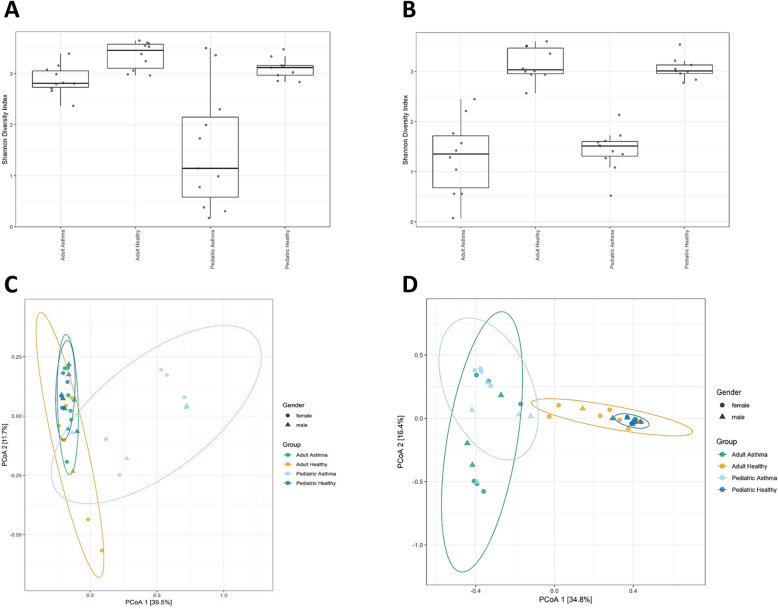
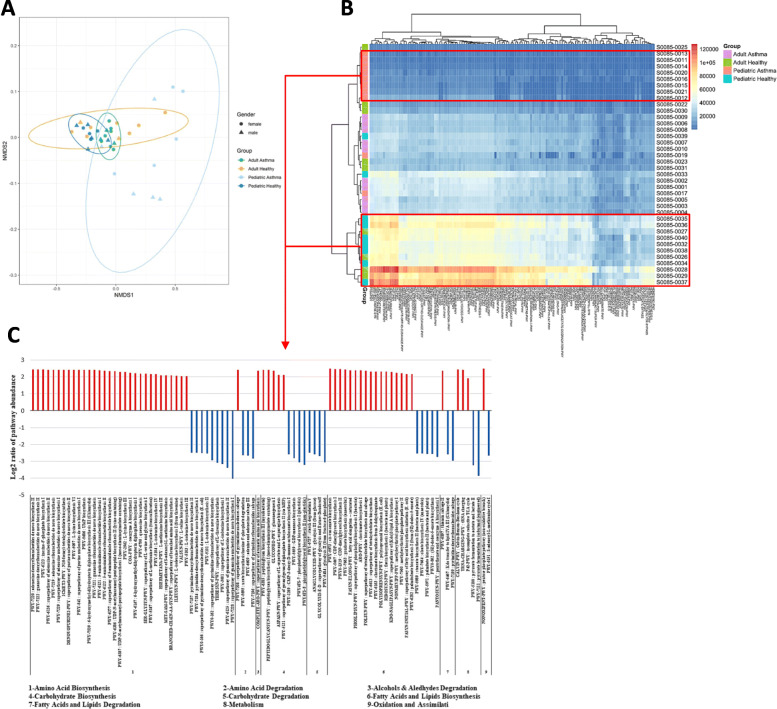
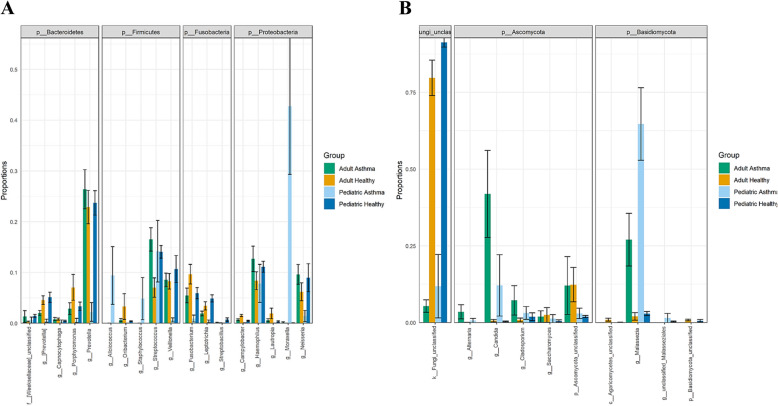
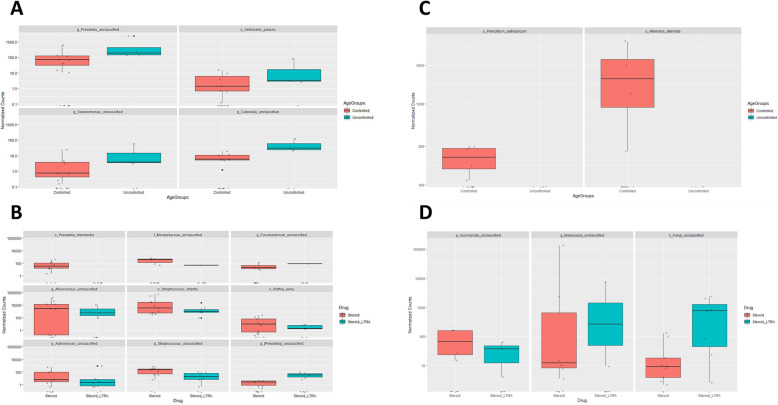
We report bacterial difference belonging to Bacteroidetes, Firmicutes, Fusobacteria and Proteobacteria phyla between asthmatic and non-asthmatic controls. Similarly, fungal difference belonging to Ascomycota, Basidiomycota phyla and other unclassified fungi. Differential abundance testing among asthmatic individuals with relation to Asthma Control Test show a significant depletion of Penicillium aethiopicum and Alternaria spp., among poorly controlled asthmatics. Moreover, data suggest a significant expansion of Malassezia spp. and other unclassified fungi in the airways of those receiving steroids and leukotriene receptor antagonists' combination therapy, in contrast to those receiving steroids alone. Functional profiling from 16S data showed marked differences between pediatric asthmatic and non-asthmatic controls, with pediatric asthmatic patients showing an increase in amino acid (p-value < 5.03 × 10), carbohydrate (p-value < 4.76 × 10), and fatty acid degradation (p-value < 6.65 × 10) pathways, whereas non-asthmatic controls are associated with increase in amino acid (p-value < 8.34 × 10), carbohydrate (p-value < 3.65 × 10), and fatty acid (p-value < 2.18 × 10) biosynthesis pathways in concordance with enterotype composition.
These differences provide an insight into respiratory microbiota composition in Emirati population and its possible role in the development of asthma early in life. This study provides important information that may eventually lead to the development of screening biomarkers to predict early asthma development and novel therapeutic approaches.
呼吸道微生物群在维持呼吸道健康方面起着重要作用。然而,关于中东人群中哮喘患者的呼吸道微生物群,人们知之甚少。本研究调查了与阿联酋人群哮喘相关的呼吸道微生物群组成和功能。
我们对 40 名成年和儿科阿联酋个体的咳出痰液样本进行了基于 16S rRNA 和 ITS2 基因的微生物谱分析,这些个体的平均年龄分别为 52 岁和 7 岁,分别患有或不患有哮喘。
我们报告了细菌差异,属于拟杆菌门、厚壁菌门、梭杆菌门和变形菌门,存在于哮喘和非哮喘对照组之间。同样,真菌差异属于子囊菌门、担子菌门和其他未分类真菌。在与哮喘控制测试有关的哮喘个体中进行差异丰度检测,显示出较差控制的哮喘患者中 Penicillium aethiopicum 和 Alternaria spp. 的显著减少。此外,数据表明,在接受类固醇和白三烯受体拮抗剂联合治疗的患者中,马拉色菌属和其他未分类真菌在气道中的显著扩张,与单独接受类固醇治疗的患者形成对比。来自 16S 数据的功能谱分析显示,儿科哮喘和非哮喘对照组之间存在显著差异,儿科哮喘患者表现出氨基酸(p 值 < 5.03 × 10)、碳水化合物(p 值 < 4.76 × 10)和脂肪酸降解(p 值 < 6.65 × 10)途径增加,而非哮喘对照组则与氨基酸(p 值 < 8.34 × 10)、碳水化合物(p 值 < 3.65 × 10)和脂肪酸(p 值 < 2.18 × 10)生物合成途径增加相关,这与肠型组成一致。
这些差异为阿联酋人群的呼吸道微生物群组成及其在生命早期发展为哮喘中的可能作用提供了深入了解。本研究提供了重要信息,最终可能导致开发预测早期哮喘发展的筛查生物标志物和新的治疗方法。