Odum School of Ecology, University of Georgia, Athens, GA, 30602;
Center for the Ecology of Infectious Diseases, University of Georgia, Athens, GA, 30602.
Proc Natl Acad Sci U S A. 2020 Oct 13;117(41):25897-25903. doi: 10.1073/pnas.2008087117. Epub 2020 Sep 22.
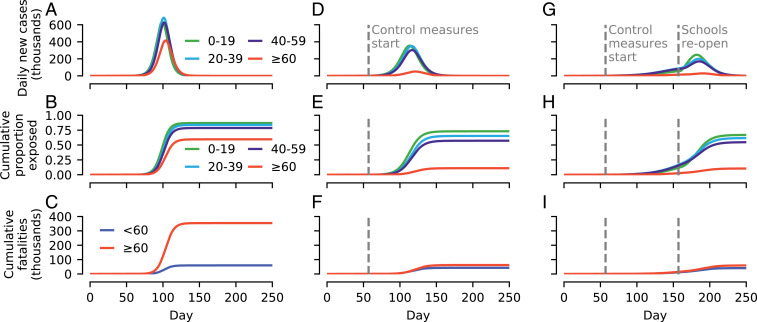
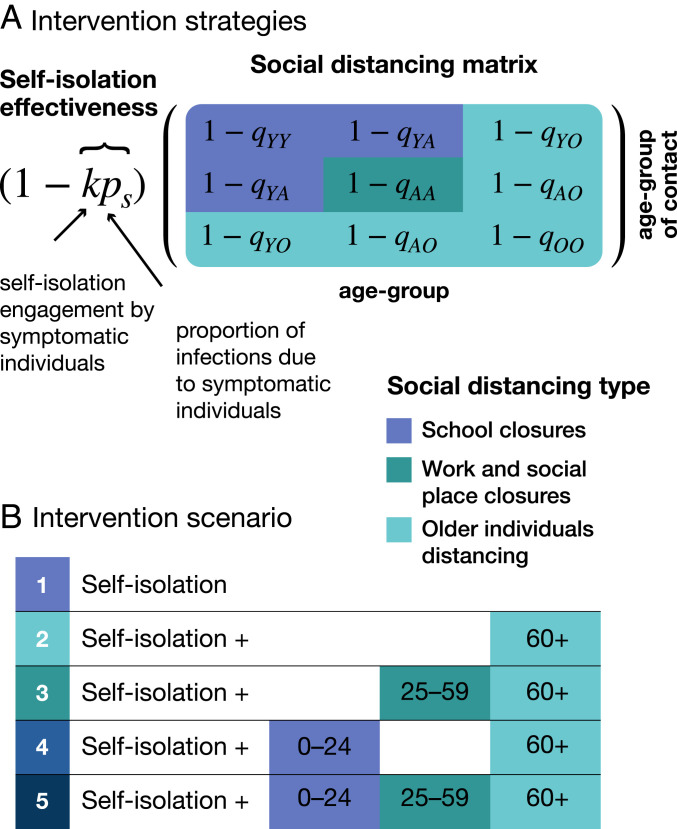
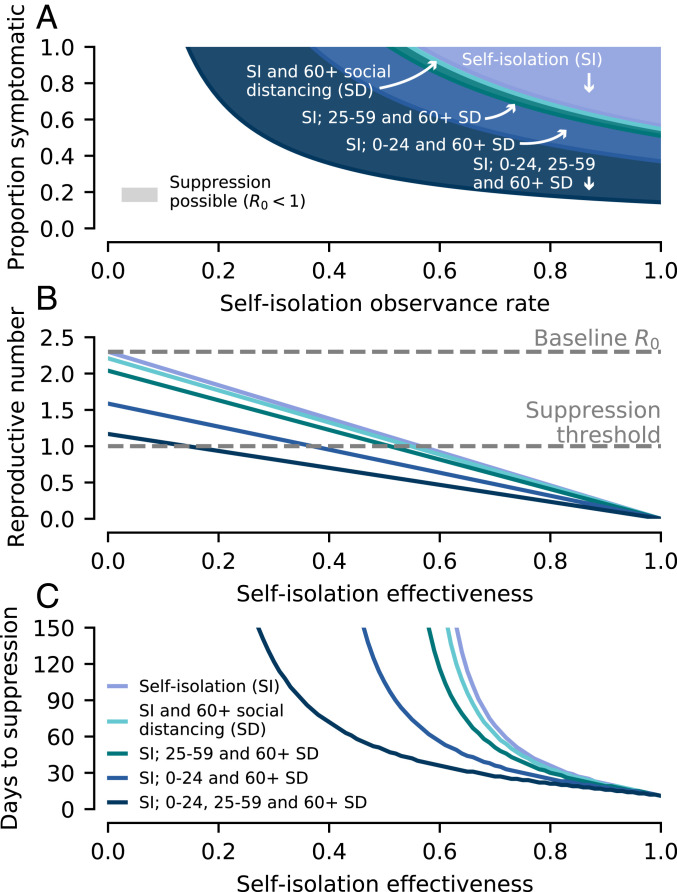
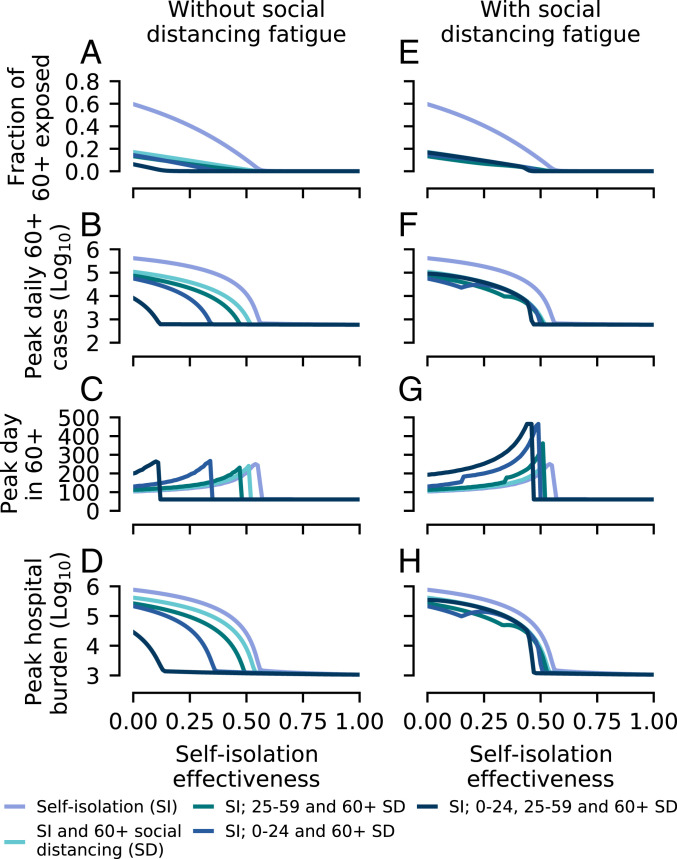
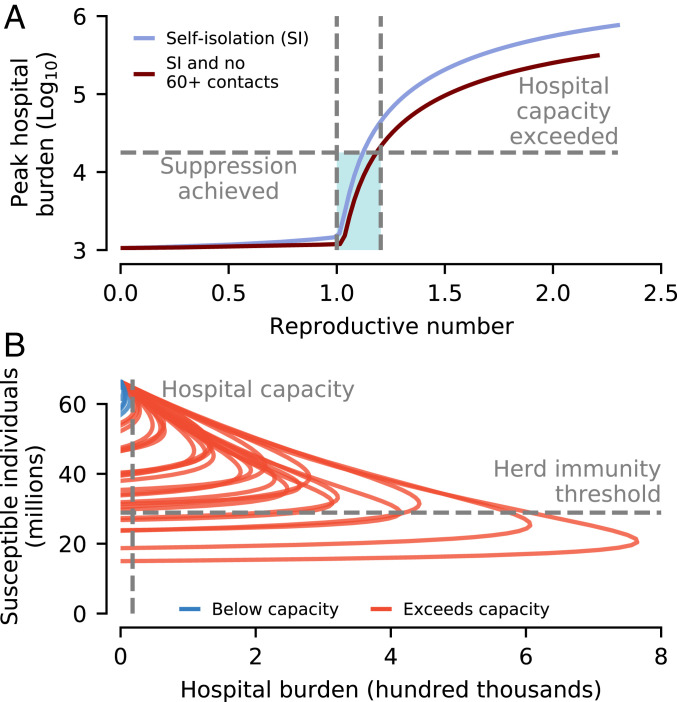
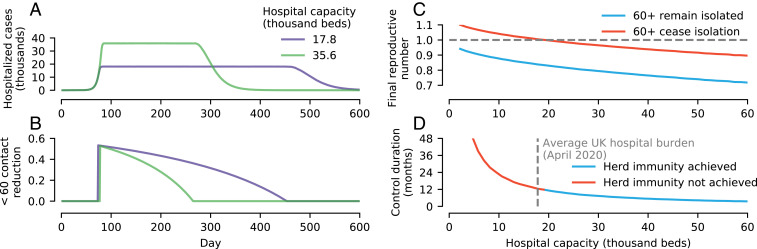
The rapid growth rate of COVID-19 continues to threaten to overwhelm healthcare systems in multiple countries. In response, severely affected countries have had to impose a range of public health strategies achieved via nonpharmaceutical interventions. Broadly, these strategies have fallen into two categories: 1) "mitigation," which aims to achieve herd immunity by allowing the severe acute respiratory syndrome coronavirus 2 (SARS-CoV-2) virus to spread through the population while mitigating disease burden, and 2) "suppression," aiming to drastically reduce SARS-CoV-2 transmission rates and halt endogenous transmission in the target population. Using an age-structured transmission model, parameterized to simulate SARS-CoV-2 transmission in the United Kingdom, we assessed the long-term prospects of success using both of these approaches. We simulated a range of different nonpharmaceutical intervention scenarios incorporating social distancing applied to differing age groups. Our modeling confirmed that suppression of SARS-CoV-2 transmission is possible with plausible levels of social distancing over a period of months, consistent with observed trends. Notably, our modeling did not support achieving herd immunity as a practical objective, requiring an unlikely balancing of multiple poorly defined forces. Specifically, we found that 1) social distancing must initially reduce the transmission rate to within a narrow range, 2) to compensate for susceptible depletion, the extent of social distancing must be adaptive over time in a precise yet unfeasible way, and 3) social distancing must be maintained for an extended period to ensure the healthcare system is not overwhelmed.
COVID-19 的快速增长率继续威胁到多个国家的医疗体系。作为回应,受严重影响的国家不得不实施一系列通过非药物干预实现的公共卫生策略。这些策略大致可以分为两类:1)“缓解”,旨在通过允许严重急性呼吸系统综合症冠状病毒 2(SARS-CoV-2)病毒在人群中传播,同时减轻疾病负担,从而实现群体免疫;2)“抑制”,旨在大幅降低 SARS-CoV-2 的传播率,并在目标人群中阻止内源性传播。我们使用了一个年龄结构传播模型,该模型经过参数化以模拟 SARS-CoV-2 在英国的传播,使用这两种方法评估了长期成功的前景。我们模拟了一系列不同的非药物干预情景,包括针对不同年龄组的社交距离措施。我们的模型证实,通过数月的合理社交距离水平,抑制 SARS-CoV-2 的传播是可能的,这与观察到的趋势一致。值得注意的是,我们的模型不支持将群体免疫作为一个实际目标,这需要多种难以定义的力量之间的平衡,这是不太可能的。具体来说,我们发现:1)社交距离必须最初将传播率降低到一个狭窄的范围内;2)为了弥补易感人群的减少,社交距离的程度必须随着时间的推移以精确但不可行的方式自适应;3)社交距离必须持续延长一段时间,以确保医疗系统不会不堪重负。