Zhao Xinming, Qi Xiaochen, Liu Dequan, Che Xiangyu, Wu Guangzhen
Department of Urology, The First Affiliated Hospital of Dalian Medical University, Dalian, 116011, People's Republic of China.
Int J Nanomedicine. 2024 Dec 17;19:13461-13483. doi: 10.2147/IJN.S498729. eCollection 2024.
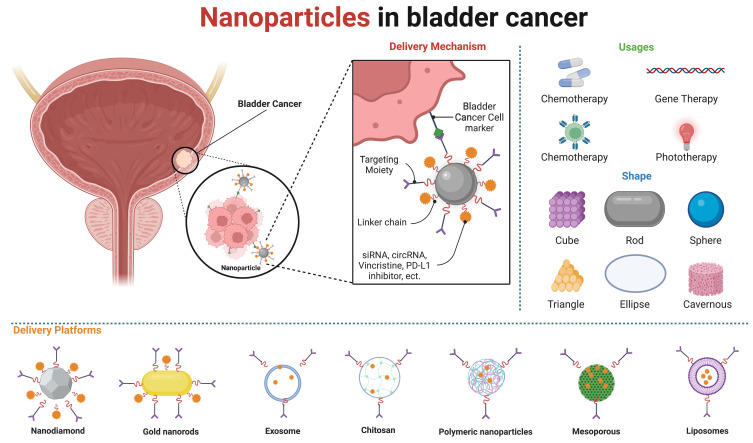
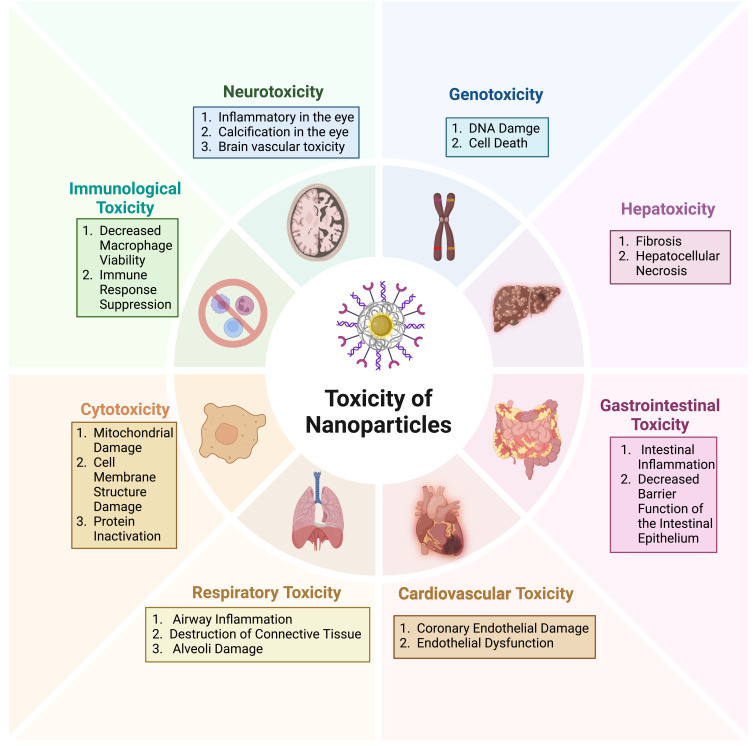
Bladder cancer represents one of the most prevalent malignant neoplasms of the urinary tract. In the Asian context, it represents the eighth most common cancer in males. In 2022, there were approximately 613,791 individuals diagnosed with bladder cancer worldwide. Despite the availability of efficacious treatments for the two principal forms of bladder cancer, namely non-invasive and invasive bladder cancer, the high incidence of recurrence following treatment and the suboptimal outcomes observed in patients with high-grade and advanced disease represent significant concerns in the management of bladder cancer at this juncture. Nanoparticles have gained attention for their excellent properties, including stable physical properties, a porous structure that can be loaded with a variety of substances, and so on. The in-depth research on nanoparticles has led to their emergence as a new class of nanoparticles for combination therapy, due to their advantageous properties. These include the extension of the drug release window, the enhancement of drug bioavailability, the improvement of drug targeting ability, the reduction of local and systemic toxicity, and the simultaneous delivery of multiple drugs for combination therapy. As a result, nanoparticles have become a novel agent of the drug delivery system. The advent of nanoparticles has provided a new impetus for the development of non-surgical treatments for bladder cancer, including chemotherapy, immunotherapy, gene therapy and phototherapy. The unique properties of nanoparticles have facilitated the combination of diverse non-surgical therapeutic modalities, enhancing their overall efficacy. This review examines the recent advancements in the use of nanoparticles in non-surgical bladder cancer treatments, encompassing aspects such as delivery, therapeutic efficacy, and the associated toxicity of nanoparticles, as well as the challenges encountered in clinical applications.
膀胱癌是泌尿系统中最常见的恶性肿瘤之一。在亚洲地区,它是男性中第八大常见癌症。2022年,全球约有613791人被诊断出患有膀胱癌。尽管对于膀胱癌的两种主要形式,即非侵袭性和侵袭性膀胱癌,已有有效的治疗方法,但治疗后复发率高,以及在高级别和晚期疾病患者中观察到的治疗效果欠佳,是目前膀胱癌治疗中令人担忧的重要问题。纳米颗粒因其优异的性能而受到关注,包括稳定的物理性质、可负载多种物质的多孔结构等。对纳米颗粒的深入研究使其成为一类新型的用于联合治疗的纳米颗粒,因其具有诸多优势特性。这些特性包括延长药物释放窗口、提高药物生物利用度、改善药物靶向能力、降低局部和全身毒性以及同时递送多种药物进行联合治疗。因此,纳米颗粒已成为药物递送系统的新型载体。纳米颗粒的出现为膀胱癌非手术治疗的发展提供了新动力,包括化疗、免疫疗法、基因疗法和光疗法。纳米颗粒的独特性质促进了多种非手术治疗方式的联合,提高了它们的整体疗效。本综述探讨了纳米颗粒在膀胱癌非手术治疗中的最新进展,涵盖纳米颗粒的递送、治疗效果、相关毒性以及临床应用中遇到的挑战等方面。