Department of Rheumatology, School of Medicine, The Second Affiliated Hospital of Zhejiang University, No. 88, Jiefang Road, Hangzhou 310009, China.
Biomed Res Int. 2020 Sep 7;2020:9803024. doi: 10.1155/2020/9803024. eCollection 2020.
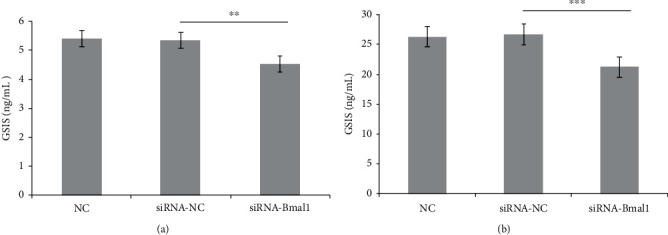
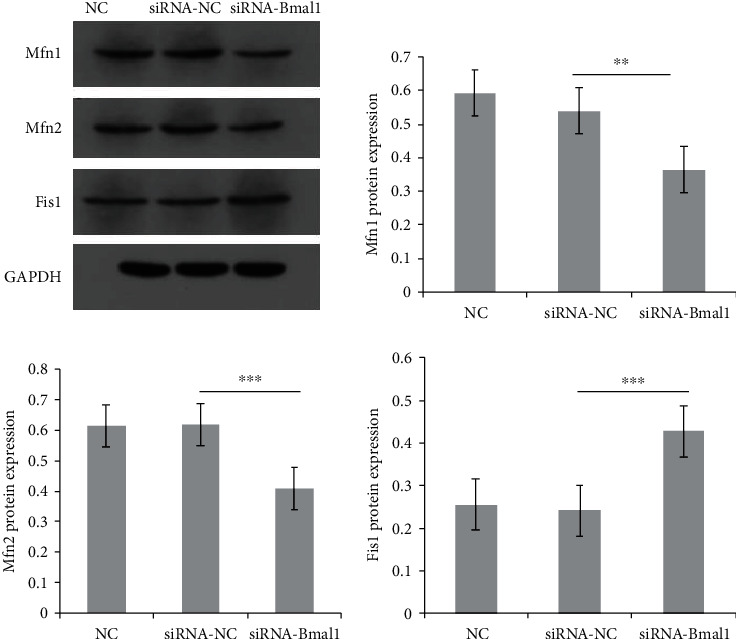
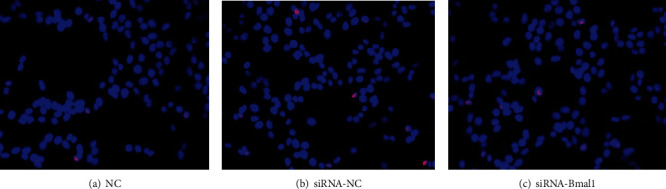
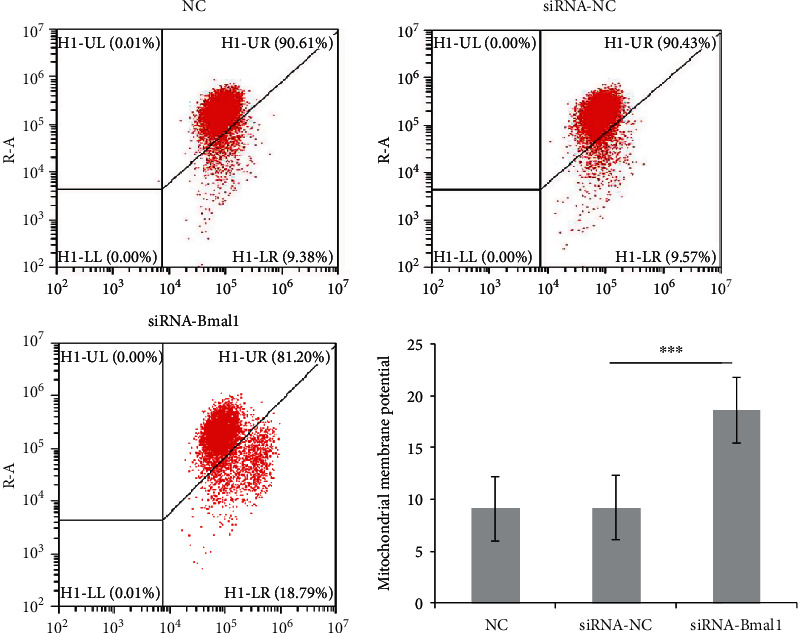
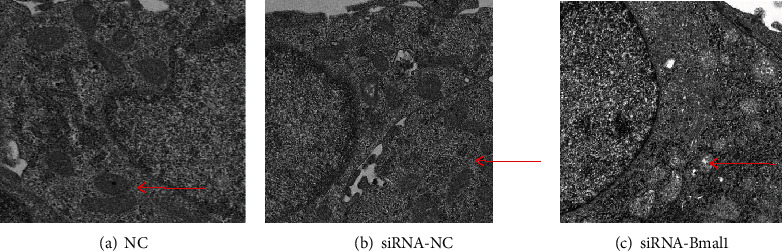
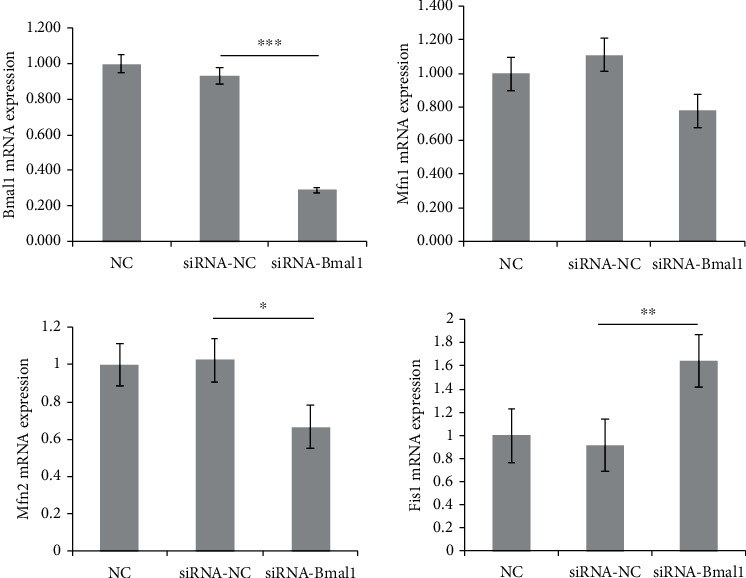
Several studies have demonstrated that brain and muscle Arnt-like protein-1 (Bmal1) acts as a core clock gene for maintaining normal cell function, including hepatocytes and cardiomyocytes. Loss of Bmal1 is associated with type 2 diabetes due to pancreatic -cell failure. However, little information is available about its role and mechanism in pancreatic -cell. To address this, we investigated the consequences of Bmal1 inhibition in an insulinoma cell line (INS-1) by using small interfering RNA (siRNA). We observed that knockout of Bmal1 impaired glucose-stimulated insulin secretion in -cell. Meanwhile, the depletion of Bmal1 in -cell caused an adverse change in mitochondrial membrane potential and mitochondrial architecture. Deletion of Bmal1 attenuated mRNA and protein expression of mitofusin 1 (Mfn1) and mitofusin 2 (Mfn2) and enhanced the expression of fission 1 (Fis1). In summary, the deletion of Bmal1 impaired -cell function may be via the mitochondrial signaling pathway in INS-1 cells.
几项研究表明,脑和肌肉芳香烃受体核转录因子样蛋白 1(Bmal1)作为核心时钟基因,维持包括肝细胞和心肌细胞在内的正常细胞功能。由于胰岛细胞衰竭,Bmal1 的缺失与 2 型糖尿病有关。然而,关于其在胰岛细胞中的作用和机制的信息很少。为了解决这个问题,我们通过使用小干扰 RNA(siRNA)在胰岛素瘤细胞系(INS-1)中研究了 Bmal1 抑制的后果。我们观察到 Bmal1 的敲除会损害细胞的葡萄糖刺激胰岛素分泌。同时,细胞中 Bmal1 的耗竭导致线粒体膜电位和线粒体结构发生不良变化。Bmal1 的缺失减弱了融合蛋白 1(Mfn1)和融合蛋白 2(Mfn2)的 mRNA 和蛋白表达,并增强了分裂蛋白 1(Fis1)的表达。总之,Bmal1 的缺失会损害 INS-1 细胞中的细胞功能,可能是通过线粒体信号通路。