Department of Chemistry, Ben-Gurion University of the Negev, Beer-Sheva, 8410501, Israel.
Department of Life Sciences, Ben-Gurion University of the Negev, Beer-Sheva, 8410501, Israel.
Nat Commun. 2020 Sep 24;11(1):4827. doi: 10.1038/s41467-020-18577-4.
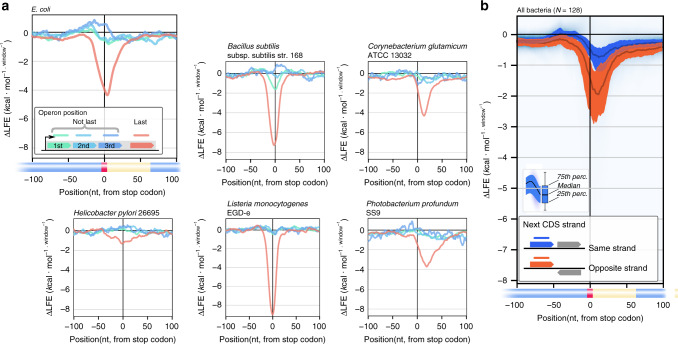
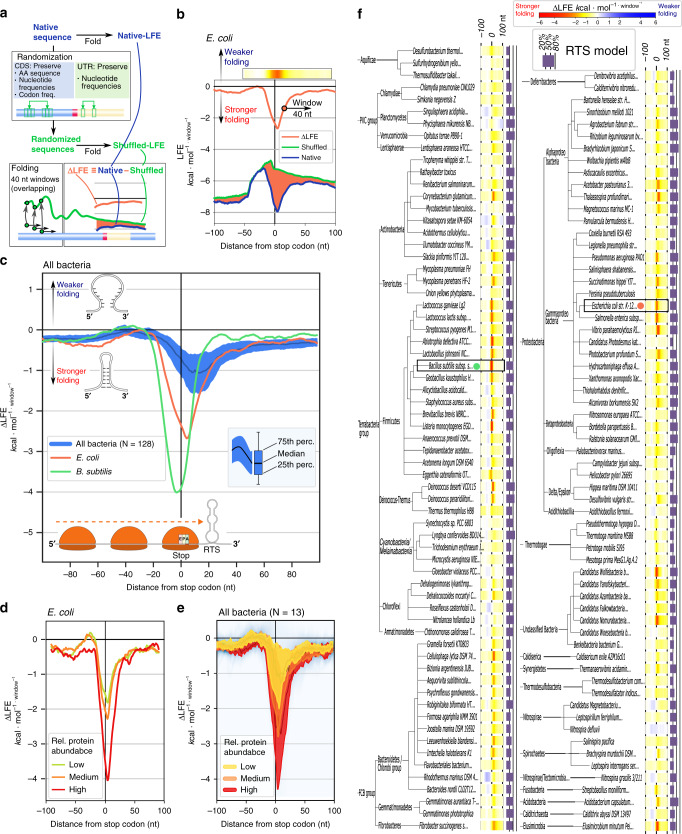
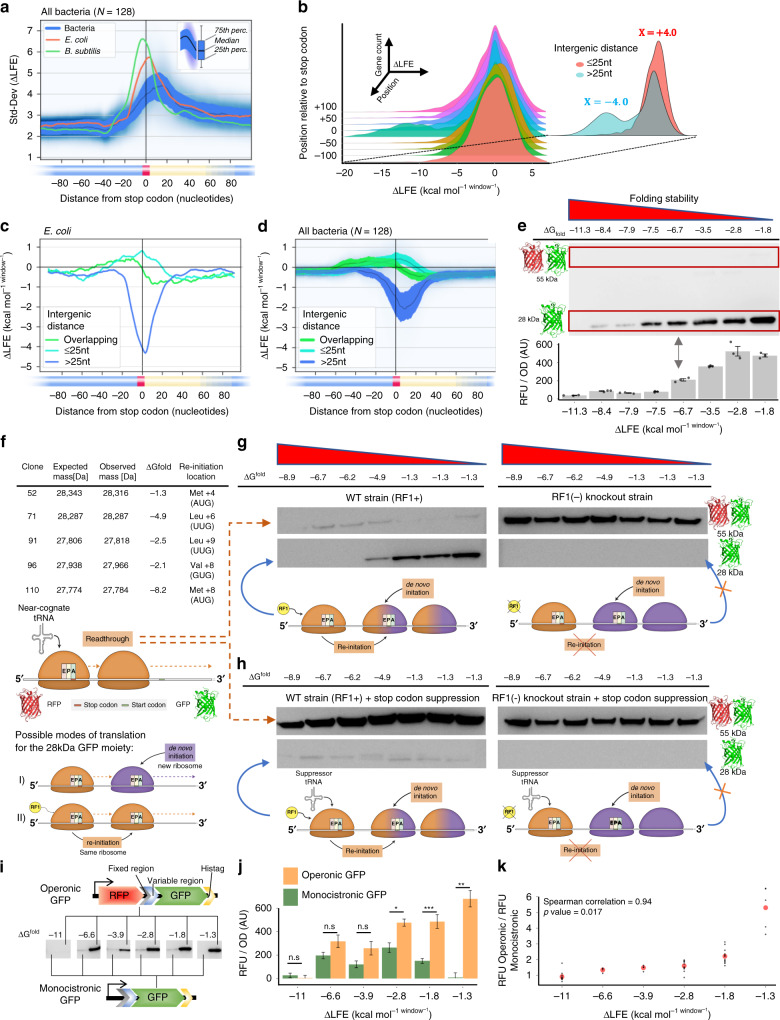
In bacteria, translation re-initiation is crucial for synthesizing proteins encoded by genes that are organized into operons. The mechanisms regulating translation re-initiation remain, however, poorly understood. We now describe the ribosome termination structure (RTS), a conserved and stable mRNA secondary structure localized immediately downstream of stop codons, and provide experimental evidence for its role in governing re-initiation efficiency in a synthetic Escherichia coli operon. We further report that RTSs are abundant, being associated with 18%-65% of genes in 128 analyzed bacterial genomes representing all phyla, and are selectively depleted when translation re-initiation is advantageous yet selectively enriched so as to insulate translation when re-initiation is deleterious. Our results support a potentially universal role for the RTS in controlling translation termination-insulation and re-initiation across bacteria.
在细菌中,翻译重新起始对于合成由操纵子编码的蛋白质至关重要。然而,调节翻译重新起始的机制仍知之甚少。我们现在描述了核糖体终止结构(RTS),这是一种保守且稳定的 mRNA 二级结构,位于终止密码子的下游,为其在调节合成大肠杆菌操纵子中重新起始效率的作用提供了实验证据。我们还报告说,RTS 非常丰富,与分析的 128 个细菌基因组中的 18%-65%的基因相关,这些基因组代表了所有的生物门类,并且当翻译重新起始有利时,它们会被选择性地消耗,而当重新起始有害时,它们会被选择性地富集,以隔离翻译。我们的结果支持 RTS 在控制细菌中翻译终止-隔离和重新起始方面具有潜在的普遍性作用。