School of BioSciences, The University of Melbourne, Parkville, VIC, 3052, Australia.
Department of Molecular and Human Genetics, Baylor College of Medicine, Houston, TX 77030.
Proc Natl Acad Sci U S A. 2020 Oct 13;117(41):25840-25850. doi: 10.1073/pnas.2011828117. Epub 2020 Sep 28.
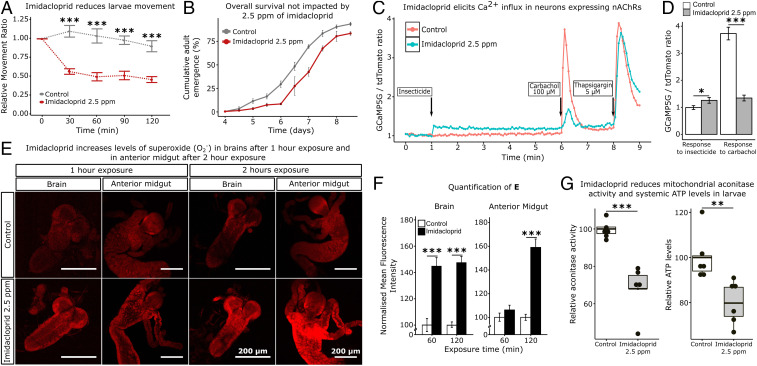
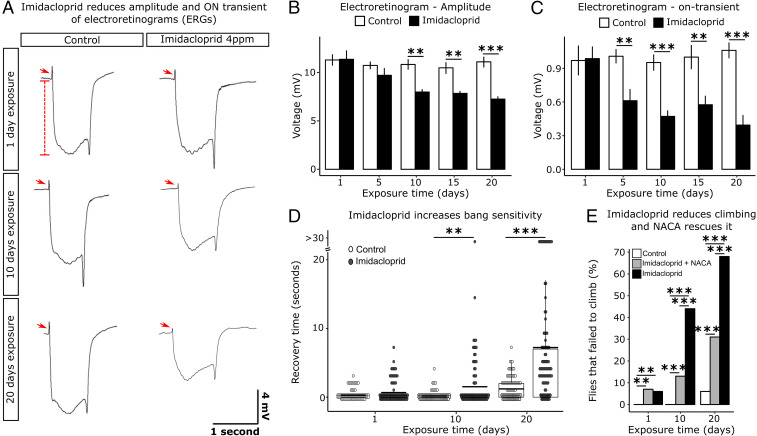
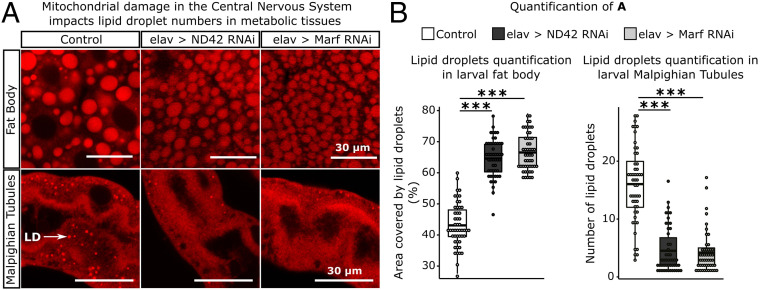
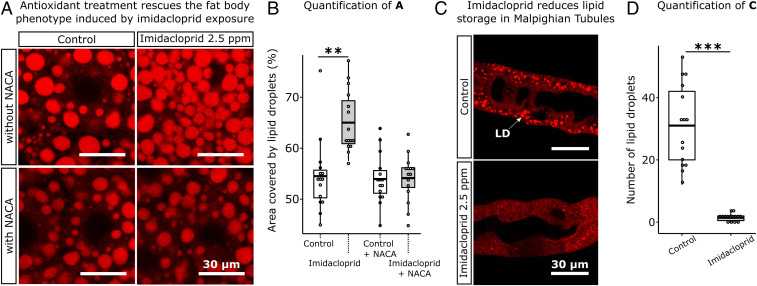
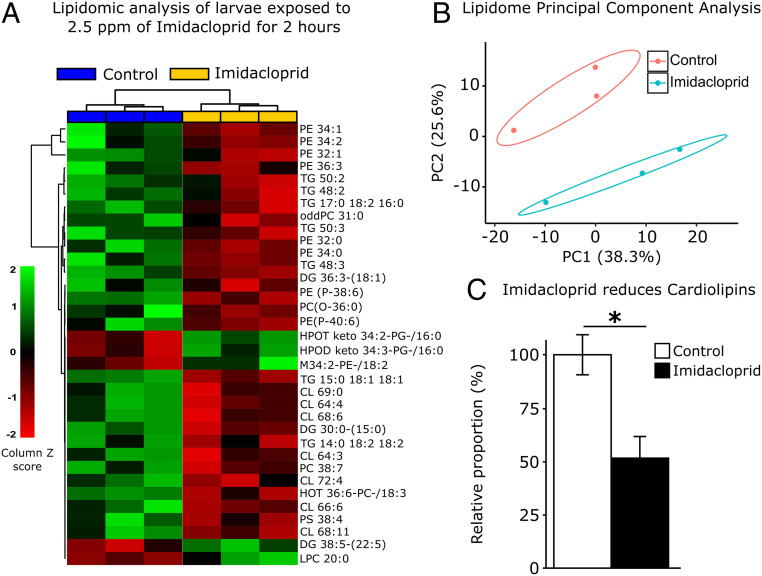
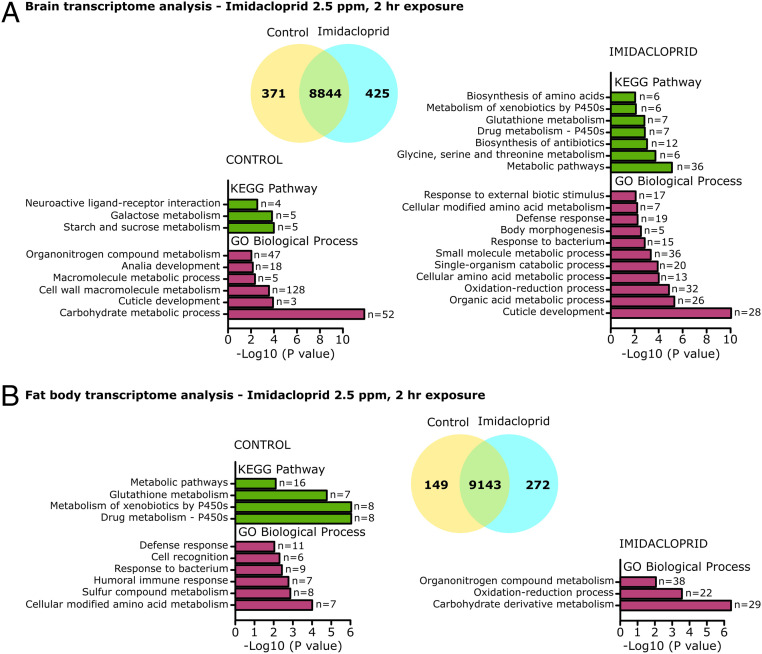
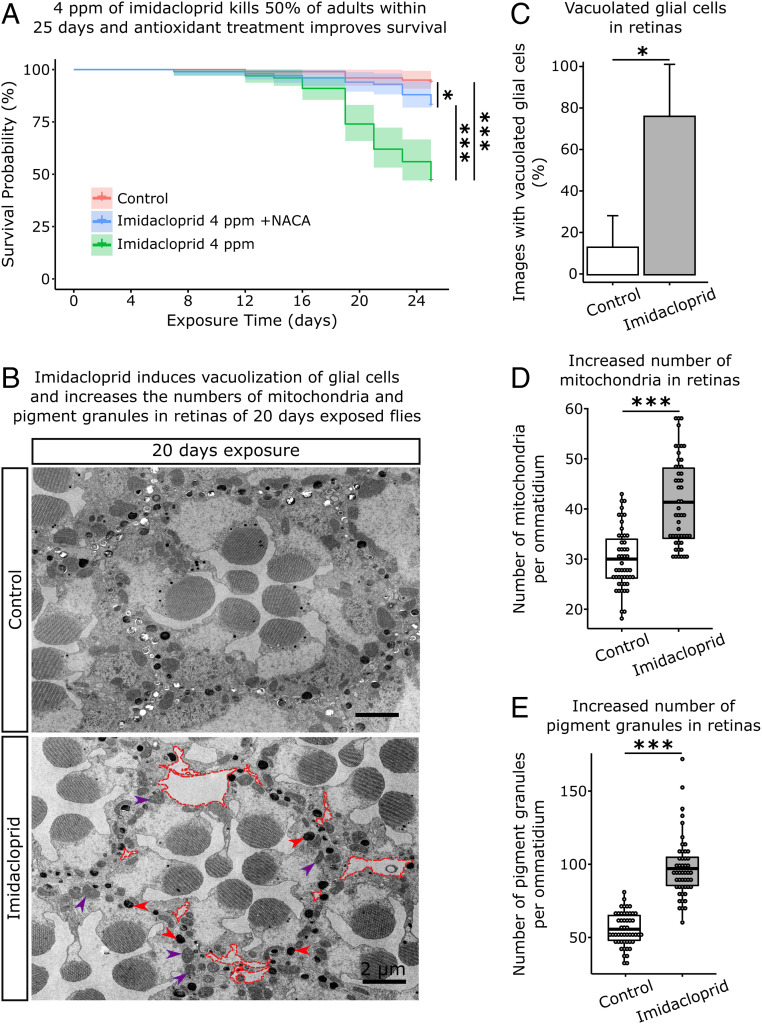
Declining insect population sizes are provoking grave concern around the world as insects play essential roles in food production and ecosystems. Environmental contamination by intense insecticide usage is consistently proposed as a significant contributor, among other threats. Many studies have demonstrated impacts of low doses of insecticides on insect behavior, but have not elucidated links to insecticidal activity at the molecular and cellular levels. Here, the histological, physiological, and behavioral impacts of imidacloprid are investigated in , an experimental organism exposed to insecticides in the field. We show that oxidative stress is a key factor in the mode of action of this insecticide at low doses. Imidacloprid produces an enduring flux of Ca into neurons and a rapid increase in levels of reactive oxygen species (ROS) in the larval brain. It affects mitochondrial function, energy levels, the lipid environment, and transcriptomic profiles. Use of RNAi to induce ROS production in the brain recapitulates insecticide-induced phenotypes in the metabolic tissues, indicating that a signal from neurons is responsible. Chronic low level exposures in adults lead to mitochondrial dysfunction, severe damage to glial cells, and impaired vision. The potent antioxidant, -acetylcysteine amide (NACA), reduces the severity of a number of the imidacloprid-induced phenotypes, indicating a causal role for oxidative stress. Given that other insecticides are known to generate oxidative stress, this research has wider implications. The systemic impairment of several key biological functions, including vision, reported here would reduce the resilience of insects facing other environmental challenges.
昆虫数量的减少正在全球范围内引起严重关注,因为昆虫在粮食生产和生态系统中起着至关重要的作用。强烈使用杀虫剂导致的环境污染被认为是一个重要的因素,除此之外还有其他威胁。许多研究已经表明,低剂量的杀虫剂会影响昆虫的行为,但尚未阐明其与分子和细胞水平杀虫活性的联系。在这里,研究了在田间接触杀虫剂的实验生物中,吡虫啉对组织学、生理学和行为的影响。我们表明,氧化应激是这种杀虫剂在低剂量下作用模式的关键因素。吡虫啉会持续将钙离子涌入神经元,并使幼虫大脑中的活性氧(ROS)水平迅速增加。它会影响线粒体功能、能量水平、脂质环境和转录组谱。在大脑中使用 RNAi 诱导 ROS 的产生,可重现代谢组织中杀虫剂诱导的表型,表明神经元发出的信号是其原因。在成虫中慢性低水平暴露会导致线粒体功能障碍、神经胶质细胞严重损伤和视力受损。强力抗氧化剂 N-乙酰半胱氨酸酰胺(NACA)可降低多种吡虫啉诱导表型的严重程度,表明氧化应激起因果作用。鉴于其他杀虫剂已知会产生氧化应激,因此这项研究具有更广泛的意义。这里报道的包括视力在内的几种关键生物功能的系统性损伤,会降低昆虫应对其他环境挑战的恢复能力。