• 文献检索
  • 文档翻译
  • 深度研究
  • 学术资讯
  • Suppr Zotero 插件Zotero 插件
  • 邀请有礼
  • 套餐&价格
  • 历史记录
应用&插件
Suppr Zotero 插件Zotero 插件浏览器插件Mac 客户端Windows 客户端微信小程序
定价
高级版会员购买积分包购买API积分包
服务
文献检索文档翻译深度研究API 文档MCP 服务
关于我们
关于 Suppr公司介绍联系我们用户协议隐私条款
关注我们

Suppr 超能文献

核心技术专利:CN118964589B侵权必究
粤ICP备2023148730 号-1Suppr @ 2026

文献检索

告别复杂PubMed语法,用中文像聊天一样搜索,搜遍4000万医学文献。AI智能推荐,让科研检索更轻松。

立即免费搜索

文件翻译

保留排版,准确专业,支持PDF/Word/PPT等文件格式,支持 12+语言互译。

免费翻译文档

深度研究

AI帮你快速写综述,25分钟生成高质量综述,智能提取关键信息,辅助科研写作。

立即免费体验

颞下颌关节紊乱病小鼠模型的伤害感受性行为评估。

Nociceptive behavioural assessments in mouse models of temporomandibular joint disorders.

机构信息

Department of Orthopedic Surgery, Rush University Medical Center, Chicago, IL, 60612, USA.

Research Center for Human Tissues and Organs Degeneration, Shenzhen Institutes of Advanced Technology, Chinese Academy of Sciences, Shenzhen, 518055, China.

出版信息

Int J Oral Sci. 2020 Sep 29;12(1):26. doi: 10.1038/s41368-020-00095-0.

DOI:10.1038/s41368-020-00095-0
PMID:32989215
原文链接:https://pmc.ncbi.nlm.nih.gov/articles/PMC7522224/
Abstract

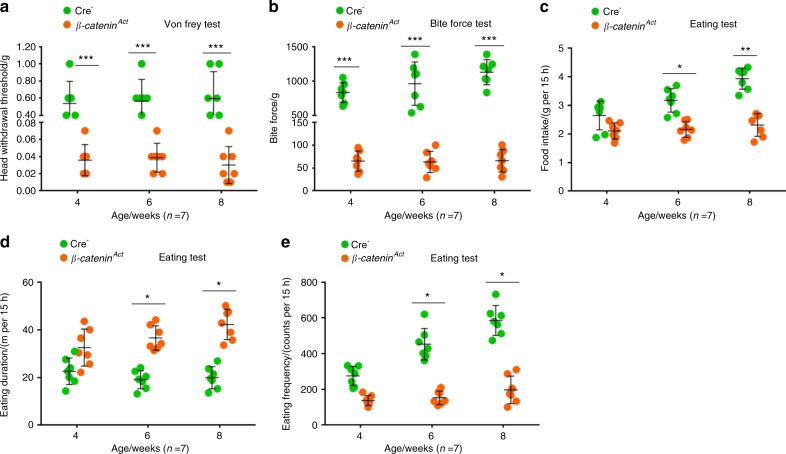
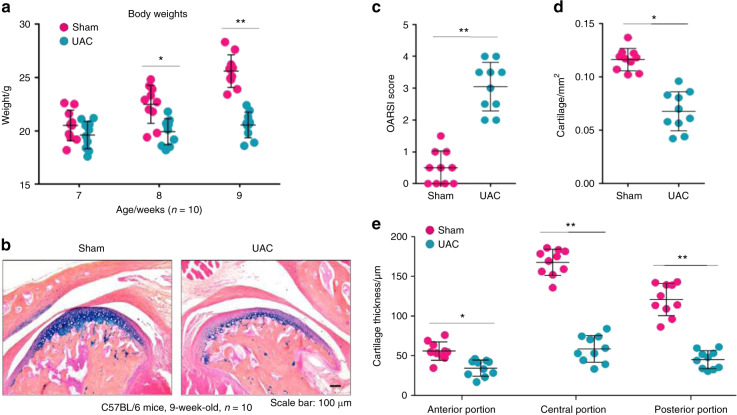
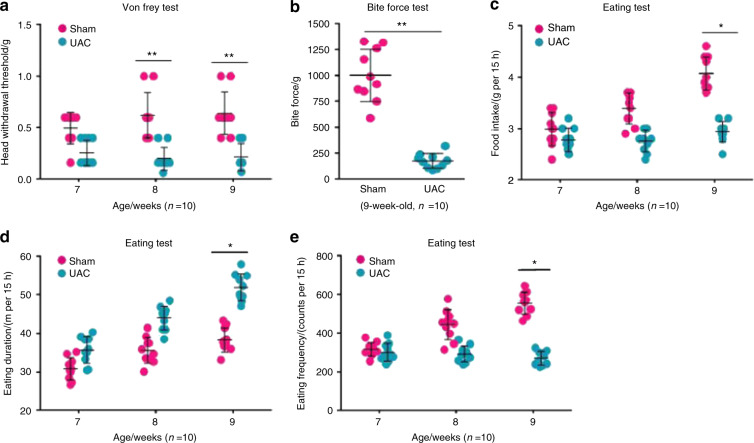
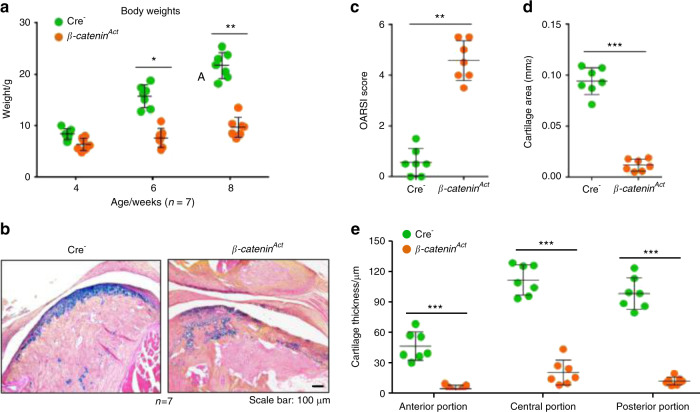
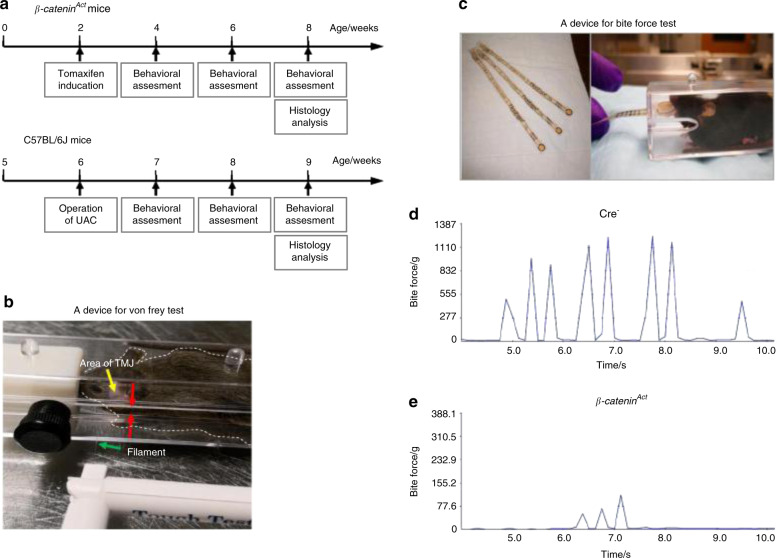
Orofacial pain or tenderness is a primary symptom associated with temporomandibular joint (TMJ) disorders (TMDs). To understand the pathological mechanisms underlying TMDs, several mouse models have been developed, including mechanical stimulus-induced TMD and genetic mouse models. However, a lack of feasible approaches for assessing TMD-related nociceptive behaviours in the orofacial region of mice has hindered the in-depth study of TMD-associated mechanisms. This study aimed to explore modifications of three existing methods to analyse nociceptive behaviours using two TMD mouse models: (1) mechanical allodynia was tested using von Frey filaments in the mouse TMJ region by placing mice in specially designed chambers; (2) bite force was measured using the Economical Load and Force (ELF) system; and (3) spontaneous feeding behaviour tests, including eating duration and frequency, were analysed using the Laboratory Animal Behaviour Observation Registration and Analysis System (LABORAS). We successfully assessed changes in nociceptive behaviours in two TMD mouse models, a unilateral anterior crossbite (UAC)-induced TMD mouse model and a β-catenin conditional activation mouse model. We found that the UAC model and β-catenin conditional activation mouse model were significantly associated with signs of increased mechanical allodynia, lower bite force, and decreased spontaneous feeding behaviour, indicating manifestations of TMD. These behavioural changes were consistent with the cartilage degradation phenotype observed in these mouse models. Our studies have shown reliable methods to analyse nociceptive behaviours in mice and may indicate that these methods are valid to assess signs of TMD in mice.

摘要

口颌面部疼痛或压痛是颞下颌关节(TMJ)紊乱(TMD)的主要症状。为了了解 TMD 的病理机制,已经开发了几种小鼠模型,包括机械刺激诱导的 TMD 和遗传小鼠模型。然而,缺乏可行的方法来评估小鼠口颌区域与 TMD 相关的伤害感受行为,这阻碍了对 TMD 相关机制的深入研究。本研究旨在探讨三种现有方法的改进,以分析两种 TMD 小鼠模型的伤害感受行为:(1)通过将小鼠放置在特制的腔室内,使用 von Frey 纤维在小鼠 TMJ 区域测试机械性超敏反应;(2)使用经济负荷和力(ELF)系统测量咬合力;(3)使用实验室动物行为观察登记和分析系统(LABORAS)分析自发进食行为测试,包括进食持续时间和频率。我们成功评估了两种 TMD 小鼠模型,即单侧前交叉咬合(UAC)诱导的 TMD 小鼠模型和β-连环蛋白条件激活小鼠模型中的伤害感受行为变化。我们发现,UAC 模型和β-连环蛋白条件激活小鼠模型与机械性超敏反应增加、咬合力降低和自发进食行为减少的迹象显著相关,表明 TMD 的表现。这些行为变化与这些小鼠模型中观察到的软骨降解表型一致。我们的研究表明了分析小鼠伤害感受行为的可靠方法,并且可能表明这些方法可用于评估小鼠 TMD 的迹象。
https://cdn.ncbi.nlm.nih.gov/pmc/blobs/5ef4/7522224/76979adfccd2/41368_2020_95_Fig5_HTML.jpg
https://cdn.ncbi.nlm.nih.gov/pmc/blobs/5ef4/7522224/3b447c7d9f56/41368_2020_95_Fig1_HTML.jpg
https://cdn.ncbi.nlm.nih.gov/pmc/blobs/5ef4/7522224/46aae20426c9/41368_2020_95_Fig2_HTML.jpg
https://cdn.ncbi.nlm.nih.gov/pmc/blobs/5ef4/7522224/7201b5e50668/41368_2020_95_Fig3_HTML.jpg
https://cdn.ncbi.nlm.nih.gov/pmc/blobs/5ef4/7522224/b218e75fa70e/41368_2020_95_Fig4_HTML.jpg
https://cdn.ncbi.nlm.nih.gov/pmc/blobs/5ef4/7522224/76979adfccd2/41368_2020_95_Fig5_HTML.jpg
https://cdn.ncbi.nlm.nih.gov/pmc/blobs/5ef4/7522224/3b447c7d9f56/41368_2020_95_Fig1_HTML.jpg
https://cdn.ncbi.nlm.nih.gov/pmc/blobs/5ef4/7522224/46aae20426c9/41368_2020_95_Fig2_HTML.jpg
https://cdn.ncbi.nlm.nih.gov/pmc/blobs/5ef4/7522224/7201b5e50668/41368_2020_95_Fig3_HTML.jpg
https://cdn.ncbi.nlm.nih.gov/pmc/blobs/5ef4/7522224/b218e75fa70e/41368_2020_95_Fig4_HTML.jpg
https://cdn.ncbi.nlm.nih.gov/pmc/blobs/5ef4/7522224/76979adfccd2/41368_2020_95_Fig5_HTML.jpg

相似文献

1
Nociceptive behavioural assessments in mouse models of temporomandibular joint disorders.颞下颌关节紊乱病小鼠模型的伤害感受性行为评估。
Int J Oral Sci. 2020 Sep 29;12(1):26. doi: 10.1038/s41368-020-00095-0.
2
Analysis of pain in the rabbit temporomandibular joint after unilateral splint placement.分析兔单侧夹板放置后颞下颌关节疼痛。
J Oral Facial Pain Headache. 2015 Spring;29(2):193-202. doi: 10.11607/ofph.1371.
3
Prevalence of temporomandibular disorder pain, jaw noises and oral behaviours in an adult Italian population sample.意大利成年人样本中颞下颌关节紊乱疼痛、颌关节弹响和口腔行为的流行情况。
J Oral Rehabil. 2019 Aug;46(8):691-698. doi: 10.1111/joor.12803. Epub 2019 May 7.
4
Executive summary of the Diagnostic Criteria for Temporomandibular Disorders for clinical and research applications.临床及研究应用的颞下颌关节紊乱病诊断标准执行摘要。
J Am Dent Assoc. 2016 Jun;147(6):438-45. doi: 10.1016/j.adaj.2016.01.007. Epub 2016 Feb 26.
5
Early growth response 1 reduction in peripheral blood involving condylar subchondral bone loss.早期生长反应 1 减少,涉及髁突软骨下骨丢失的外周血。
Oral Dis. 2019 Oct;25(7):1759-1768. doi: 10.1111/odi.13168. Epub 2019 Aug 19.
6
Installing and thereafter removing an aberrant prosthesis elicited opposite remodelling responses in growing mouse temporomandibular joints.在生长中的小鼠颞下颌关节中,植入并随后移除异常假体引发了相反的重塑反应。
J Oral Rehabil. 2015 Sep;42(9):685-92. doi: 10.1111/joor.12304. Epub 2015 May 1.
7
Temporomandibular Joint Pain Measurement by Bite Force and Von Frey Filament Assays in Mice.通过咬合力和 Von Frey 纤维丝试验测量小鼠颞下颌关节疼痛。
J Vis Exp. 2024 Sep 13(211). doi: 10.3791/67203.
8
A potent and selective calcitonin gene-related peptide (CGRP) receptor antagonist, MK-8825, inhibits responses to nociceptive trigeminal activation: Role of CGRP in orofacial pain.一种强效且选择性的降钙素基因相关肽(CGRP)受体拮抗剂MK-8825可抑制对伤害性三叉神经激活的反应:CGRP在口腔面部疼痛中的作用
Exp Neurol. 2015 Sep;271:95-103. doi: 10.1016/j.expneurol.2015.05.005. Epub 2015 May 14.
9
Inflammatory 'double hit' model of temporomandibular joint disorder with elevated CCL2, CXCL9, CXCL10, RANTES and behavioural hypersensitivity in TNFR1/R2-/- mice.TNFR1/R2基因敲除小鼠中伴有CCL2、CXCL9、CXCL10、RANTES升高及行为超敏反应的颞下颌关节紊乱症炎性“双打击”模型
Eur J Pain. 2017 Aug;21(7):1209-1223. doi: 10.1002/ejp.1021. Epub 2017 Mar 20.
10
Mouse genetic models for temporomandibular joint development and disorders.用于颞下颌关节发育和疾病的小鼠遗传模型。
Oral Dis. 2016 Jan;22(1):33-8. doi: 10.1111/odi.12353. Epub 2015 Jul 2.

引用本文的文献

1
BURN-SYNOVECTOMY MOUSE MODEL FOR TEMPOROMANDIBULAR JOINT OSTEOARTHRITIS.颞下颌关节骨关节炎的烧伤滑膜切除术小鼠模型
Eur Cell Mater. 2024 Jan-Jun;47:51-58. doi: 10.22203/ecm.v047a04. Epub 2024 Mar 5.
2
Enhanced exosome secretion regulated by microglial P2X7R in the medullary dorsal horn contributes to pulpitis-induced pain.髓质背角中由小胶质细胞P2X7R调节的外泌体分泌增强促成了牙髓炎诱导的疼痛。
Cell Biosci. 2025 Feb 22;15(1):28. doi: 10.1186/s13578-025-01363-4.
3
The involvement of orexin-1 receptors in modulation of feeding and anxiety-like behavior in rats with complete Freund's adjuvant-induced temporomandibular joint disorder.

本文引用的文献

1
The effects of tamoxifen on mouse behavior.他莫昔芬对小鼠行为的影响。
Genes Brain Behav. 2020 Apr;19(4):e12620. doi: 10.1111/gbb.12620. Epub 2019 Nov 6.
2
Deletion of Runx2 in condylar chondrocytes disrupts TMJ tissue homeostasis.髁突软骨细胞中 Runx2 的缺失破坏了 TMJ 组织的动态平衡。
J Cell Physiol. 2019 Apr;234(4):3436-3444. doi: 10.1002/jcp.26761. Epub 2018 Nov 1.
3
Loss of in chondrocytes inhibits osteoarthritis by promoting autophagic activity in temporomandibular joint.软骨细胞中的缺失通过促进颞下颌关节中的自噬活性来抑制骨关节炎。
食欲素-1受体在完全弗氏佐剂诱导的颞下颌关节紊乱大鼠摄食和焦虑样行为调节中的作用。
Odontology. 2025 Apr;113(2):764-775. doi: 10.1007/s10266-024-01021-0. Epub 2025 Jan 23.
4
Multi-class segmentation of temporomandibular joint using ensemble deep learning.基于集成深度学习的颞下颌关节多类分割。
Sci Rep. 2024 Aug 16;14(1):18990. doi: 10.1038/s41598-024-69814-5.
5
Assessment of orofacial nociceptive behaviors of mice with the sheltering tube method: Oxaliplatin-induced mechanical and cold allodynia in orofacial regions.采用遮蔽管法评估小鼠的口面部伤害感受行为:口腔区域奥沙利铂诱导的机械性和冷感觉过敏。
Mol Pain. 2024 Jan-Dec;20:17448069241261687. doi: 10.1177/17448069241261687.
6
An analysis of the relationship between dietary pattern changes and temporomandibular joint inflammation in diabetic rats.糖尿病大鼠饮食模式变化与颞下颌关节炎症之间关系的分析
J Dent Res Dent Clin Dent Prospects. 2023 Fall;17(4):216-221. doi: 10.34172/joddd.2023.40713. Epub 2023 Dec 30.
7
Loss of Slc39a12 in hippocampal neurons is responsible for anxiety-like behavior caused by temporomandibular joint osteoarthritis.海马神经元中Slc39a12的缺失是颞下颌关节骨关节炎所致焦虑样行为的原因。
Heliyon. 2024 Feb 10;10(4):e26271. doi: 10.1016/j.heliyon.2024.e26271. eCollection 2024 Feb 29.
8
Assessing Orofacial Pain Behaviors in Animal Models: A Review.评估动物模型中的口面部疼痛行为:综述
Brain Sci. 2023 Feb 24;13(3):390. doi: 10.3390/brainsci13030390.
9
Chemokine Regulation in Temporomandibular Joint Disease: A Comprehensive Review.《颞下颌关节疾病中的趋化因子调控:全面综述》。
Genes (Basel). 2023 Feb 4;14(2):408. doi: 10.3390/genes14020408.
10
The neurobiology of pain and facial movements in rodents: Clinical applications and current research.啮齿动物疼痛与面部运动的神经生物学:临床应用与当前研究
Front Vet Sci. 2022 Sep 29;9:1016720. doi: 10.3389/fvets.2022.1016720. eCollection 2022.
J Biol Chem. 2018 Jun 8;293(23):8761-8774. doi: 10.1074/jbc.RA118.002293. Epub 2018 Apr 24.
4
Activation of β-catenin signaling in aggrecan-expressing cells in temporomandibular joint causes osteoarthritis-like defects.β-连环蛋白信号在颞下颌关节中表达聚集蛋白的细胞中的激活导致类似骨关节炎的缺陷。
Int J Oral Sci. 2018 Apr 23;10(2):13. doi: 10.1038/s41368-018-0016-z.
5
Sustained and repeated mouth opening leads to development of painful temporomandibular disorders involving macrophage/microglia activation in mice.持续且反复的张口会导致小鼠出现疼痛的颞下颌关节紊乱,涉及巨噬细胞/小胶质细胞的激活。
Pain. 2018 Jul;159(7):1277-1288. doi: 10.1097/j.pain.0000000000001206.
6
Inhibition of TNF reduces mechanical orofacial hyperalgesia induced by Complete Freund's Adjuvant by a TRPV1-dependent mechanism in mice.抑制 TNF 通过 TRPV1 依赖性机制减少完全弗氏佐剂诱导的小鼠机械性口面部痛觉过敏。
Pharmacol Rep. 2017 Dec;69(6):1380-1385. doi: 10.1016/j.pharep.2017.05.013. Epub 2017 Jun 3.
7
Spontaneous and Bite-Evoked Muscle Pain Are Mediated by a Common Nociceptive Pathway With Differential Contribution by TRPV1.自发性和咬肌疼痛由共同的伤害感受通路介导,TRPV1 有不同的贡献。
J Pain. 2017 Nov;18(11):1333-1345. doi: 10.1016/j.jpain.2017.06.005. Epub 2017 Jun 29.
8
Anti-inflammatory and anti-nociceptive effects of strontium ranelate on the zymosan-induced temporomandibular joint inflammatory hypernociception in rats depend on TNF-α inhibition.雷奈酸锶对酵母聚糖诱导的大鼠颞下颌关节炎症性痛觉过敏的抗炎和抗伤害作用依赖于 TNF-α 抑制。
Pharmacol Rep. 2017 Aug;69(4):764-772. doi: 10.1016/j.pharep.2017.03.007. Epub 2017 Mar 12.
9
Combination Drug Therapy of Pioglitazone and D-cycloserine Attenuates Chronic Orofacial Neuropathic Pain and Anxiety by Improving Mitochondrial Function Following Trigeminal Nerve Injury.吡格列酮与D-环丝氨酸联合药物治疗通过改善三叉神经损伤后的线粒体功能减轻慢性口面部神经性疼痛和焦虑。
Clin J Pain. 2018 Feb;34(2):168-177. doi: 10.1097/AJP.0000000000000515.
10
Inflammatory 'double hit' model of temporomandibular joint disorder with elevated CCL2, CXCL9, CXCL10, RANTES and behavioural hypersensitivity in TNFR1/R2-/- mice.TNFR1/R2基因敲除小鼠中伴有CCL2、CXCL9、CXCL10、RANTES升高及行为超敏反应的颞下颌关节紊乱症炎性“双打击”模型
Eur J Pain. 2017 Aug;21(7):1209-1223. doi: 10.1002/ejp.1021. Epub 2017 Mar 20.