• 文献检索
  • 文档翻译
  • 深度研究
  • 学术资讯
  • Suppr Zotero 插件Zotero 插件
  • 邀请有礼
  • 套餐&价格
  • 历史记录
应用&插件
Suppr Zotero 插件Zotero 插件浏览器插件Mac 客户端Windows 客户端微信小程序
定价
高级版会员购买积分包购买API积分包
服务
文献检索文档翻译深度研究API 文档MCP 服务
关于我们
关于 Suppr公司介绍联系我们用户协议隐私条款
关注我们

Suppr 超能文献

核心技术专利:CN118964589B侵权必究
粤ICP备2023148730 号-1Suppr @ 2026

文献检索

告别复杂PubMed语法,用中文像聊天一样搜索,搜遍4000万医学文献。AI智能推荐,让科研检索更轻松。

立即免费搜索

文件翻译

保留排版,准确专业,支持PDF/Word/PPT等文件格式,支持 12+语言互译。

免费翻译文档

深度研究

AI帮你快速写综述,25分钟生成高质量综述,智能提取关键信息,辅助科研写作。

立即免费体验

基于心率变异性和心音图指数的支持向量机预测心源性猝死风险。

Prediction of Sudden Cardiac Death Risk with a Support Vector Machine Based on Heart Rate Variability and Heartprint Indices.

机构信息

Facultad de Ingeniería, Universidad Anáhuac México, Huixquilucan 52786, Estado de Mexico, Mexico.

Departamento de Estudios en Ingeniería para la Innovación, Universidad Iberoamericana Ciudad de México, Ciudad de México 01219, Mexico.

出版信息

Sensors (Basel). 2020 Sep 25;20(19):5483. doi: 10.3390/s20195483.

DOI:10.3390/s20195483
PMID:32992675
原文链接:https://pmc.ncbi.nlm.nih.gov/articles/PMC7582608/
Abstract

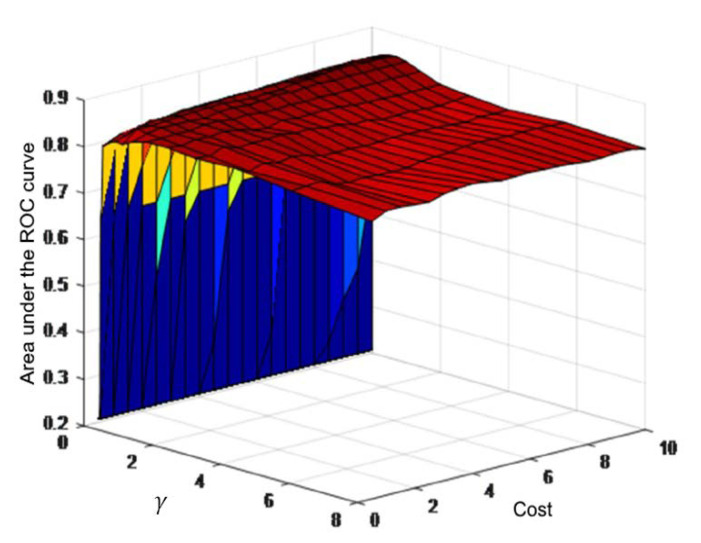
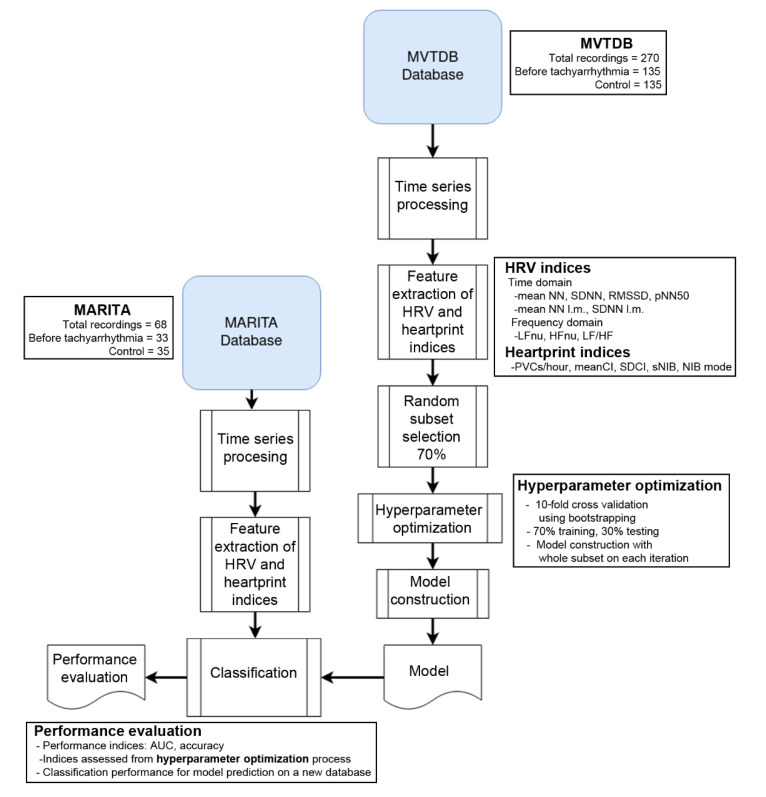
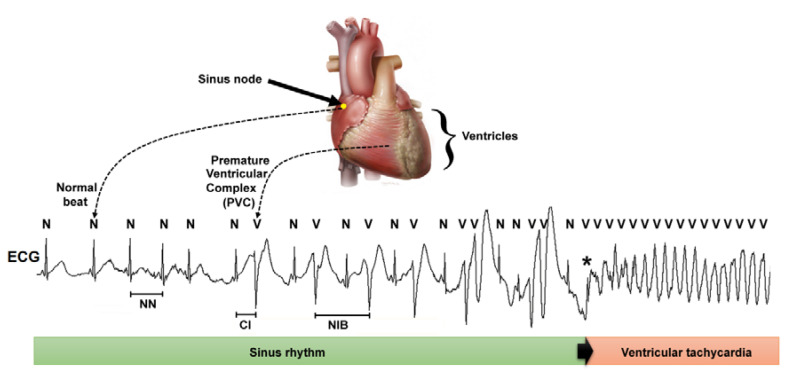
Most methods for sudden cardiac death (SCD) prediction require long-term (24 h) electrocardiogram recordings to measure heart rate variability (HRV) indices or premature ventricular complex indices (with the heartprint method). This work aimed to identify the best combinations of HRV and heartprint indices for predicting SCD based on short-term recordings (1000 heartbeats) through a support vector machine (SVM). Eleven HRV indices and five heartprint indices were measured in 135 pairs of recordings (one before an SCD episode and another without SCD as control). SVMs (defined with a radial basis function kernel with hyperparameter optimization) were trained with this dataset to identify the 13 best combinations of indices systematically. Through 10-fold cross-validation, the best area under the curve (AUC) value as a function of γ (gamma) and cost was identified. The predictive value of the identified combinations had AUCs between 0.80 and 0.86 and accuracies between 80 and 86%. Further SVM performance tests on a different dataset of 68 recordings (33 before SCD and 35 as control) showed AUC = 0.68 and accuracy = 67% for the best combination. The developed SVM may be useful for preventing imminent SCD through early warning based on electrocardiogram (ECG) or heart rate monitoring.

摘要

大多数用于预测心源性猝死(SCD)的方法都需要进行长期(24 小时)心电图记录,以测量心率变异性(HRV)指数或室性早搏指数(使用心印法)。本研究旨在通过支持向量机(SVM),基于短期记录(1000 次心跳),确定用于预测 SCD 的最佳 HRV 和心印指数组合。在 135 对记录(一次在 SCD 发作前,另一次无 SCD 作为对照)中测量了 11 个 HRV 指数和 5 个心印指数。使用该数据集通过 SVM(定义为具有超参数优化的径向基函数核)进行训练,以系统地识别 13 个最佳指数组合。通过 10 倍交叉验证,确定了作为γ(gamma)和成本函数的最佳曲线下面积(AUC)值。确定组合的预测值的 AUC 在 0.80 到 0.86 之间,准确性在 80 到 86%之间。对 68 次记录的另一数据集(33 次在 SCD 之前,35 次作为对照)进行的进一步 SVM 性能测试显示,最佳组合的 AUC 为 0.68,准确性为 67%。开发的 SVM 可能有助于通过基于心电图(ECG)或心率监测的预警来预防即将发生的 SCD。
https://cdn.ncbi.nlm.nih.gov/pmc/blobs/cd9e/7582608/6fd4bfb71389/sensors-20-05483-g003.jpg
https://cdn.ncbi.nlm.nih.gov/pmc/blobs/cd9e/7582608/5c819c636811/sensors-20-05483-g001.jpg
https://cdn.ncbi.nlm.nih.gov/pmc/blobs/cd9e/7582608/003690fcd479/sensors-20-05483-g002.jpg
https://cdn.ncbi.nlm.nih.gov/pmc/blobs/cd9e/7582608/6fd4bfb71389/sensors-20-05483-g003.jpg
https://cdn.ncbi.nlm.nih.gov/pmc/blobs/cd9e/7582608/5c819c636811/sensors-20-05483-g001.jpg
https://cdn.ncbi.nlm.nih.gov/pmc/blobs/cd9e/7582608/003690fcd479/sensors-20-05483-g002.jpg
https://cdn.ncbi.nlm.nih.gov/pmc/blobs/cd9e/7582608/6fd4bfb71389/sensors-20-05483-g003.jpg

相似文献

1
Prediction of Sudden Cardiac Death Risk with a Support Vector Machine Based on Heart Rate Variability and Heartprint Indices.基于心率变异性和心音图指数的支持向量机预测心源性猝死风险。
Sensors (Basel). 2020 Sep 25;20(19):5483. doi: 10.3390/s20195483.
2
Development and validation of warning system of ventricular tachyarrhythmia in patients with heart failure with heart rate variability data.基于心率变异性数据的心力衰竭患者室性心律失常预警系统的开发与验证。
PLoS One. 2018 Nov 14;13(11):e0207215. doi: 10.1371/journal.pone.0207215. eCollection 2018.
3
Cardiac iodine-123 metaiodobenzylguanidine imaging predicts sudden cardiac death independently of left ventricular ejection fraction in patients with chronic heart failure and left ventricular systolic dysfunction: results from a comparative study with signal-averaged electrocardiogram, heart rate variability, and QT dispersion.心脏碘-123间碘苄胍显像可独立于慢性心力衰竭和左心室收缩功能障碍患者的左心室射血分数预测心源性猝死:与信号平均心电图、心率变异性和QT离散度对比研究的结果
J Am Coll Cardiol. 2009 Feb 3;53(5):426-35. doi: 10.1016/j.jacc.2008.10.025.
4
Usefulness of the heart-rate variability complex for predicting cardiac mortality after acute myocardial infarction.心率变异性复合体对预测急性心肌梗死后心脏死亡率的有用性。
BMC Cardiovasc Disord. 2014 May 1;14:59. doi: 10.1186/1471-2261-14-59.
5
Automatic SVM classification of sudden cardiac death and pump failure death from autonomic and repolarization ECG markers.基于自主神经和复极心电图标志物,对心源性猝死和泵衰竭死亡进行自动支持向量机分类。
J Electrocardiol. 2015 Jul-Aug;48(4):551-7. doi: 10.1016/j.jelectrocard.2015.04.002. Epub 2015 Apr 9.
6
An approach to predict Sudden Cardiac Death (SCD) using time domain and bispectrum features from HRV signal.一种利用心率变异性(HRV)信号的时域和双谱特征预测心脏性猝死(SCD)的方法。
Biomed Mater Eng. 2016 Aug 12;27(2-3):275-85. doi: 10.3233/BME-161583.
7
Utility of short-term heart rate variability for prediction of sudden cardiac death after acute myocardial infarction.短期心率变异性对急性心肌梗死后心源性猝死的预测价值
Acta Univ Palacki Olomuc Fac Med. 1998;141:69-73.
8
Prediction of Sudden Cardiac Death With Ultra-Short-Term Heart Rate Fluctuations.基于极短期心率波动预测心源性猝死。
JACC Clin Electrophysiol. 2024 Sep;10(9):2010-2020. doi: 10.1016/j.jacep.2024.04.018. Epub 2024 Jun 12.
9
Short-term heart rate variability strongly predicts sudden cardiac death in chronic heart failure patients.短期心率变异性强烈预测慢性心力衰竭患者的心源性猝死。
Circulation. 2003 Feb 4;107(4):565-70. doi: 10.1161/01.cir.0000047275.25795.17.
10
Novel spectral indexes of heart rate variability as predictors of sudden and non-sudden cardiac death after an acute myocardial infarction.作为急性心肌梗死后心源性猝死和非心源性猝死预测指标的心率变异性新频谱指数。
Ann Med. 2007;39(1):54-62. doi: 10.1080/07853890600990375.

引用本文的文献

1
Prediction of sudden cardiac death using artificial intelligence: Current status and future directions.使用人工智能预测心源性猝死:现状与未来方向。
Heart Rhythm. 2025 Mar;22(3):756-766. doi: 10.1016/j.hrthm.2024.09.003. Epub 2024 Sep 6.
2
Comparison of Machine Learning Algorithms for Heartbeat Detection Based on Accelerometric Signals Produced by a Smart Bed.基于智能床产生的加速度信号的心跳检测的机器学习算法比较。
Sensors (Basel). 2024 Mar 15;24(6):1900. doi: 10.3390/s24061900.
3
Artificial Intelligence in Resuscitation: A Scoping Review.

本文引用的文献

1
Quantitative analysis of ventricular ectopic beats in short-term RR interval recordings to predict imminent ventricular tachyarrhythmia.短期RR间期记录中心室异位搏动的定量分析以预测即将发生的室性快速心律失常。
Int J Cardiol. 2016 Dec 15;225:226-233. doi: 10.1016/j.ijcard.2016.09.117. Epub 2016 Oct 3.
2
Predicting the risk of sudden cardiac death.预测心源性猝死风险。
J Physiol. 2016 May 1;594(9):2445-58. doi: 10.1113/JP270535. Epub 2016 Feb 2.
3
New algorithm of mortality risk prediction for cardiovascular patients admitted in intensive care unit.
复苏中的人工智能:一项范围综述
J Clin Med. 2023 Mar 14;12(6):2254. doi: 10.3390/jcm12062254.
4
Machine learning of electrophysiological signals for the prediction of ventricular arrhythmias: systematic review and examination of heterogeneity between studies.机器学习在电生理信号预测中的应用:系统综述及研究间异质性的考察。
EBioMedicine. 2023 Mar;89:104462. doi: 10.1016/j.ebiom.2023.104462. Epub 2023 Feb 9.
5
Wearable Devices for Remote Monitoring of Heart Rate and Heart Rate Variability-What We Know and What Is Coming.可穿戴设备远程监测心率和心率变异性——我们知道什么和即将到来什么。
Sensors (Basel). 2022 Nov 17;22(22):8903. doi: 10.3390/s22228903.
6
Atrial fibrillation prediction by combining ECG markers and CMR radiomics.基于心电图标志物和 CMR 放射组学的心房颤动预测。
Sci Rep. 2022 Nov 7;12(1):18876. doi: 10.1038/s41598-022-21663-w.
重症监护病房收治的心血管患者死亡风险预测新算法。
Int J Clin Exp Med. 2015 Jun 15;8(6):8916-26. eCollection 2015.
4
SCD-HeFT: Use of R-R interval statistics for long-term risk stratification for arrhythmic sudden cardiac death.心脏性猝死-心力衰竭试验(SCD-HeFT):利用R-R间期统计数据进行心律失常性心脏性猝死的长期风险分层。
Heart Rhythm. 2015 Oct;12(10):2058-66. doi: 10.1016/j.hrthm.2015.06.030. Epub 2015 Jun 19.
5
Sudden cardiac death risk stratification.心脏性猝死风险分层
Circ Res. 2015 Jun 5;116(12):1907-18. doi: 10.1161/CIRCRESAHA.116.304493.
6
Ventricular fibrillation and tachycardia classification using a machine learning approach.基于机器学习方法的心室颤动和心动过速分类
IEEE Trans Biomed Eng. 2014 Jun;61(6):1607-13. doi: 10.1109/TBME.2013.2275000. Epub 2013 Jul 26.
7
The LF/HF ratio does not accurately measure cardiac sympatho-vagal balance.低频/高频比值并不能准确测量心脏交感-迷走神经平衡。
Front Physiol. 2013 Feb 20;4:26. doi: 10.3389/fphys.2013.00026. eCollection 2013.
8
Patterns of ectopy leading to increased risk of fatal or near-fatal cardiac arrhythmia in patients with depressed left ventricular function after an acute myocardial infarction.急性心肌梗死后左心室功能降低的患者中,导致致命或近乎致命性心律失常风险增加的异位模式。
Europace. 2013 Sep;15(9):1304-12. doi: 10.1093/europace/eus415. Epub 2013 Feb 5.
9
Prediction of cardiac arrest in critically ill patients presenting to the emergency department using a machine learning score incorporating heart rate variability compared with the modified early warning score.与改良早期预警评分相比,使用纳入心率变异性的机器学习评分预测急诊科危重症患者的心脏骤停。
Crit Care. 2012 Jun 21;16(3):R108. doi: 10.1186/cc11396.
10
Long-term recording of cardiac arrhythmias with an implantable cardiac monitor in patients with reduced ejection fraction after acute myocardial infarction: the Cardiac Arrhythmias and Risk Stratification After Acute Myocardial Infarction (CARISMA) study.急性心肌梗死后射血分数降低患者中植入式心脏监测仪进行心律失常的长期记录:心律失常和急性心肌梗死后危险分层(CARISMA)研究。
Circulation. 2010 Sep 28;122(13):1258-64. doi: 10.1161/CIRCULATIONAHA.109.902148. Epub 2010 Sep 13.