Guan Yanfang, Liu Yansheng, Lei Hui, Liu Shihua, Xu Fengqian, Meng Xiangxin, Bai Mingyang, Wang Xiaoliang, Yang Gexuan
School of Electromechanical Engineering, Henan University of Technology, Zhengzhou 450001, China.
Micromachines (Basel). 2020 Sep 25;11(10):890. doi: 10.3390/mi11100890.
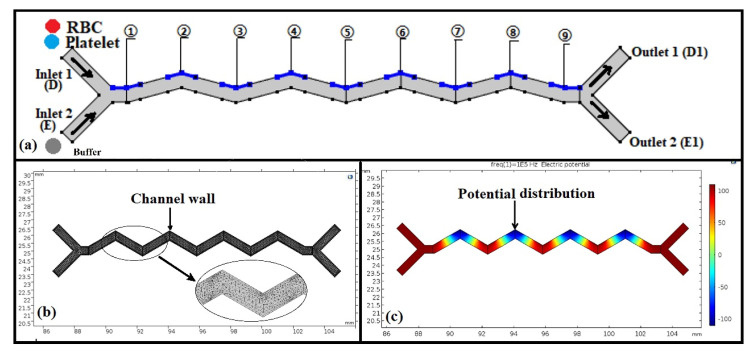
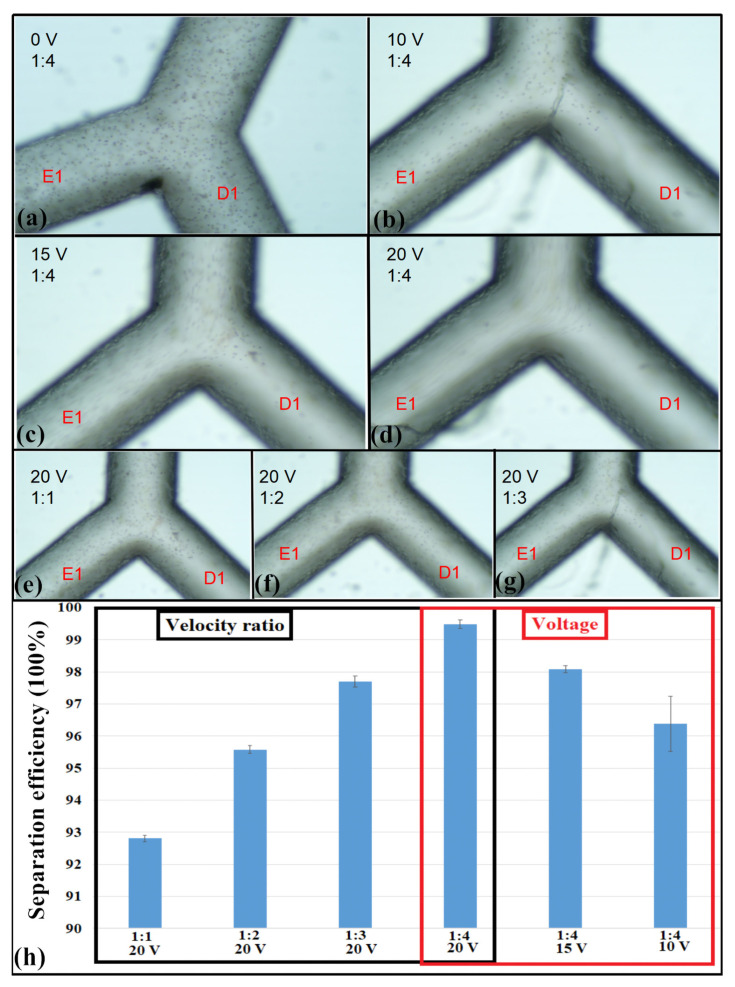
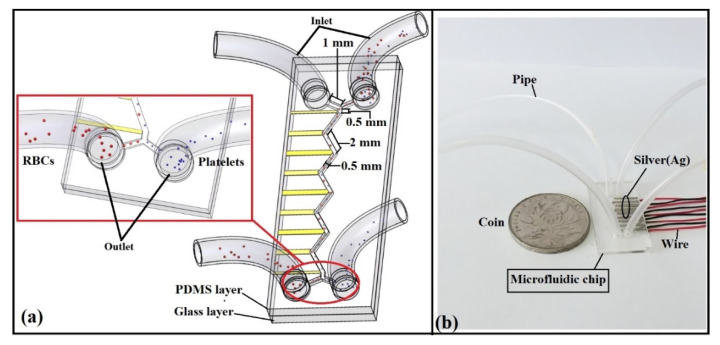
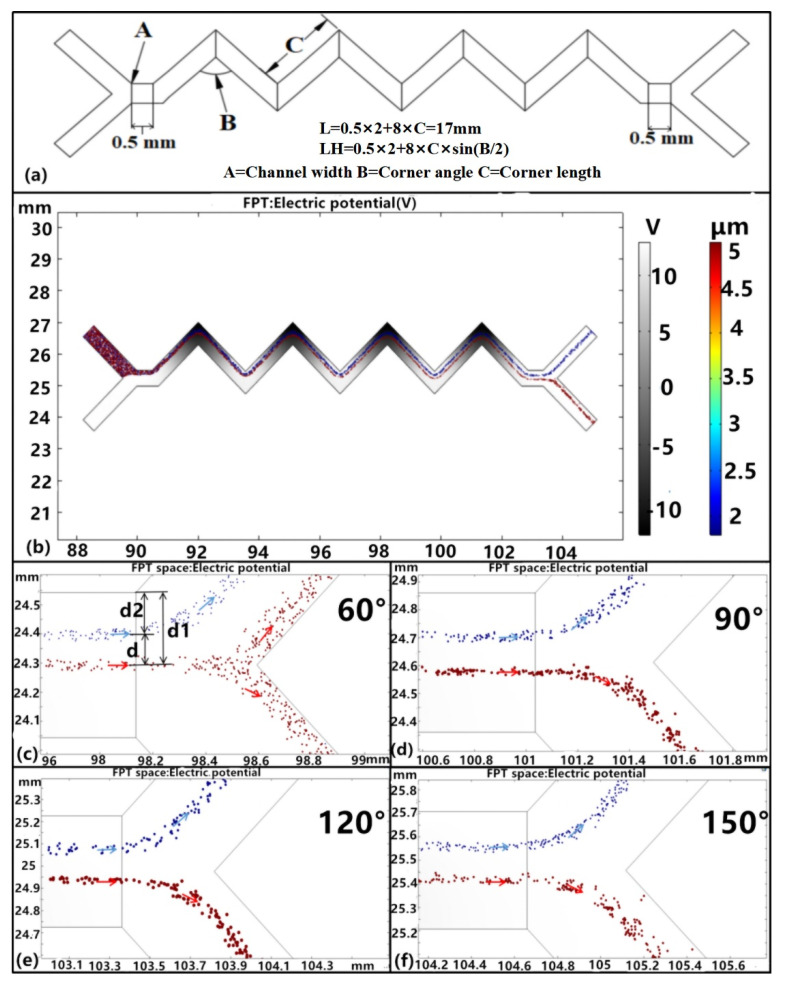
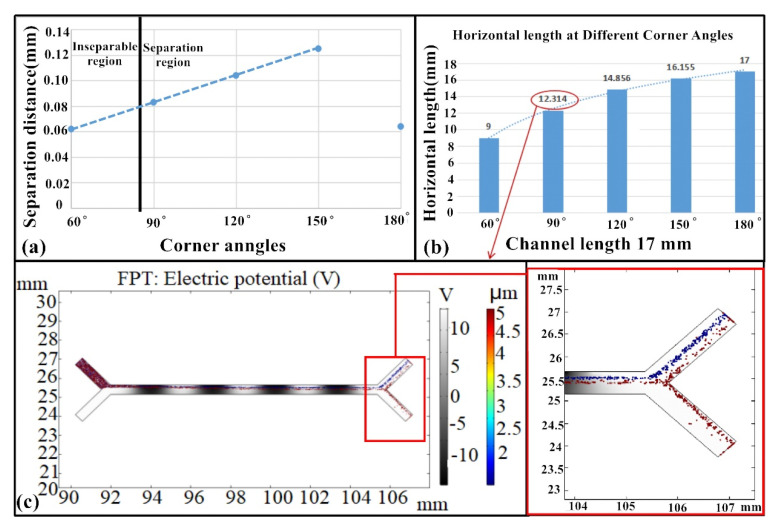
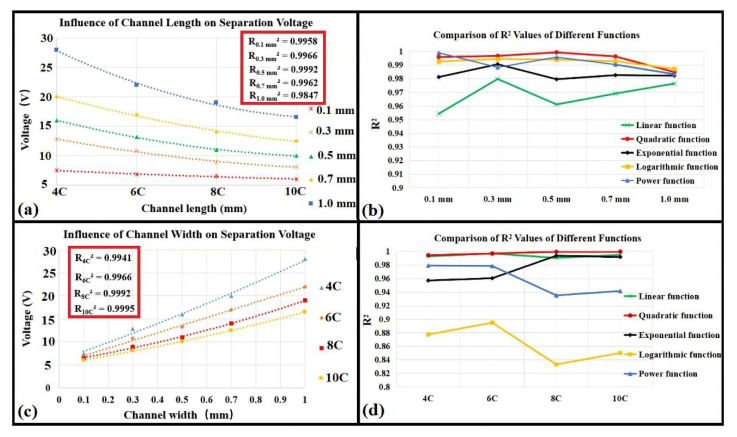
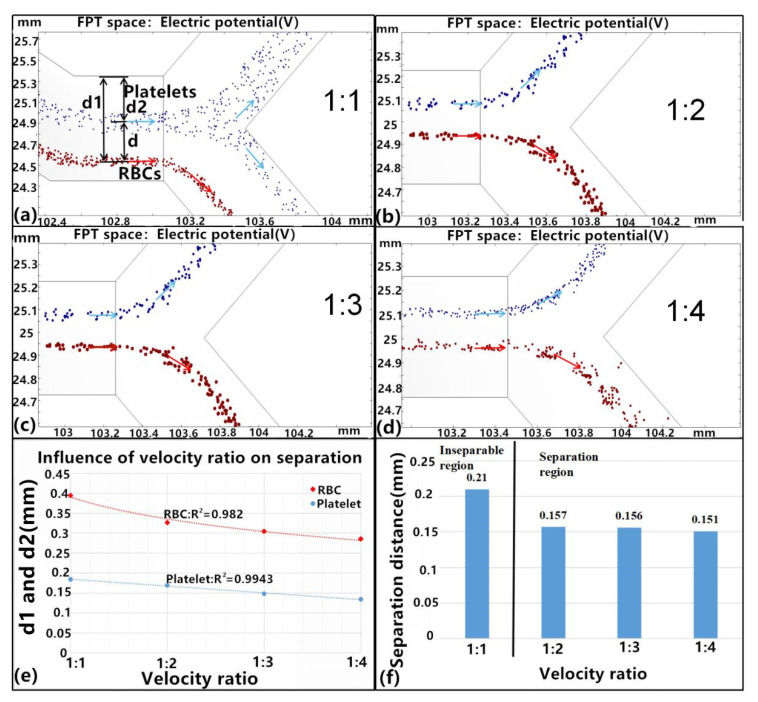
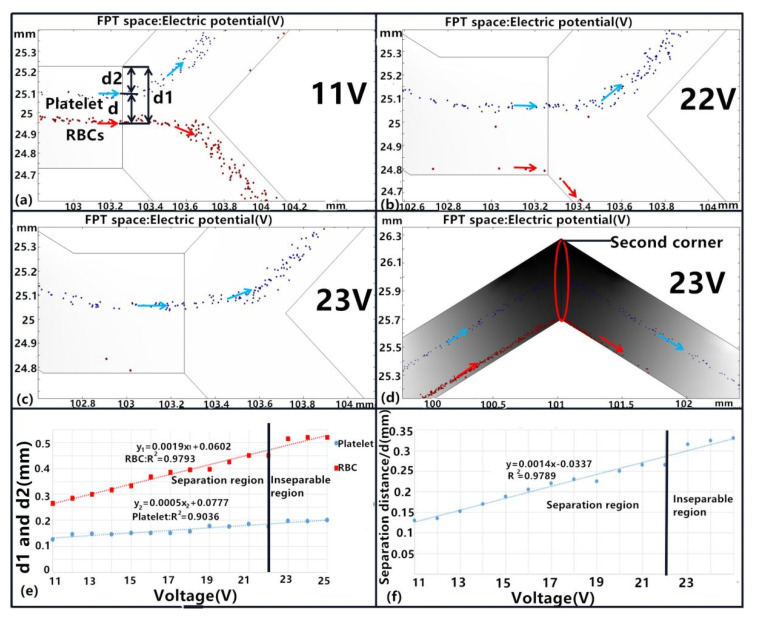
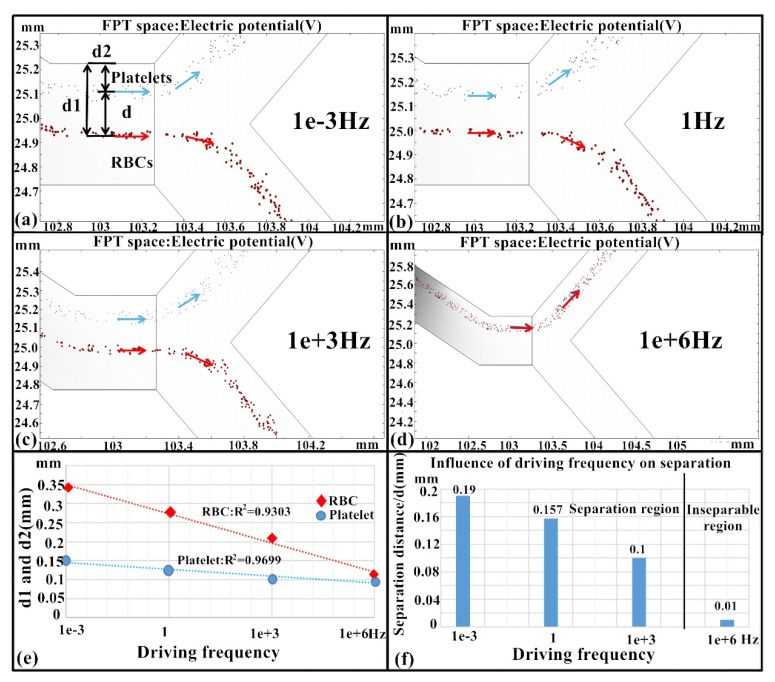
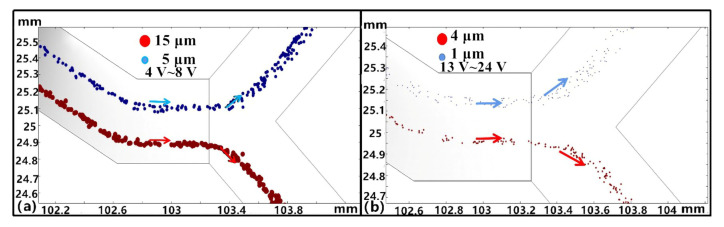
Platelet separation and purification are required in many applications including in the detection and treatment of hemorrhagic and thrombotic diseases, in addition to transfusions and in medical research. In this study, platelet separation was evaluated using a novel zigzag microchannel fluidic device while leveraging a dielectrophoresis (DEP) electric field using the COMSOL multiphysics software package and additional experimentation. The zigzag-shaped microchannel was superior to straight channel devices for cell separation because the sharp corners reduced the required horizontal distance needed for separation and also contributed to an asymmetric DEP electric field. A perfect linear relationship was observed between the separation distance and the corner angles. A quadratic relationship ( = 0.99) was observed between the driving voltage and the width and the lengths of the channel, allowing for optimization of these properties. In addition, the voltage was inversely proportional to the channel width and proportional to the channel length. An optimal velocity ratio of 1:4 was identified for the velocities of the two device inlets. The proposed device was fabricated using laser engraving and lithography with optimized structures including a 0.5 mm channel width, a 120° corner angle, a 0.3 mm channel depth, and a 17 mm channel length. A separation efficiency of 99.4% was achieved using a voltage of 20 V and a velocity ratio of 1:4. The easy fabrication, lower required voltage, label-free detection, high efficiency, and environmental friendliness of this device make it suitable for point-of-care medicine and biological applications. Moreover, it can be used for the separation of other types of compounds including lipids.
在许多应用中都需要进行血小板的分离和纯化,这些应用包括出血性和血栓性疾病的检测与治疗、输血以及医学研究。在本研究中,使用一种新型的曲折微通道流体装置,并借助COMSOL多物理场软件包利用介电泳(DEP)电场以及额外的实验来评估血小板分离。曲折形微通道在细胞分离方面优于直通道装置,因为锐角减少了分离所需的水平距离,并且有助于形成不对称的DEP电场。观察到分离距离与拐角角度之间存在完美的线性关系。观察到驱动电压与通道宽度和长度之间存在二次关系(= 0.99),这使得可以对这些特性进行优化。此外,电压与通道宽度成反比,与通道长度成正比。确定了两个装置入口流速的最佳流速比为1:4。所提出的装置采用激光雕刻和光刻技术制造,具有优化的结构,包括0.5毫米的通道宽度、120°的拐角角度、0.3毫米的通道深度和17毫米的通道长度。使用20伏电压和1:4的流速比时,分离效率达到了99.4%。该装置易于制造、所需电压较低、无需标记检测、效率高且环保,使其适用于即时医疗和生物应用。此外,它还可用于分离包括脂质在内的其他类型的化合物。