Danielsson Adam, Horvath Alexandra, Senorski Carl, Alentorn-Geli Eduard, Garrett William E, Cugat Ramón, Samuelsson Kristian, Hamrin Senorski Eric
Department of Orthopaedics, Sahlgrenska University Hospital, Mölndal, Sweden.
Department of Orthopaedics, Institute of Clinical Sciences, Sahlgrenska Academy, University of Gothenburg, Göteborgsvägen 31, SE-431 80 Mölndal, Gothenburg, Sweden.
BMC Musculoskelet Disord. 2020 Sep 29;21(1):641. doi: 10.1186/s12891-020-03658-8.
Injuries to the hamstring muscles are among the most common in sports and account for significant time loss. Despite being so common, the injury mechanism of hamstring injuries remains to be determined.
To investigate the hamstring injury mechanism by conducting a systematic review.
A systematic review following the PRISMA statement.
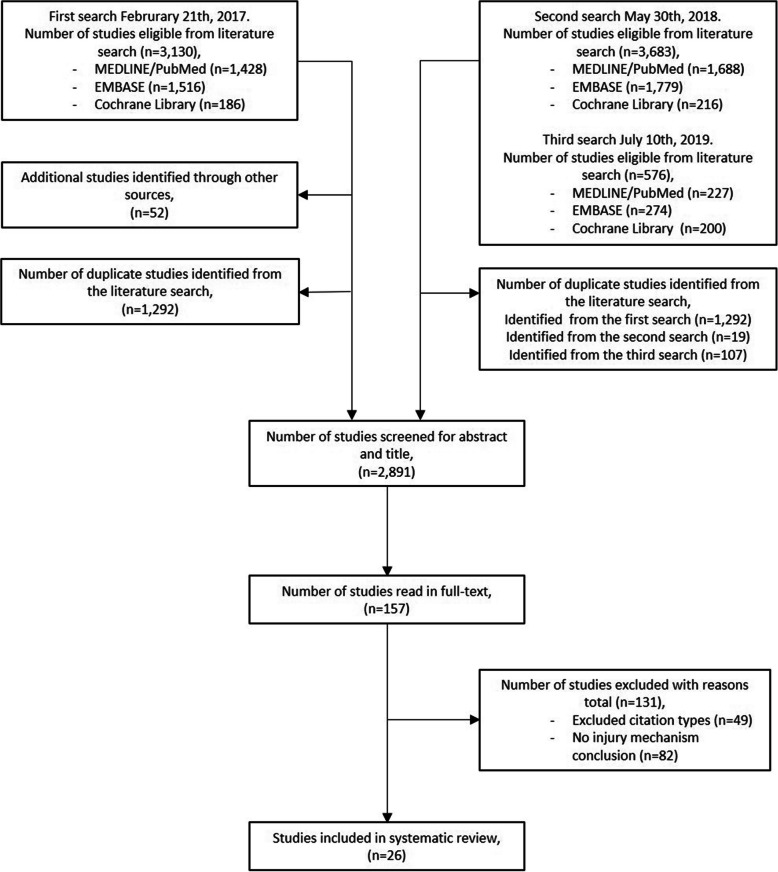
A systematic search was conducted using PubMed, EMBASE and the Cochrane Library. Studies 1) written in English and 2) deciding on the mechanism of hamstring injury were eligible for inclusion. Literature reviews, systematic reviews, meta-analyses, conference abstracts, book chapters and editorials were excluded, as well as studies where the full text could not be obtained.
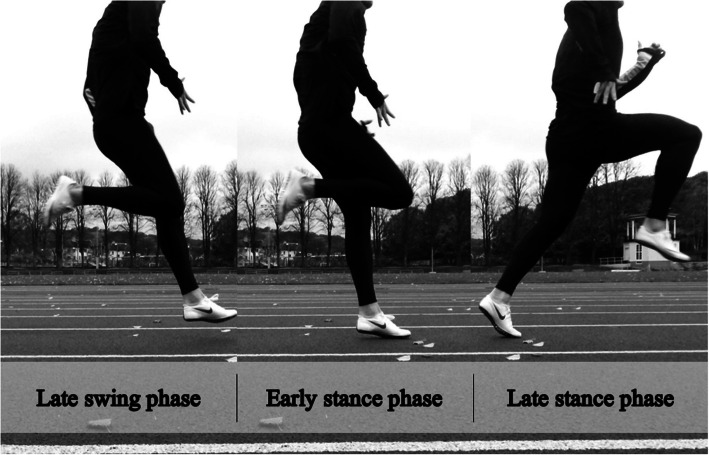
Twenty-six of 2372 screened original studies were included and stratified to the mechanism or methods used to determine hamstring injury: stretch-related injuries, kinematic analysis, electromyography-based kinematic analysis and strength-related injuries. All studies that reported the stretch-type injury mechanism concluded that injury occurs due to extensive hip flexion with a hyperextended knee. The vast majority of studies on injuries during running proposed that these injuries occur during the late swing phase of the running gait cycle.
A stretch-type injury to the hamstrings is caused by extensive hip flexion with an extended knee. Hamstring injuries during sprinting are most likely to occur due to excessive muscle strain caused by eccentric contraction during the late swing phase of the running gait cycle.
Level IV.
腘绳肌损伤是体育运动中最常见的损伤之一,会导致大量的时间损失。尽管十分常见,但腘绳肌损伤的机制仍有待确定。
通过系统评价来研究腘绳肌损伤机制。
遵循PRISMA声明的系统评价。
使用PubMed、EMBASE和Cochrane图书馆进行系统检索。纳入标准为:1)英文撰写的研究;2)确定腘绳肌损伤机制的研究。排除文献综述、系统评价、荟萃分析、会议摘要、书籍章节和社论,以及无法获取全文的研究。
在2372项筛选出的原始研究中,有26项被纳入,并根据用于确定腘绳肌损伤的机制或方法进行分层:拉伸相关损伤、运动学分析、基于肌电图的运动学分析和力量相关损伤。所有报告拉伸型损伤机制的研究均得出结论,损伤是由于膝关节过度伸展时髋关节过度屈曲所致。绝大多数关于跑步过程中损伤的研究表明,这些损伤发生在跑步步态周期的摆动后期。
腘绳肌的拉伸型损伤是由膝关节伸展时髋关节过度屈曲引起的。短跑过程中的腘绳肌损伤最有可能是由于跑步步态周期摆动后期离心收缩导致的肌肉过度拉伤所致。
四级。