Sultan Insha, Ali Asghar, Gogry Firdoos A, Rather Irfan A, Sabir Jamal S M, Haq Qazi M R
Department of Biosciences, Jamia Millia Islamia, New Delhi 110025, India.
Department of Biological Sciences, Faculty of Science, King Abdulaziz University (KAU), P.O. Box 80141, Jeddah 21589, Saudi Arabia.
Saudi J Biol Sci. 2020 Oct;27(10):2660-2668. doi: 10.1016/j.sjbs.2020.06.002. Epub 2020 Jun 8.
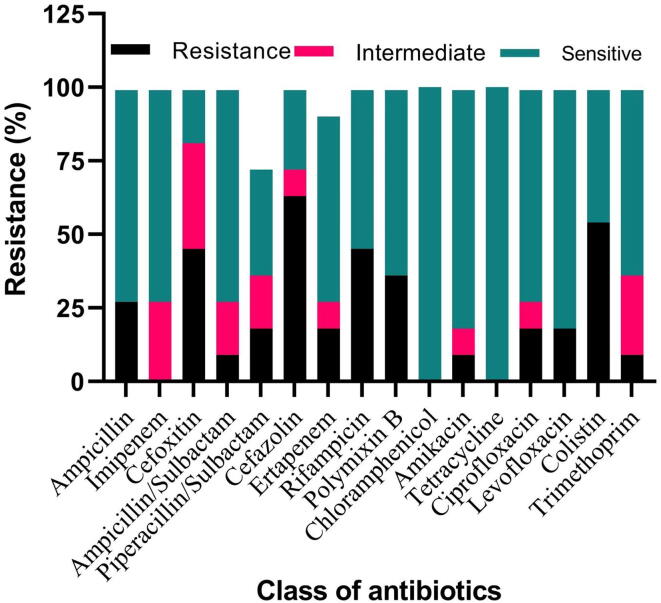
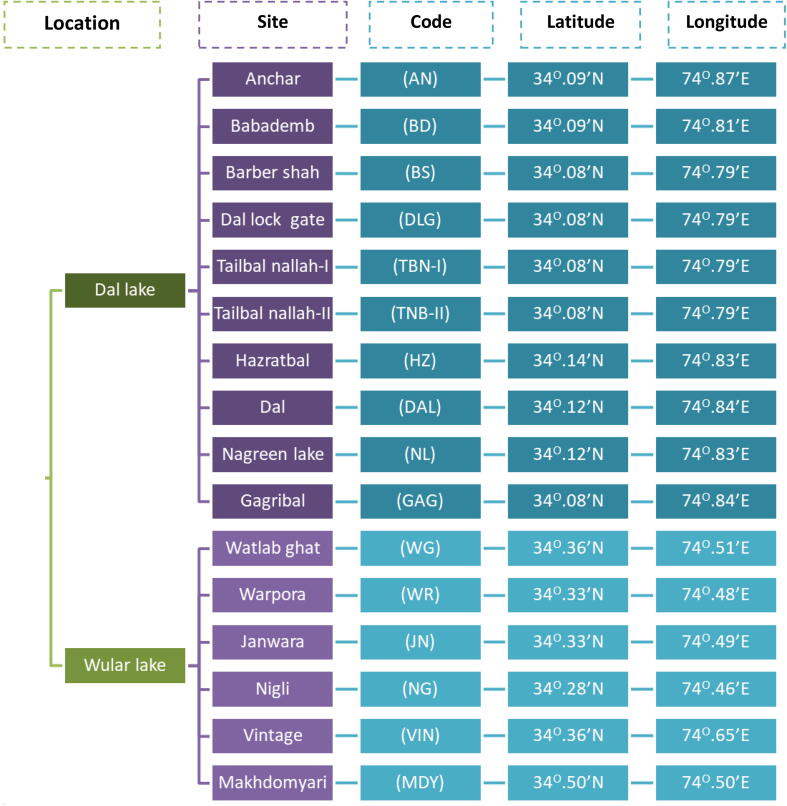
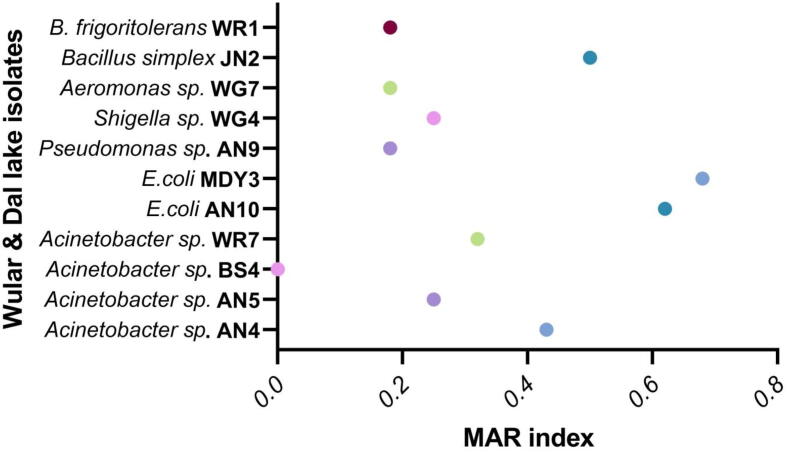
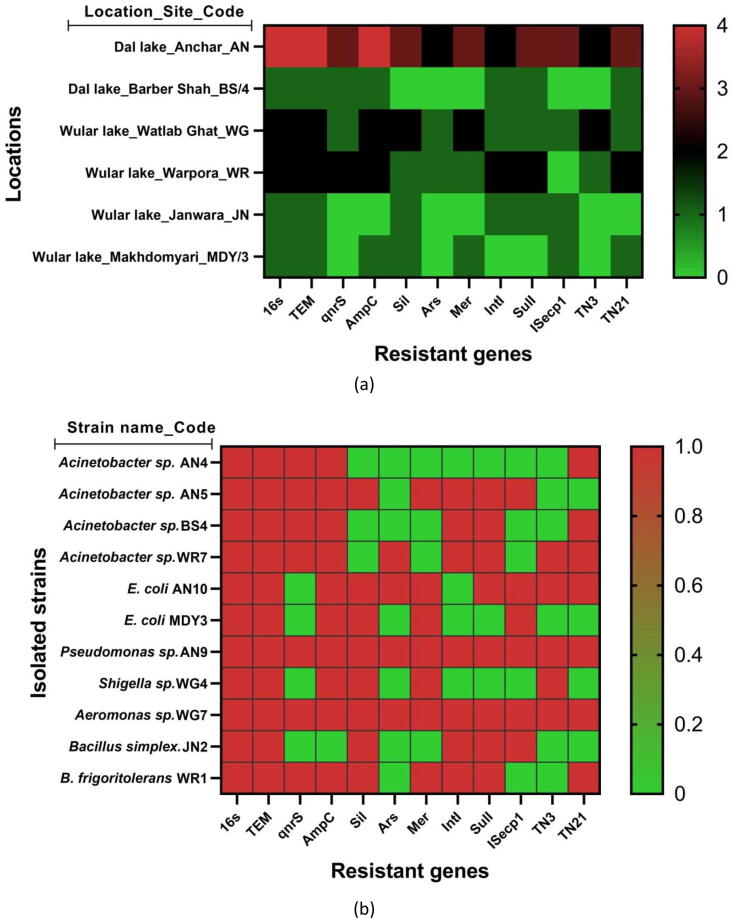
The rise in antibiotic-resistant bacteria and contamination of water bodies is a serious issue that demands immense attention of scientific acumen. Here, we examined the pervasiveness of ESBL producing bacteria in Dal Lake and Wular Lake of Kashmir valley, India. Isolates were screened for antibiotic, heavy metal resistant elements, and their coexistence with mobile genetic elements. Out of two hundred one isolates screened, thirty-eight were found positive for ESBL production. Antibiotic profiling of ESBL positive isolates with 16 different drugs representing β-lactam or -non-β-lactam, exhibited multidrug resistance phenotype among 55% isolates. Molecular characterization revealed the occurrence of drug resistance determinants and heavy metal resistance genes (MRGs) , and . Furthermore, mobile genetic elements were also detected. Conjugation assay confirmed the transfer of different ARGs, HMRGs, and mobile elements in recipient J53 AZ strain. Plasmid incompatibility studies showed to be associated with Inc groups B/O, HI1, HI2, I1, N, FIA, and FIB. Co-occurrence of TEM, HMRGs, and mobile elements from the aquatic milieu of Kashmir, India has not been reported so far. From this study, the detection of the TEM gene in the bacteria and are found for the first time. Considering all the facts it becomes crucial to conduct studies in natural aquatic environments that could help depict the epidemiological situations in which the resistance mechanism might have clinical relevance.
抗生素耐药细菌的增加和水体污染是一个严重问题,需要科学智慧给予极大关注。在此,我们研究了印度克什米尔山谷达尔湖和伍拉尔湖中产超广谱β-内酰胺酶(ESBL)细菌的普遍性。对分离株进行了抗生素、重金属抗性元素筛查,以及它们与移动遗传元件的共存情况研究。在筛查的201株分离株中,有38株被发现产ESBL呈阳性。用16种代表β-内酰胺或非β-内酰胺的不同药物对ESBL阳性分离株进行抗生素谱分析,55%的分离株表现出多重耐药表型。分子特征分析揭示了耐药决定因素以及重金属抗性基因(MRGs)的存在,即 、 和 。此外,还检测到了移动遗传元件 。接合试验证实了不同的抗生素抗性基因(ARGs)、重金属抗性基因(HMRGs)和移动元件在受体J53 AZ菌株中的转移。质粒不相容性研究表明 与B/O、HI1、HI2、I1、N、FIA和FIB等不相容群有关。印度克什米尔水生环境中TEM、HMRGs和移动元件的共存情况迄今尚未见报道。在本研究中,首次在细菌 和 中发现了TEM基因。考虑到所有这些事实,在自然水生环境中开展研究至关重要,这有助于描绘出抗性机制可能具有临床相关性的流行病学情况。