Health Hotline, Gansu Provincial Center for Disease Control and Prevention, Lanzhou, China.
School of Public Health, Xi'an Jiaotong University Health Science Center, Xi'an, China.
Am J Trop Med Hyg. 2020 Nov;103(5):2065-2076. doi: 10.4269/ajtmh.20-0179.
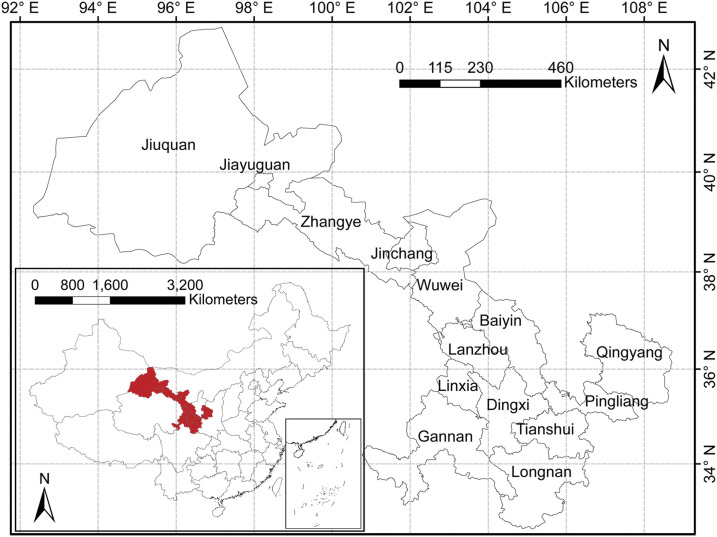
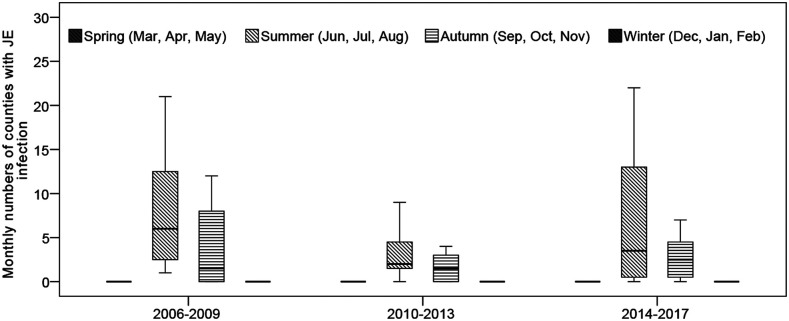
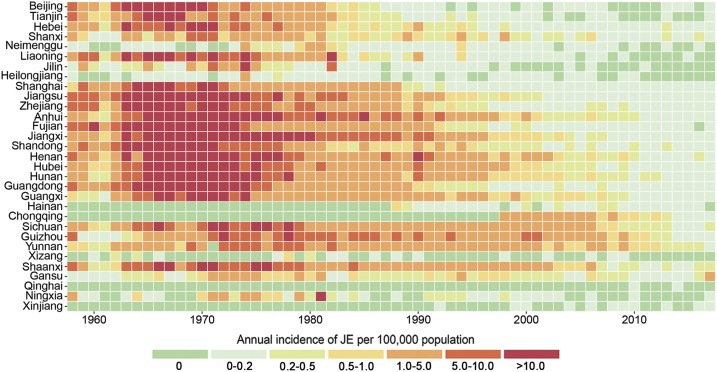
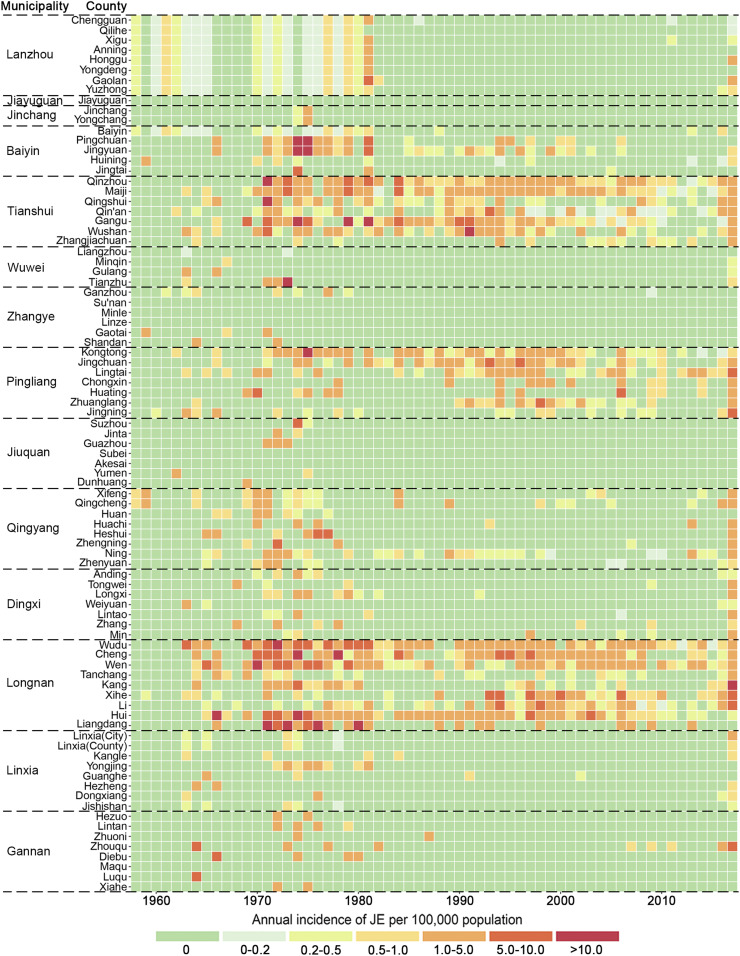
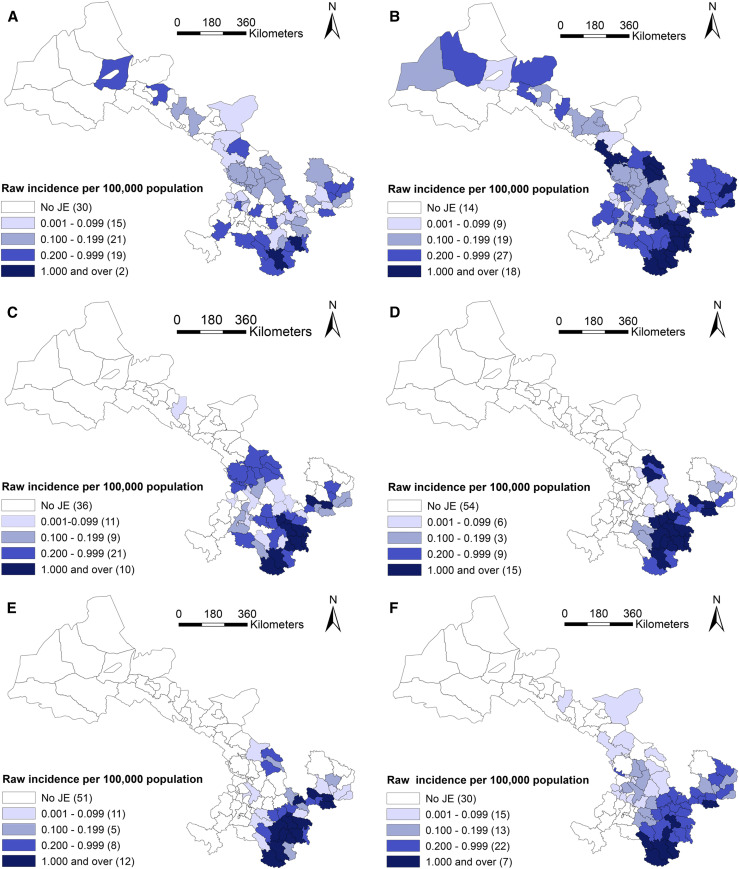
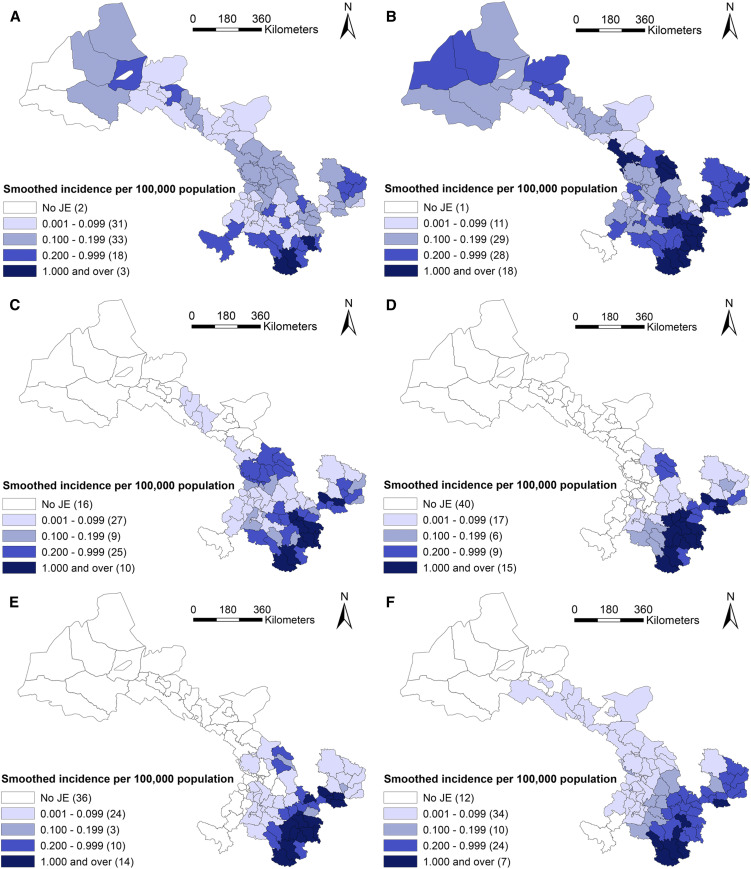
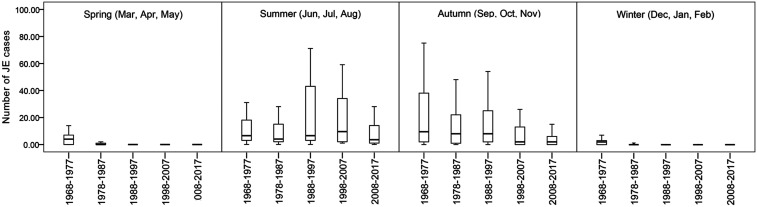
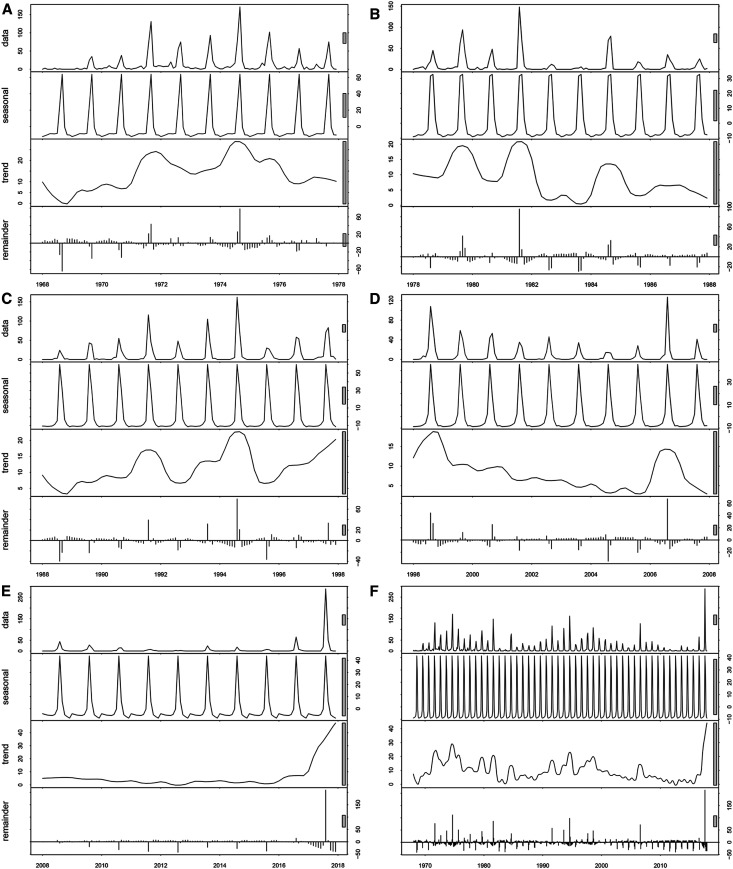
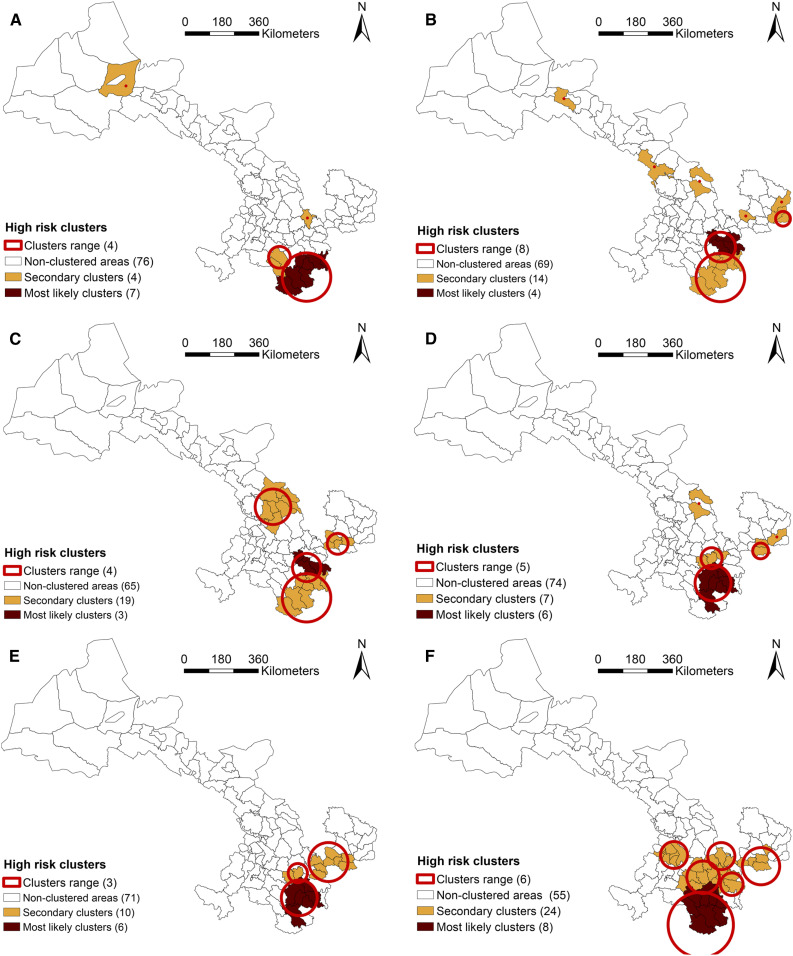
The incidence of Japanese encephalitis (JE) has greatly declined in China. However, JE incidence has significantly increased in Gansu in recent years, on the top of ranks among all provinces in China. To explore the spatial spread and resurgence of JE transmission in Gansu in the past 60 years, we collected yearly data on reported JE in each county (1958-2017) and monthly data on JE cases (1968-2017), respectively. We grouped the dataset into six categories, each consisting of a 10-year period between 1958 and 2017. Spatial cluster analysis was applied to identify the potential space-time clusters of JE incidence, and logistic regression models were used to identify the spatial and temporal dispersion of JE. Japanese encephalitis incidence in Gansu showed an upward trend from 1970 to 1977 and peaked in 1974, then declined, and fluctuated over the study period until an outbreak again in 2017. Japanese encephalitis incidence for the first 30-year period (1958-1987) peaked in September each year and thereafter peaked in July and August during 1988-2017. Spatial cluster analysis showed the geographical range of JE transmission fluctuated over the past 60 years. The high-incidence clusters of JE were primarily concentrated in the southeast of Gansu. We found significant space-time clustering characteristics of JE in Gansu, and the geographical range of notified JE cases has significantly expanded over recent years. The potential rebound of JE transmission occurred in 2016-2017 should be placed on the top priority of government work during the control and prevention of JE in Gansu, China.
中国的日本脑炎 (JE) 发病率已大幅下降。然而,近年来甘肃 JE 发病率显著上升,在全国各省中排名第一。为了探讨过去 60 年来甘肃 JE 传播的空间传播和再现,我们分别收集了各县报告的 JE 年数据(1958-2017 年)和 JE 病例的月数据(1968-2017 年)。我们将数据集分为六类,每类包含 1958 年至 2017 年的 10 年期间。应用空间聚类分析来识别 JE 发病率的潜在时空聚类,并用逻辑回归模型来识别 JE 的时空离散。甘肃 JE 发病率从 1970 年到 1977 年呈上升趋势,1974 年达到峰值,然后下降,在研究期间波动,直到 2017 年再次爆发。1958-1987 年的前 30 年(1958-1987 年)每年 9 月发病率最高,此后 1988-2017 年 7 月和 8 月发病率最高。空间聚类分析显示,JE 传播的地理范围在过去 60 年中波动。JE 的高发集群主要集中在甘肃东南部。我们发现甘肃 JE 具有显著的时空聚类特征,近年来通报 JE 病例的地理范围显著扩大。2016-2017 年 JE 传播的潜在反弹应成为中国甘肃 JE 防控工作的重中之重。