Department of Biomedical Sciences and Health, Università degli Studi di Milano, Milan, Italy; Department of Endocrinology, Nutrition and Metabolic Diseases, IRCCS MultiMedica, Milan, Italy.
Department of Biomedical Sciences and Health, Università degli Studi di Milano, Milan, Italy; Department of Endocrinology, Nutrition and Metabolic Diseases, IRCCS MultiMedica, Milan, Italy.
Nutrition. 2020 Nov-Dec;79-80:110996. doi: 10.1016/j.nut.2020.110996. Epub 2020 Sep 1.
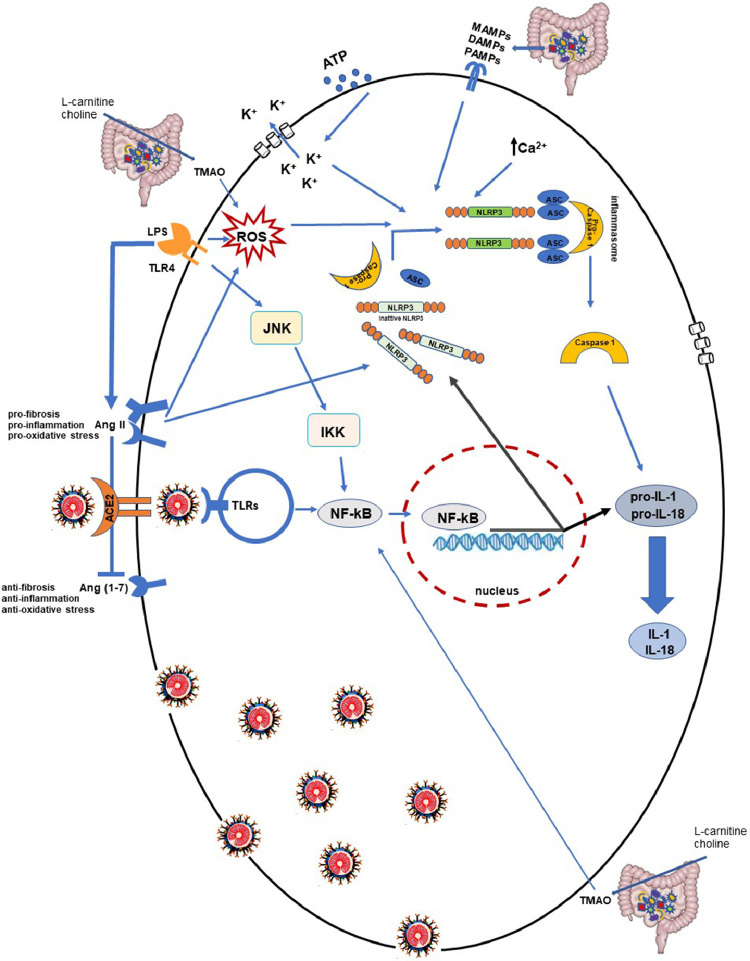
In a few months, the severe acute respiratory syndrome coronavirus 2 (SARS-CoV-2) infection has become the main health problem worldwide. Epidemiologic studies revealed that populations have different vulnerabilities to SARS-CoV-2. Severe outcomes of the coronavirus disease 2019 (COVID-19) with an increased risk of death are observed in patients with metabolic syndrome, as well as diabetic and heart conditions (frail population). Excessive proinflammatory cytokine storm could be the main cause of increased vulnerability in this frail population. In patients with diabetes and/or heart disease, a low inflammatory state is often associated with gut dysbiosis. The increase amount of microbial metabolites (i.e., trimethylamine N-oxide and lipopolysaccharide), which generate an inflammatory microenvironment, is probably associated with an improved risk of severe illness from COVID-19. Nutritional interventions aimed at restoring the gut microbial balance could represent preventive strategies to protect the frail population from COVID-19. This narrative review presents the possible molecular mechanisms by which intestinal dysbiosis that enhances the inflammatory state could promote the spread of SARS-CoV-2 infection. Some nutritional strategies to counteract inflammation in frail patients are also analyzed.
在短短几个月内,严重急性呼吸综合征冠状病毒 2(SARS-CoV-2)感染已成为全球主要的健康问题。流行病学研究表明,不同人群对 SARS-CoV-2 的易感性存在差异。患有代谢综合征、糖尿病和心脏病(脆弱人群)的患者,其 2019 年冠状病毒病(COVID-19)的严重后果及死亡风险增加。过度的促炎细胞因子风暴可能是该脆弱人群易感性增加的主要原因。在患有糖尿病和/或心脏病的患者中,低度炎症状态通常与肠道菌群失调有关。微生物代谢物(即三甲胺 N-氧化物和脂多糖)的增加量会产生炎症微环境,这可能与 COVID-19 重症风险的增加有关。旨在恢复肠道微生物平衡的营养干预措施可能代表预防策略,可以保护脆弱人群免受 COVID-19 的侵害。本综述介绍了肠道菌群失调增强炎症状态从而促进 SARS-CoV-2 感染传播的可能分子机制。还分析了一些针对脆弱患者的抗炎的营养策略。