Department of Animal Sciences, Georg-August-University, Burckhardtweg 2, 37077, Göttingen, Germany.
Institute of Animal Science, University of Hohenheim, Garbenstr. 17, 70599, Stuttgart, Germany.
BMC Genet. 2020 Oct 1;21(1):114. doi: 10.1186/s12863-020-00920-9.
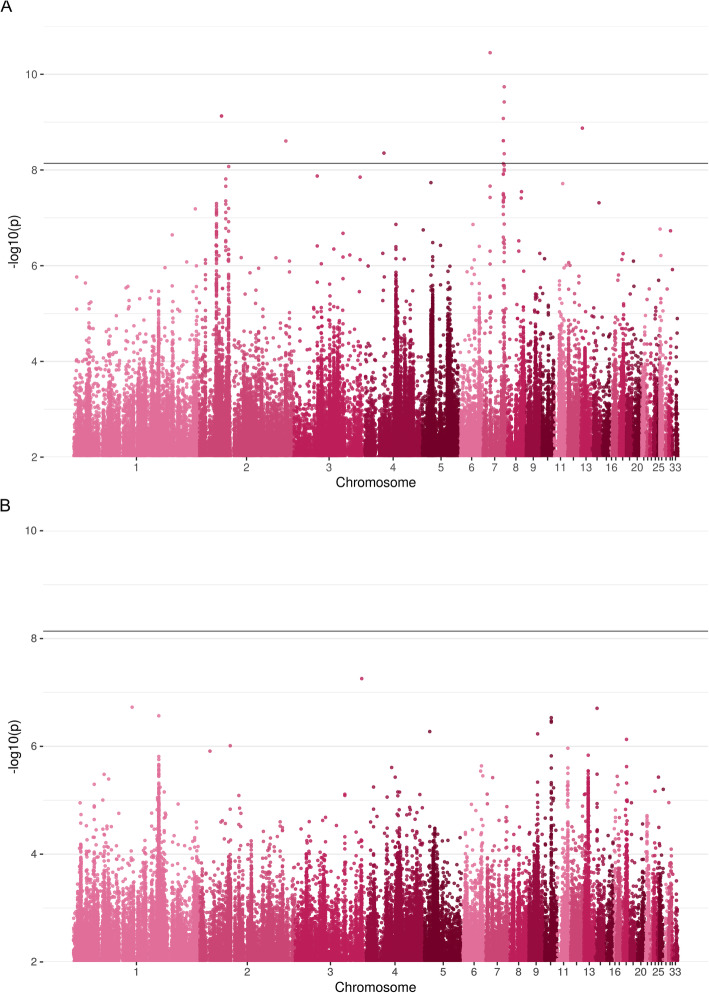
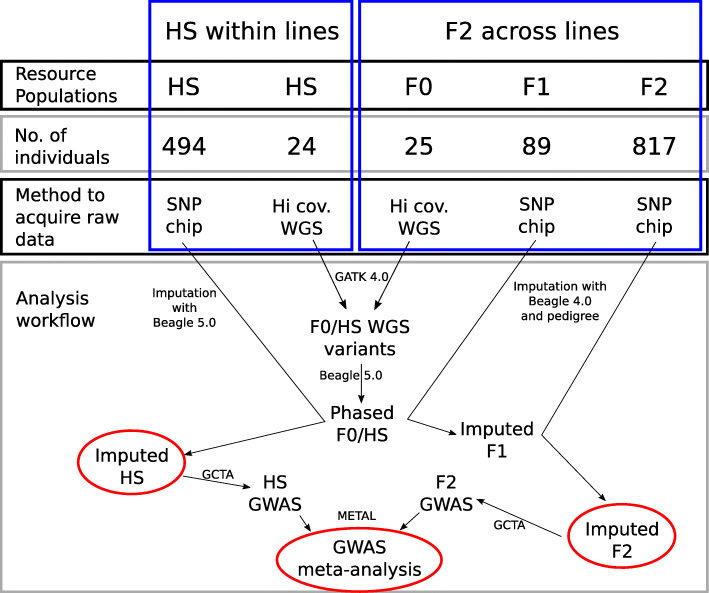
Feather pecking (FP) is damaging behavior in laying hens leading to global economic losses in the layer industry and massive impairments of animal welfare. The objective of the study was to discover genetic variants and affected genes that lead to FP behavior. To achieve that we imputed low-density genotypes from two different populations of layers divergently selected for FP to sequence level by performing whole genome sequencing on founder and half-sib individuals. In order to decipher the genetic structure of FP, genome wide association studies and meta-analyses of two resource populations were carried out by focusing on the traits 'feather pecks delivered' (FPD) and the 'posterior probability of a hen to belong to the extreme feather pecking subgroup' (pEFP).
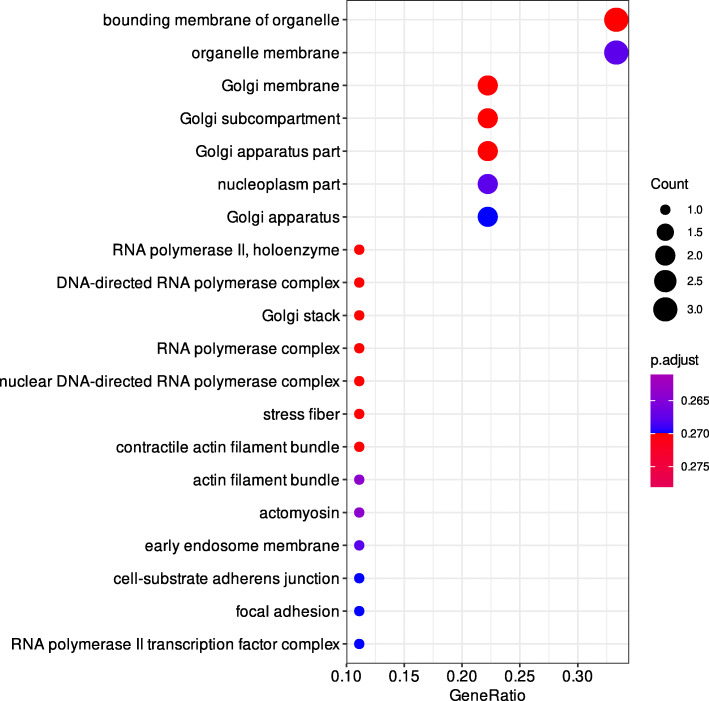
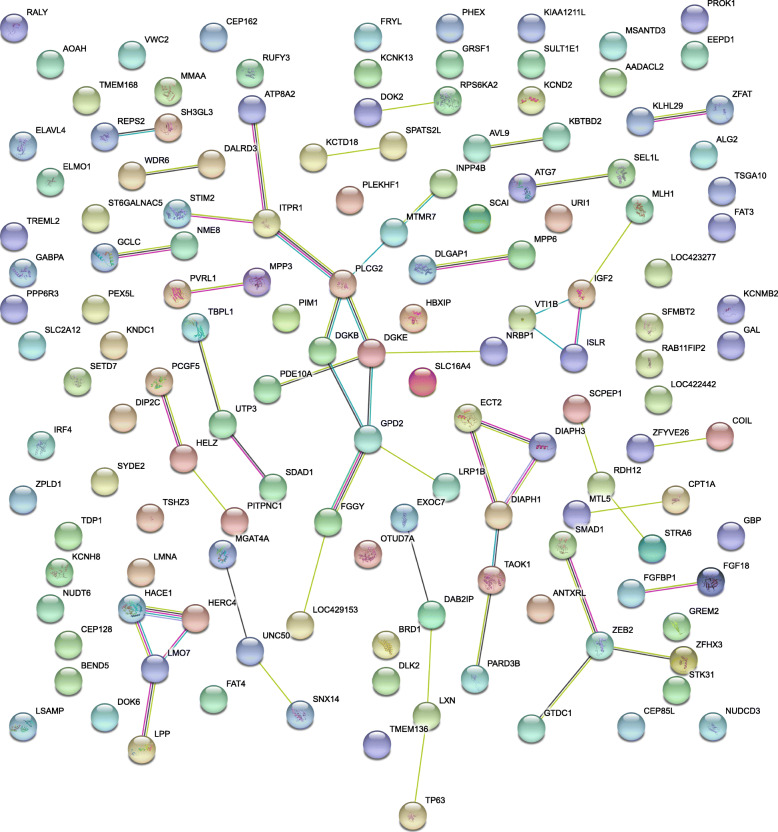
In this meta-analysis, we discovered numerous genes that are affected by polymorphisms significantly associated with the trait FPD. Among them SPATS2L, ZEB2, KCHN8, and MRPL13 which have been previously connected to psychiatric disorders with the latter two being responsive to nicotine treatment. Gene set enrichment analysis revealed that phosphatidylinositol signaling is affected by genes identified in the GWAS and that the Golgi apparatus as well as brain structure may be involved in the development of a FP phenotype. Further, we were able to validate a previously discovered QTL for the trait pEFP on GGA1, which contains variants affecting NIPA1, KIAA1211L, AFF3, and TSGA10.
We provide evidence for the involvement of numerous genes in the propensity to exhibit FP behavior that could aid in the selection against this unwanted trait. Furthermore, we identified variants that are involved in phosphatidylinositol signaling, Golgi metabolism and cell structure and therefore propose changes in brain structure to be an influential factor in FP, as already described in human neuropsychiatric disorders.
啄羽(FP)是一种破坏性行为,会导致蛋鸡养殖业遭受全球经济损失,并严重损害动物福利。本研究旨在发现导致 FP 行为的遗传变异和受影响的基因。为此,我们通过对创始个体和半同胞个体进行全基因组测序,将两个具有不同 FP 选择方向的层鸡群体的低密度基因型推断到序列水平。为了解剖 FP 的遗传结构,我们通过关注“啄羽次数”(FPD)和“母鸡属于极端啄羽亚群的后验概率”(pEFP)这两个性状,对两个资源群体进行了全基因组关联研究和荟萃分析。
在这项荟萃分析中,我们发现了许多受与 FPD 性状显著相关的多态性影响的基因。其中,SPATS2L、ZEB2、KCHN8 和 MRPL13 之前与精神障碍有关,后两者对尼古丁治疗有反应。基因集富集分析表明,磷酸肌醇信号受到 GWAS 中鉴定的基因的影响,高尔基器和大脑结构可能参与了 FP 表型的发展。此外,我们能够验证之前在 GGA1 上发现的与 pEFP 性状相关的 QTL,该 QTL 包含影响 NIPA1、KIAA1211L、AFF3 和 TSGA10 的变异。
我们为参与表现 FP 行为倾向的众多基因提供了证据,这可能有助于针对这种不受欢迎的性状进行选择。此外,我们确定了参与磷酸肌醇信号、高尔基代谢和细胞结构的变异,因此提出大脑结构的变化可能是 FP 的一个影响因素,这与人类神经精神障碍已有描述一致。