Wellcome Sanger Institute, Wellcome Genome Campus, Hinxton, CB10 1SA, UK.
Department of Internal Medicine, Center for Global Health, University of New Mexico Health Sciences Center, Albuquerque, NM, USA.
Nat Commun. 2020 Oct 1;11(1):4918. doi: 10.1038/s41467-020-18647-7.
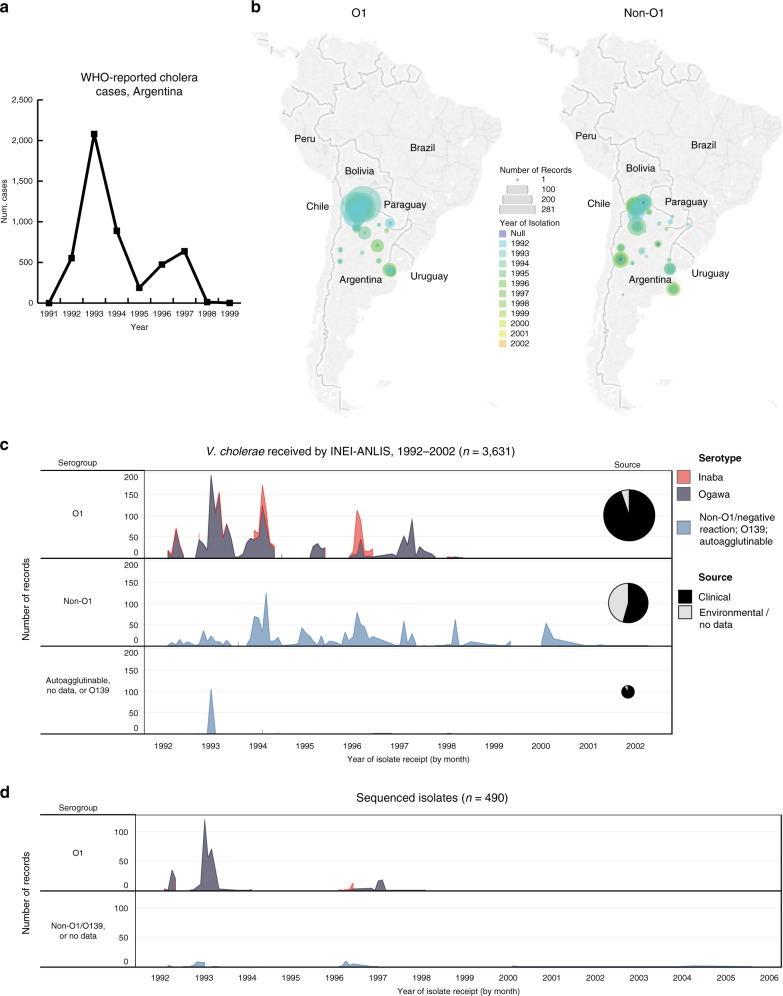
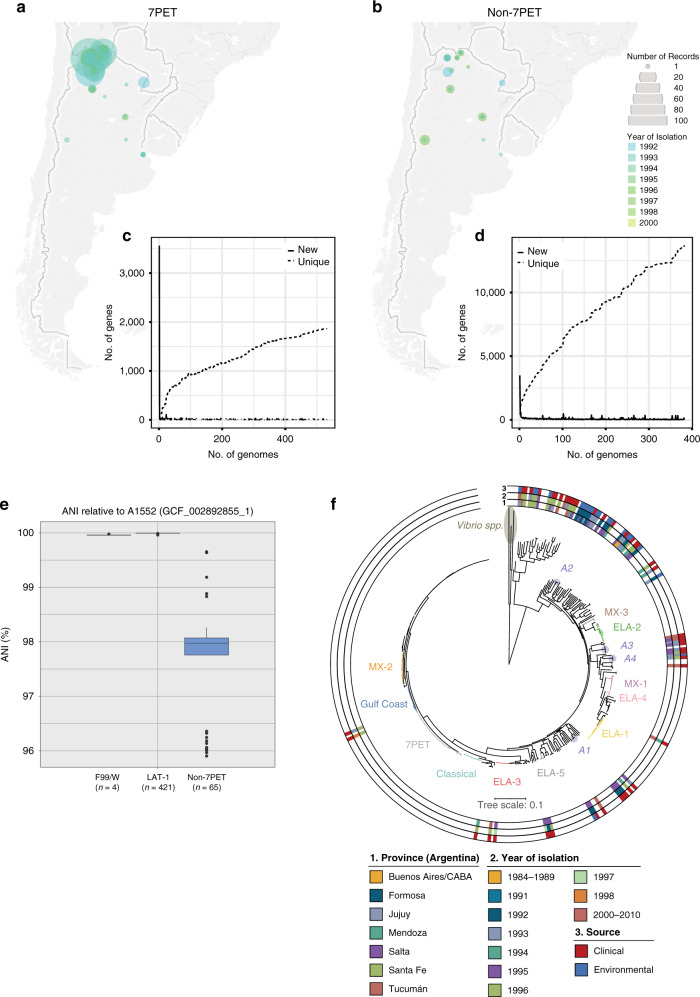
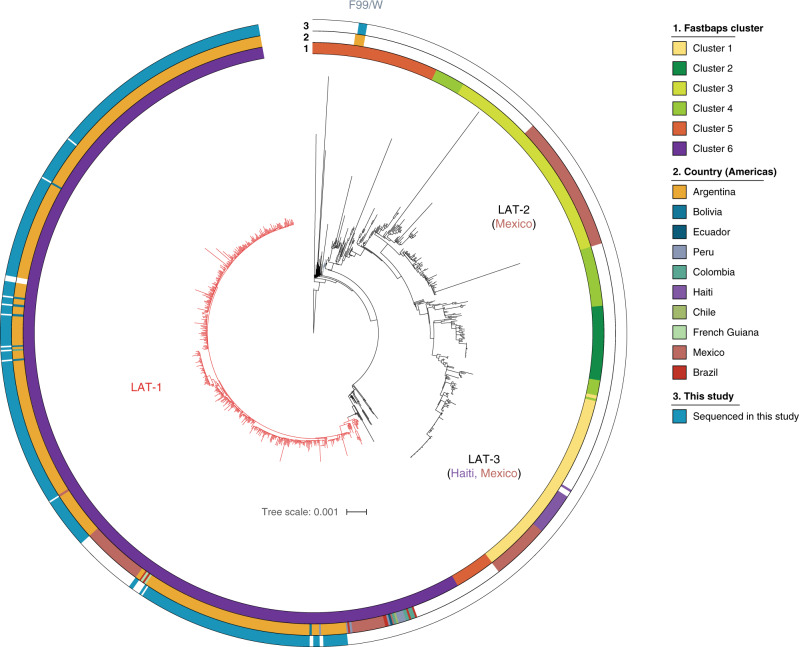
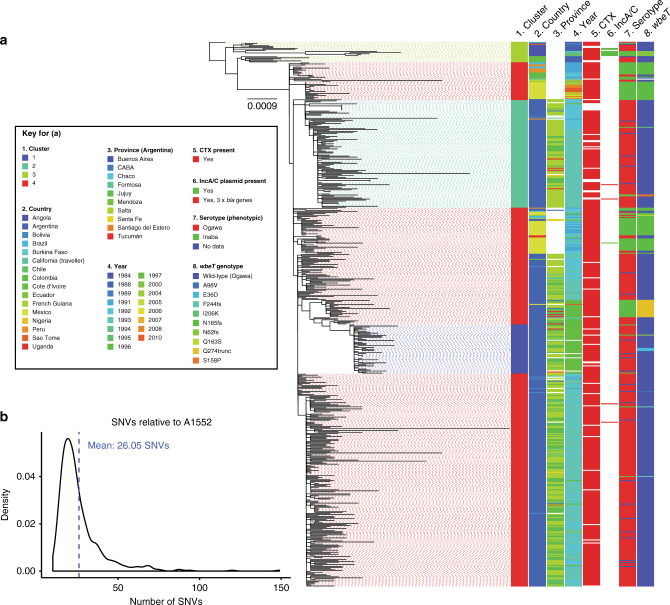
In order to control and eradicate epidemic cholera, we need to understand how epidemics begin, how they spread, and how they decline and eventually end. This requires extensive sampling of epidemic disease over time, alongside the background of endemic disease that may exist concurrently with the epidemic. The unique circumstances surrounding the Argentinian cholera epidemic of 1992-1998 presented an opportunity to do this. Here, we use 490 Argentinian V. cholerae genome sequences to characterise the variation within, and between, epidemic and endemic V. cholerae. We show that, during the 1992-1998 cholera epidemic, the invariant epidemic clone co-existed alongside highly diverse members of the Vibrio cholerae species in Argentina, and we contrast the clonality of epidemic V. cholerae with the background diversity of local endemic bacteria. Our findings refine and add nuance to our genomic definitions of epidemic and endemic cholera, and are of direct relevance to controlling current and future cholera epidemics.
为了控制和消灭霍乱疫情,我们需要了解疫情是如何开始的,如何传播的,以及如何下降并最终结束。这需要随着时间的推移对传染病进行广泛的采样,同时还要考虑到可能与疫情同时存在的地方性疾病的背景。1992-1998 年阿根廷霍乱疫情的独特情况提供了这样做的机会。在这里,我们使用 490 个阿根廷霍乱弧菌基因组序列来描述疫情和地方性霍乱弧菌之间以及内部的变异。我们表明,在 1992-1998 年的霍乱疫情期间,不变的流行克隆与阿根廷霍乱弧菌种的高度多样化成员共存,并且我们对比了流行霍乱弧菌的克隆性与当地地方性细菌的背景多样性。我们的发现细化并增加了我们对流行和地方性霍乱的基因组定义的细微差别,并且与控制当前和未来的霍乱疫情直接相关。