Silva Petterson Costa Conceição, de Azevedo Neto André Dias, Gheyi Hans Raj, Ribas Rogério Ferreira, Dos Reis Silva Caroline Rastely, Cova Alide Mitsue Watanabe
Centro de Ciências Agrárias Ambientais e Biológicas, Universidade Federal do Recôncavo da Bahia, Cruz das Almas, 44380-000, BA, Brazil.
Centro de Ciências Exatas e Tecnológicas, Universidade Federal do Recôncavo da Bahia, Cruz das Almas, 44380-000, BA, Brazil.
Heliyon. 2020 Sep 21;6(9):e05008. doi: 10.1016/j.heliyon.2020.e05008. eCollection 2020 Sep.
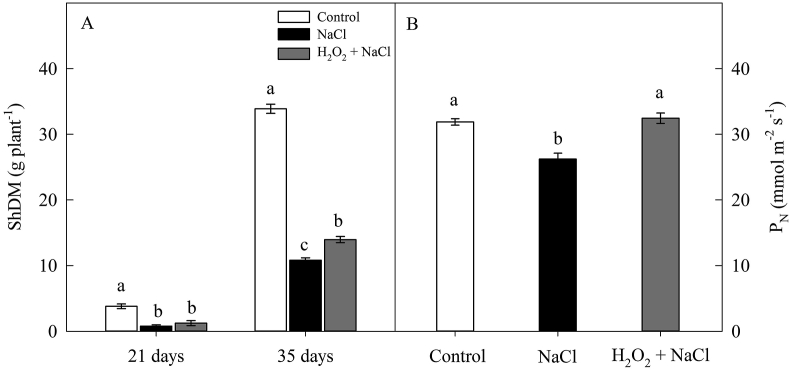
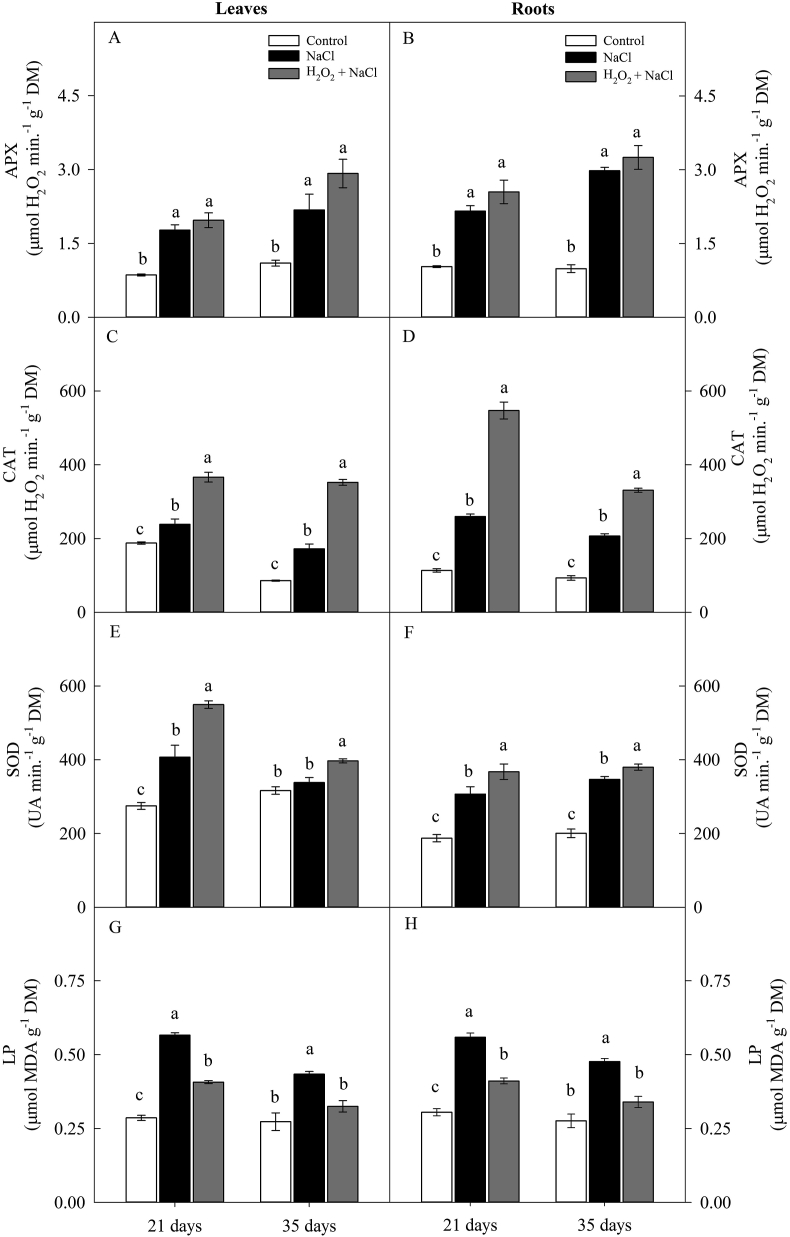
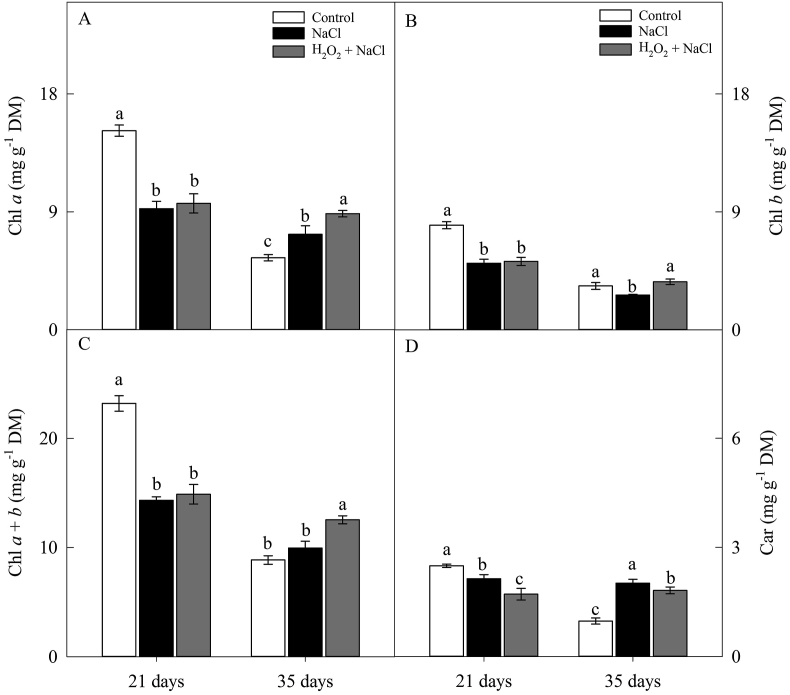
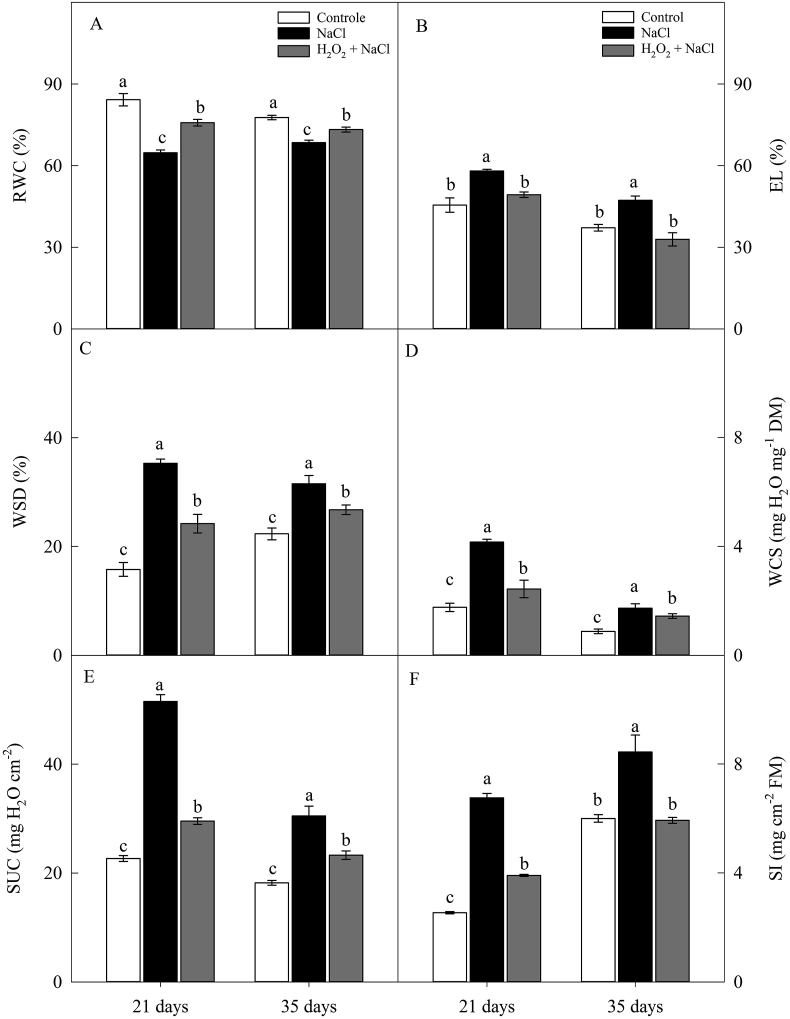
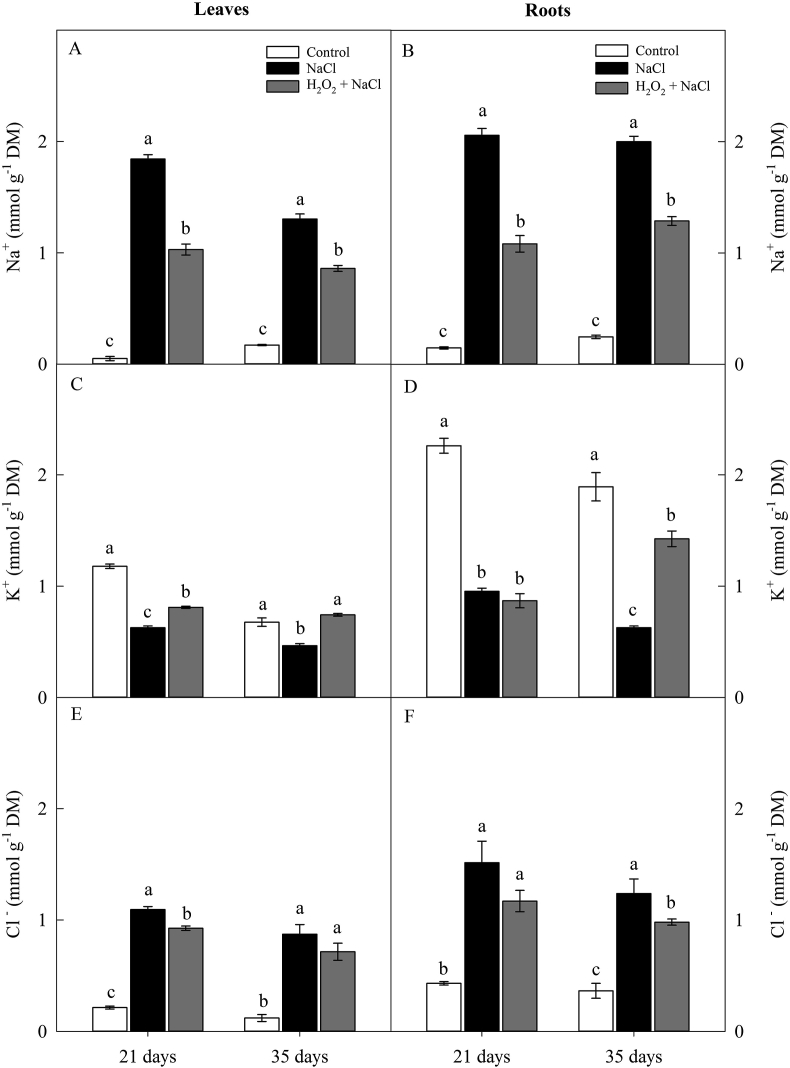
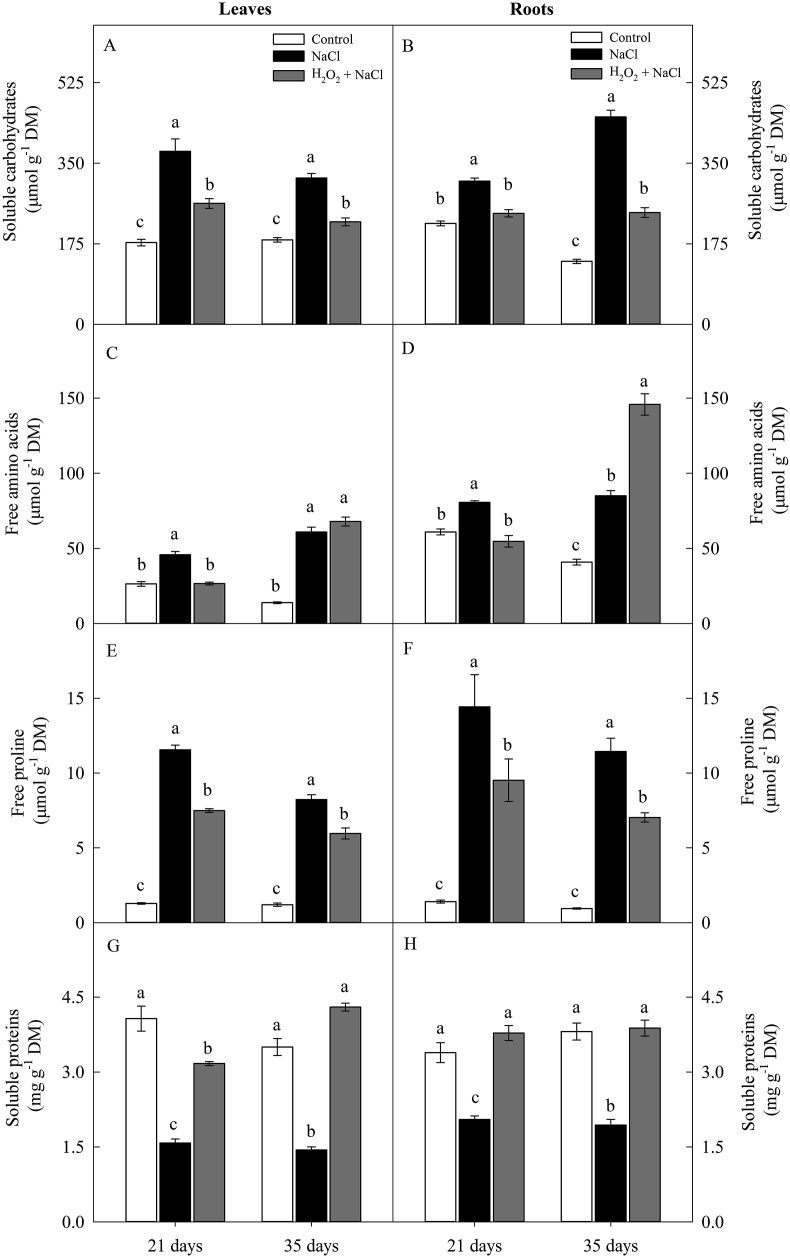
Salinity is still one of the main factors that limit the growth and production of crops. However, currently, hydrogen peroxide (HO) priming has become a promising technique to alleviate the deleterious effects caused by salt. Therefore, this study aimed to test different leaf spraying strategies with HO for acclimation of sunflower plants to salt stress, identifying the main physiological and biochemical changes involved in this process. The experiment was conducted in a completely randomized design, with four replications. Initially, four concentrations of HO were tested (0.1; 1; 10 and 100 mM) associated with different applications: 1AP - one application (48 h before exposure to NaCl); 2AP - two applications (1AP + one application 7 days after exposure to NaCl) and 3AP - three applications (2AP + one application 14 days after exposure to NaCl), besides this two reference treatments were also added: control (absence of NaCl and absence of HO) and salt control (presence of 100 mM of NaCl and absence of HO). The experiment was conducted in hydroponic system containing Furlani's nutrient solution. Salt stress reduced the growth of sunflower plants, however, the HO priming through leaf spraying was able to reduce the deleterious effects caused by salt, especially in the 1 mM HO treatment with one application. HO acts as a metabolic signal assisting in the maintenance of ionic and redox homeostasis, and consequently increasing the tolerance of plants to salt stress.
盐度仍然是限制作物生长和产量的主要因素之一。然而,目前过氧化氢(H₂O₂)引发已成为一种有前景的技术,可减轻盐害。因此,本研究旨在测试用H₂O₂进行不同的叶片喷施策略,以使向日葵植株适应盐胁迫,确定该过程中涉及的主要生理和生化变化。实验采用完全随机设计,重复四次。最初,测试了四种浓度的H₂O₂(0.1;1;10和100 mM)与不同的施用方式:1AP - 一次施用(暴露于NaCl前48小时);2AP - 两次施用(1AP + 暴露于NaCl后7天再施用一次)和3AP - 三次施用(2AP + 暴露于NaCl后14天再施用一次),此外还添加了两个对照处理:对照(无NaCl且无H₂O₂)和盐对照(有100 mM NaCl且无H₂O₂)。实验在含有富拉尼营养液的水培系统中进行。盐胁迫降低了向日葵植株的生长,然而,通过叶片喷施H₂O₂能够减轻盐害,特别是在1 mM H₂O₂一次施用的处理中。H₂O₂作为一种代谢信号,有助于维持离子和氧化还原稳态,从而提高植物对盐胁迫的耐受性。