Ibrahim Ahmad, Heitzer Marius, Bock Anna, Peters Florian, Möhlhenrich Stephan Christian, Hölzle Frank, Modabber Ali, Kniha Kristian
Department of Oral and Cranio-Maxillofacial Surgery, University Hospital RWTH Aachen, Pauwelstraße 30, 52074 Aachen, Germany.
Department of Orthodontics, University of Witten/Herdecke, Alfred-Herrhausen Str. 45, 58455 Witten, Germany.
Materials (Basel). 2020 Sep 30;13(19):4349. doi: 10.3390/ma13194349.
This in vitro study aimed to evaluate the effects of implant designs on primary stability in different bone densities and bony defects.
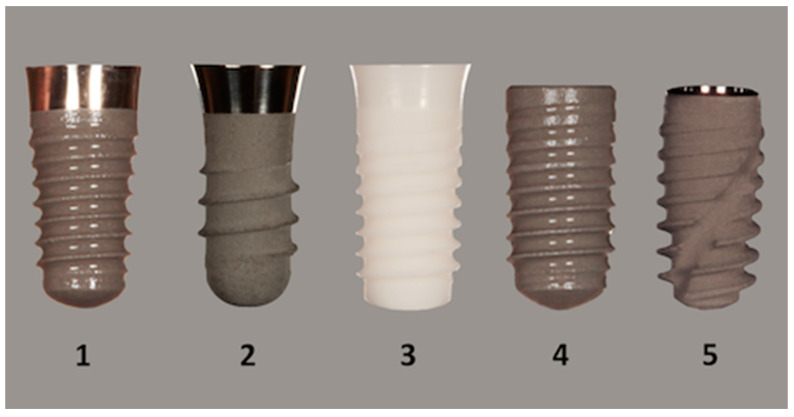
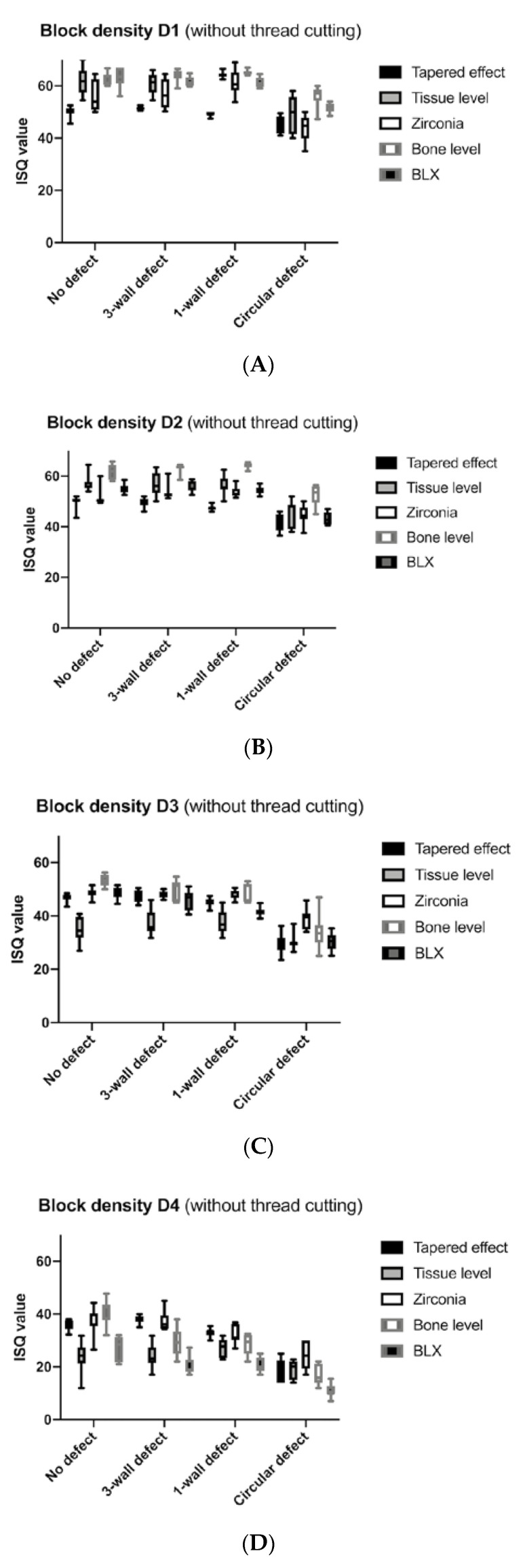
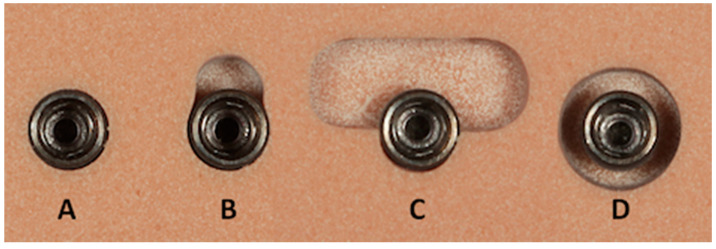
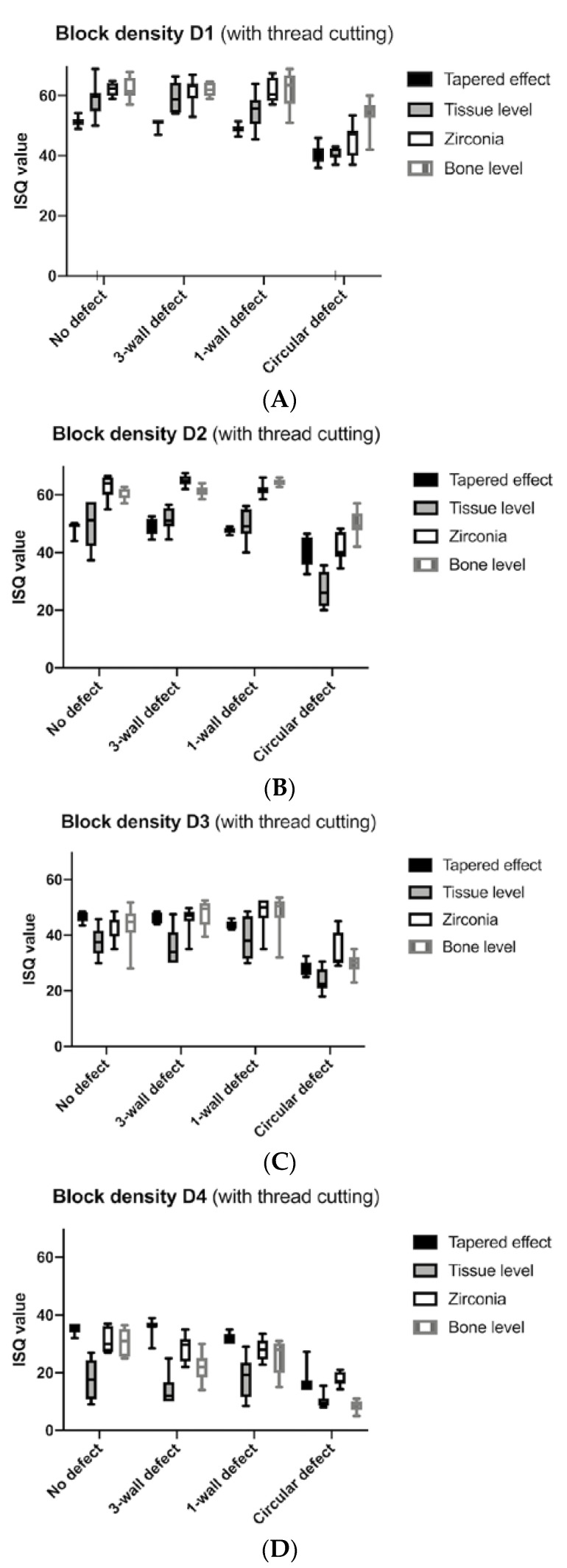
Five implant types (tapered-tissue-level, tissue-level, zirconia-tissue-level, bone-level, and BLX implants) were used in this assessment. The implants were inserted into four different artificial bone blocks representing varying bone-density groups: D1, D2, D3, and D4. Aside from the control group, three different types of defects were prepared. Using resonance frequency analysis and torque-in and -out values, the primary stability of each implant was evaluated.
With an increased defect size, all implant types presented reduced implant stability values measured by the implant stability quotient (ISQ) values. Loss of stability was the most pronounced around circular defects. Zirconia and bone-level implants showed the highest ISQ values, whereas tissue level titanium implants presented the lowest stability parameters. The implant insertion without any thread cut led to a small improvement in primary implant stability in all bone densities.
Compared with implants with no peri-implant defects, the three-wall and one-wall defect usually did not provide significant loss of primary stability. A significant loss of stability should be expected when inserting implants into circular defects. Implants with a more aggressive thread distance could increase primary stability.
本体外研究旨在评估种植体设计对不同骨密度和骨缺损情况下初期稳定性的影响。
本评估使用了五种种植体类型(锥形软组织水平型、软组织水平型、氧化锆软组织水平型、骨水平型和BLX种植体)。将种植体植入代表不同骨密度组的四种不同人工骨块中:D1、D2、D3和D4。除对照组外,制备了三种不同类型的骨缺损。使用共振频率分析以及植入和取出时的扭矩值,评估每个种植体的初期稳定性。
随着骨缺损尺寸增加,所有种植体类型通过种植体稳定性商数(ISQ)值测量的种植体稳定性值均降低。在圆形骨缺损周围稳定性丧失最为明显。氧化锆和骨水平型种植体显示出最高的ISQ值,而软组织水平钛种植体的稳定性参数最低。无螺纹切割的种植体植入在所有骨密度情况下均使种植体初期稳定性略有提高。
与无种植体周围骨缺损的种植体相比,三壁和单壁骨缺损通常不会导致初期稳定性显著丧失。将种植体植入圆形骨缺损时预计会出现明显的稳定性丧失。具有更大螺距的种植体可提高初期稳定性。