Fernández Miguel, Ferreras María Del Carmen, Giráldez Francisco Javier, Benavides Julio, Pérez Valentín
Departamento de Sanidad Animal, Facultad de Veterinaria, Universidad de León, E-24071 León, Spain.
Instituto de Ganadería de Montaña (IGM), CSIC-Universidad de León, E-24346 León, Spain.
Animals (Basel). 2020 Sep 30;10(10):1770. doi: 10.3390/ani10101770.
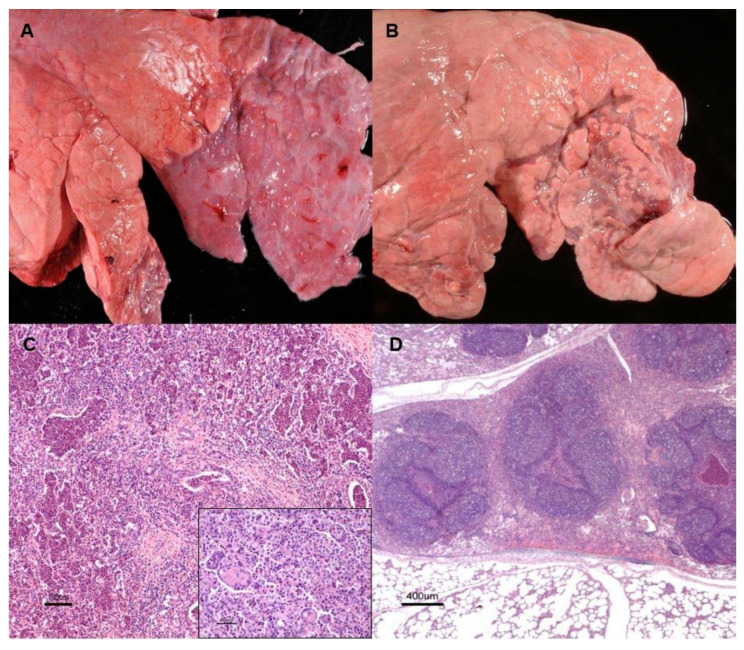
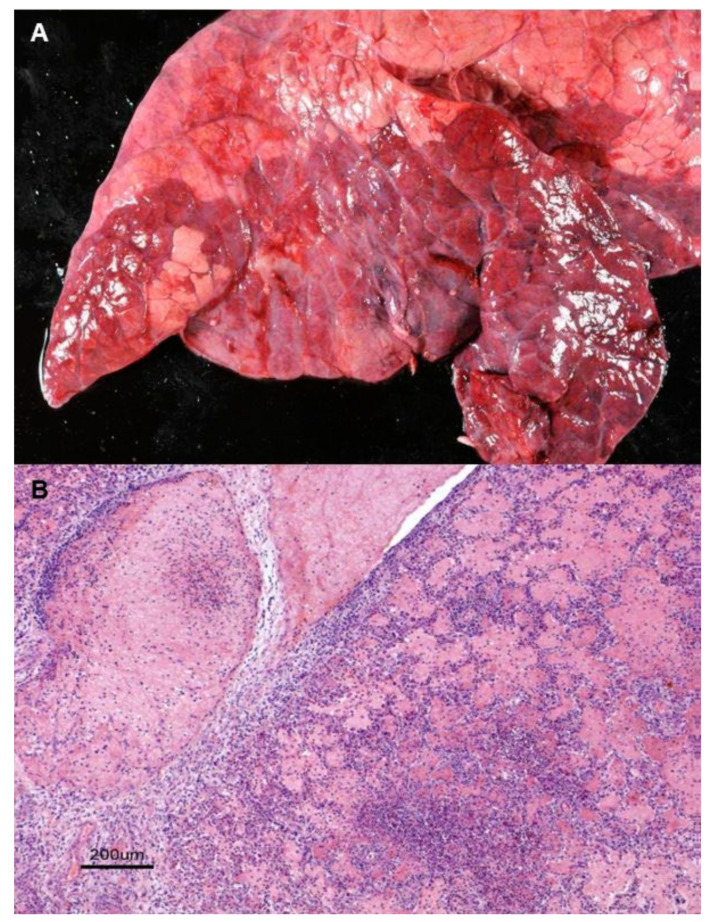
Bovine respiratory disease (BRD) is still a serious concern in feedlots, where it exerts a negative effect on farm productivity. There is a shortage of studies focused on the evaluation of BRD-associated lesions at the slaughterhouse in clinically healthy animals. The objective of this work was to investigate the prevalence and type of subclinical pneumonic lesions in slaughtered beef cattle, according to the age range and management system, and its impact on carcass weight. A total of 1101 beef cattle intended for human consumption were examined at slaughter. Information on age, sex, management system and carcass weight was recorded. The presence and type of pneumonia were evaluated according to gross and microscopic findings and etiological agents by PCR. Lung pneumonic lesions appeared in 17.9% of animals and were predominant among veal calves. According to the type, chronic catarrhal pneumonia prevailed in the majority of animals, and mixed and extensively reared cattle were more likely to suffer acute fibrinous pneumonia. The presence of pneumonic lesions was associated with a significant decrease in carcass weight that had more of an impact in veal male calves coming from intensive systems. Bacterial infections were the predominant infectious agent and the only cause of acute fibrinous pneumonia, while viruses were infrequent and only found in lesions with chronic catarrhal pneumonia. This study shows the importance of BRD in beef feedlots upon production values and points out the feasibility of slaughterhouse assessment of pneumonia as a method for the evaluation of BRD significance.
牛呼吸道疾病(BRD)在饲养场中仍然是一个严重问题,它会对农场生产力产生负面影响。目前缺乏针对临床健康动物在屠宰场进行BRD相关病变评估的研究。本研究的目的是根据年龄范围和管理系统,调查屠宰肉牛中亚临床肺炎病变的患病率和类型,及其对胴体重量的影响。共对1101头供人类食用的肉牛在屠宰时进行了检查。记录了年龄、性别、管理系统和胴体重量等信息。根据大体和显微镜检查结果以及通过PCR检测的病原体,评估肺炎的存在情况和类型。17.9%的动物出现了肺部肺炎病变,且在犊牛中最为常见。根据类型,大多数动物以慢性卡他性肺炎为主,混合饲养和粗放饲养的牛更易患急性纤维素性肺炎。肺炎病变的存在与胴体重量显著下降有关,这对来自集约化系统的雄性犊牛影响更大。细菌感染是主要的感染病原体,也是急性纤维素性肺炎的唯一病因,而病毒感染较少见,仅在慢性卡他性肺炎病变中发现。本研究表明BRD在肉牛饲养场对生产价值的重要性,并指出在屠宰场评估肺炎作为评估BRD重要性方法的可行性。