Basil Hetzel Institute for Translational Health Research, Discipline of Surgery, Adelaide Medical School, The University of Adelaide, Woodville South, Adelaide, SA 5011, Australia.
School of Chemistry and Molecular Biosciences, University of Queensland, Brisbane City, Brisbane, QLD 4072, Australia.
Int J Mol Sci. 2020 Sep 30;21(19):7228. doi: 10.3390/ijms21197228.
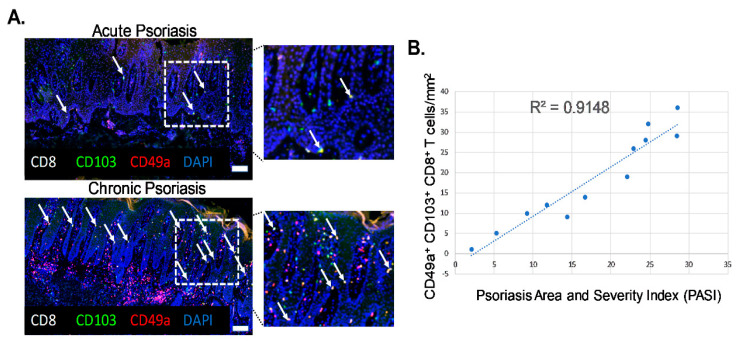
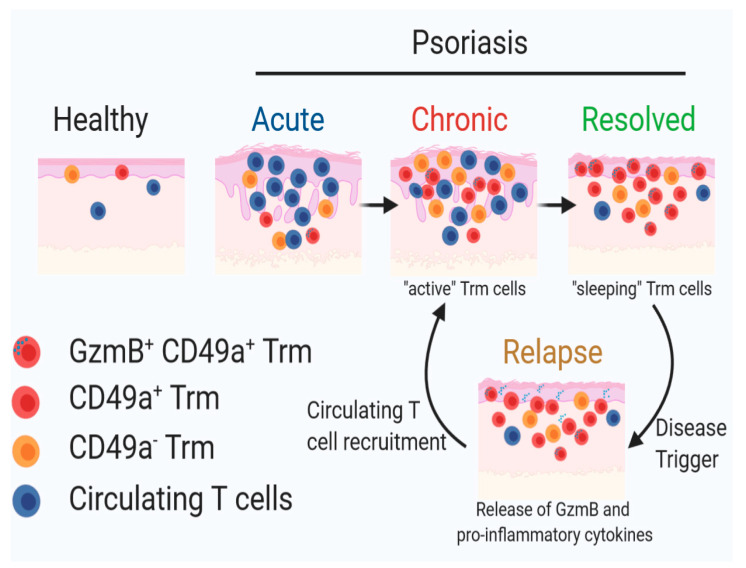
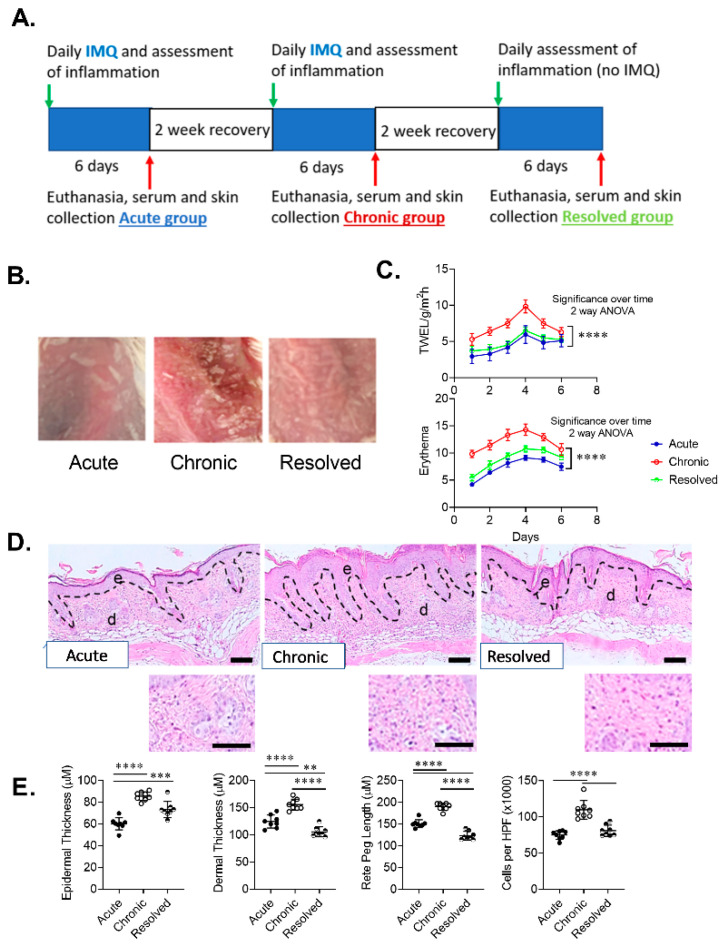
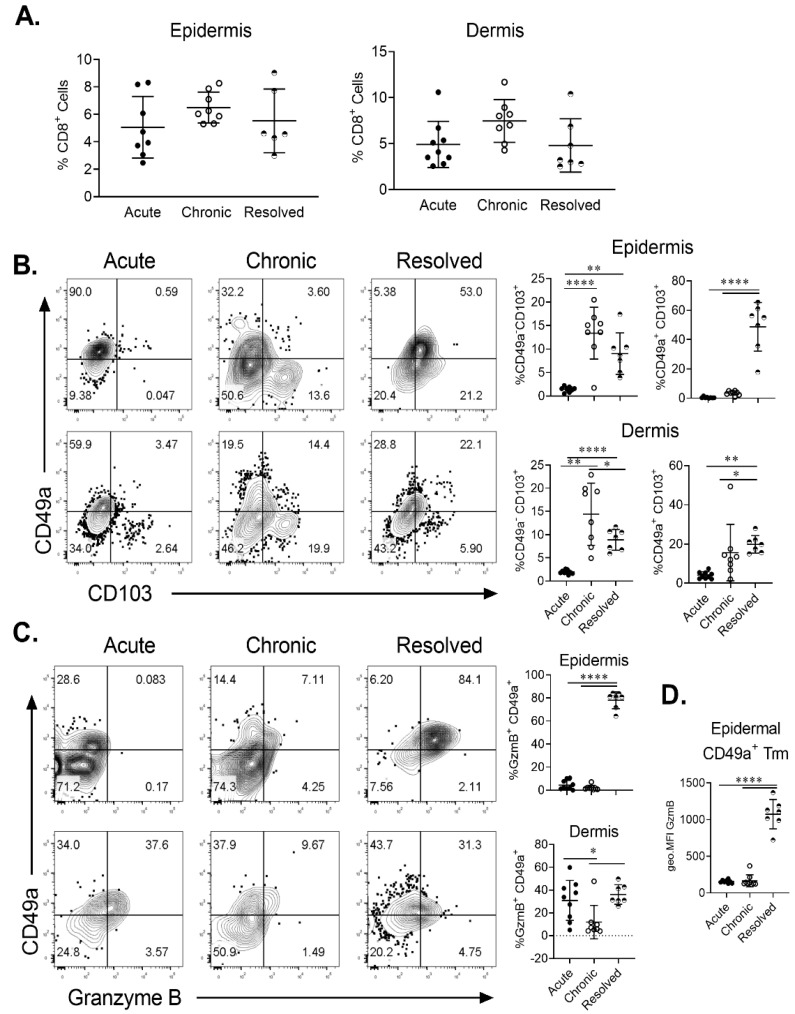
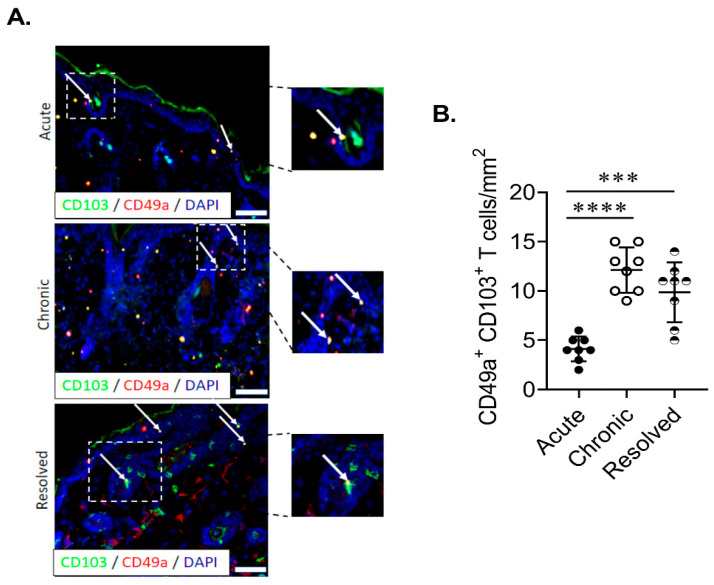
Psoriasis is a common chronic inflammatory skin condition manifested by T cell responses and characterized by preferential recurrence at previously inflamed sites upon withdrawal of treatment. The site-specific disease memory in psoriasis has been linked to CD8CD103 tissue-resident memory T cells (Trm) in the epidermis which were previously thought to only provide "frontline" protection against pathogens and immunosurveillance during cancer development. In this study, we correlated the presence of a subset of the Trm cells which are also CD49a with disease severity in human psoriatic lesions with acute and chronic disease. Using an imiquimod (IMQ)-induced murine model of psoriasiform dermatitis, we also investigated the level of CD49a Trm cells in acute, chronic and resolved psoriatic lesions. Investigation of clinical human samples showed that patient disease severity highly correlated with the numbers of epidermal CD49a Trm cells. Additionally, this subset of Trm cells was shown to persist in resolved lesions of murine psoriasiform dermatitis once clinical disease features had subsided. Importantly, these CD49a Trm cells showed significantly higher levels of granzyme B (GzmB) production compared to acute disease, suggesting a potential role of CD49a Trm cells for psoriatic re-occurrence in resolved patients. Better understanding of epidermal CD49a Trm cell activity is necessary for development of advanced treatment strategies for psoriasis to permit long-term, continuous disease control.
银屑病是一种常见的慢性炎症性皮肤病,表现为 T 细胞反应,并以治疗停止后先前炎症部位的优先复发为特征。银屑病的特定部位疾病记忆与表皮中的 CD8CD103 组织驻留记忆 T 细胞(Trm)有关,此前人们认为这些细胞仅在癌症发展过程中提供针对病原体和免疫监视的“前沿”保护。在这项研究中,我们将 Trm 细胞的一个亚群(也表达 CD49a)的存在与急性和慢性疾病中人类银屑病病变的疾病严重程度相关联。使用咪喹莫特(IMQ)诱导的银屑病样皮炎小鼠模型,我们还研究了急性、慢性和消退性银屑病病变中 CD49a Trm 细胞的水平。对临床人类样本的研究表明,患者的疾病严重程度与表皮 CD49a Trm 细胞的数量高度相关。此外,一旦临床疾病特征消退,这种 Trm 细胞亚群就会在消退的银屑病样皮炎小鼠病变中持续存在。重要的是,与急性疾病相比,这些 CD49a Trm 细胞产生的颗粒酶 B(GzmB)水平明显更高,这表明 CD49a Trm 细胞在缓解患者的银屑病再发中可能具有潜在作用。更好地了解表皮 CD49a Trm 细胞的活性对于开发治疗银屑病的先进治疗策略以实现长期持续的疾病控制是必要的。