
验证源自Empatica E4的皮肤电活动和心率变异性测量方法,该方法应用于涉及互动二元状态的研究环境中。
Validating Measures of Electrodermal Activity and Heart Rate Variability Derived From the Empatica E4 Utilized in Research Settings That Involve Interactive Dyadic States.
作者信息
Milstein Nir, Gordon Ilanit
机构信息
Department of Psychology, Bar-Ilan University, Ramat Gan, Israel.
The Gonda Multidisciplinary Brain Research Center, Bar-Ilan University, Ramat Gan, Israel.
出版信息
Front Behav Neurosci. 2020 Aug 18;14:148. doi: 10.3389/fnbeh.2020.00148. eCollection 2020.
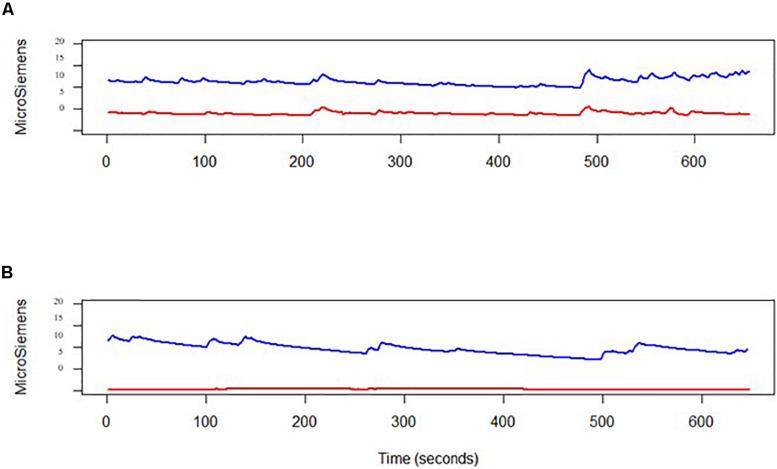
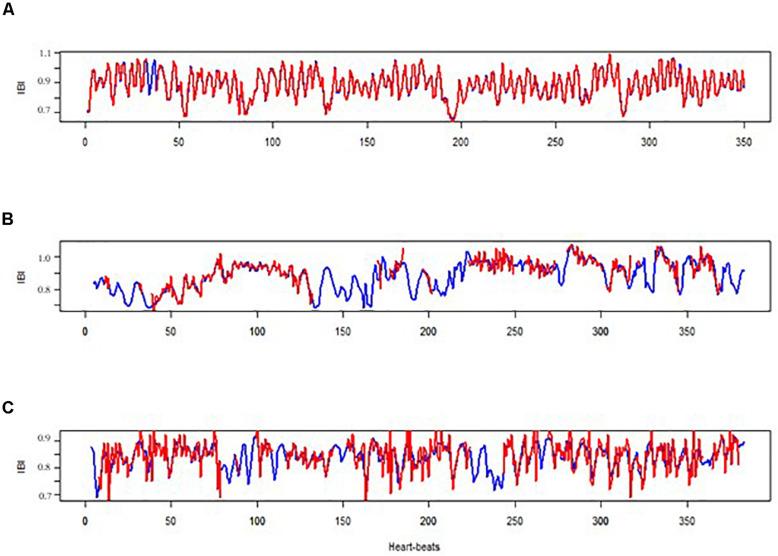
Portable and wireless devices that collect physiological data are becoming more and more sought after in clinical and psychophysiological research as technology swiftly advances. These devices allow for data collection in interactive states, such as dyadic therapy, with reduced restraints compared to traditional laboratory devices. One such portable device is the Empatica E4 wristband (Empatica Srl, Milan, Italy) which allows quantifying cardiac interbeat intervals (IBIs), heart rate variability (HRV), and electro-dermal activity (EDA), as well as several other acceleration and temperature measures. In the current study, we aimed to assess IBI, HRV, and EDA measures, against the same data collected from the well-validated MindWare mobile impedance cardiograph device (MindWare Technology, Gahanna, OH, United States). We assessed the E4 strictly as a research instrument and not as a clinical tool. We were specifically interested in the wristbands' performance during naturalistic interactive face-to-face conversations which inherently involve more hand movements. We collected data from 30 participants, nested in 15 dyads, which were connected to both devices simultaneously, during rest and during a social conversation. After preprocessing and analyses, we found that mean IBIs obtained by the E4 and the MindWare device, were highly similar during rest and during conversation. Medium to high correlations were found between the devices with respect to several HRV measures, with higher correlations during rest compared to conversation. The E4 failed to produce reliable EDA data. We conclude by discussing the strengths and limitations of the E4 during seated conversational states and suggest optimal ways to collect and analyze data with the E4.
随着技术的迅速发展,收集生理数据的便携式无线设备在临床和心理生理学研究中越来越受欢迎。与传统实验室设备相比,这些设备允许在互动状态下收集数据,如二元治疗,限制较少。一种这样的便携式设备是Empatica E4腕带(意大利米兰的Empatica Srl公司),它可以量化心脏搏动间期(IBI)、心率变异性(HRV)和皮肤电活动(EDA),以及其他一些加速度和温度测量值。在本研究中,我们旨在将IBI、HRV和EDA测量值与从经过充分验证的MindWare移动阻抗心动图设备(美国俄亥俄州加哈纳的MindWare Technology公司)收集的相同数据进行比较。我们严格将E4评估为一种研究工具,而不是临床工具。我们特别感兴趣的是在自然的面对面互动对话中腕带的性能,这种对话本身涉及更多的手部动作。我们从30名参与者中收集数据,他们被分成15对,在休息和社交对话期间同时连接到这两种设备。经过预处理和分析,我们发现E4和MindWare设备获得的平均IBI在休息和对话期间高度相似。在几种HRV测量方面,两种设备之间发现了中度到高度的相关性,休息期间的相关性高于对话期间。E4未能产生可靠的EDA数据。我们通过讨论E4在坐姿对话状态下的优点和局限性来得出结论,并提出使用E4收集和分析数据的最佳方法。
 Zotero 插件