Guadarrama-Ortiz Parménides, Choreño-Parra José Alberto, Sánchez-Martínez Claudia Marisol, Pacheco-Sánchez Francisco Javier, Rodríguez-Nava Alberto Iván, García-Quintero Gabriela
Departament of Neurosurgery, Centro Especializado en Neurocirugía y Neurociencias México (CENNM), Mexico City, Mexico.
Escuela Nacional de Ciencias Biológicas, Instituto Politécnico Nacional, Mexico City, Mexico.
Front Neurol. 2020 Sep 4;11:1039. doi: 10.3389/fneur.2020.01039. eCollection 2020.
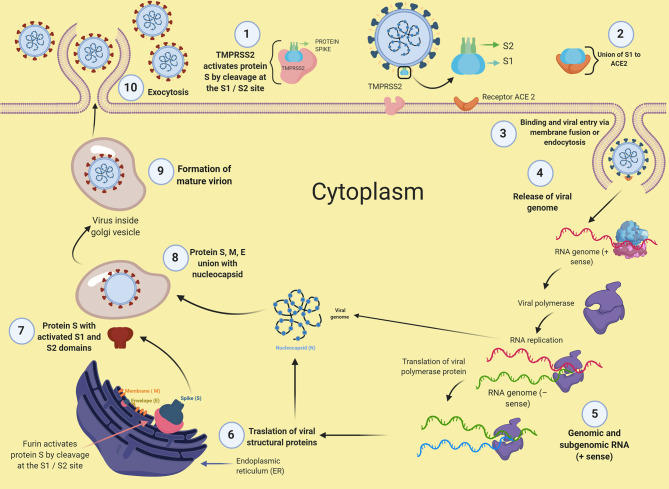
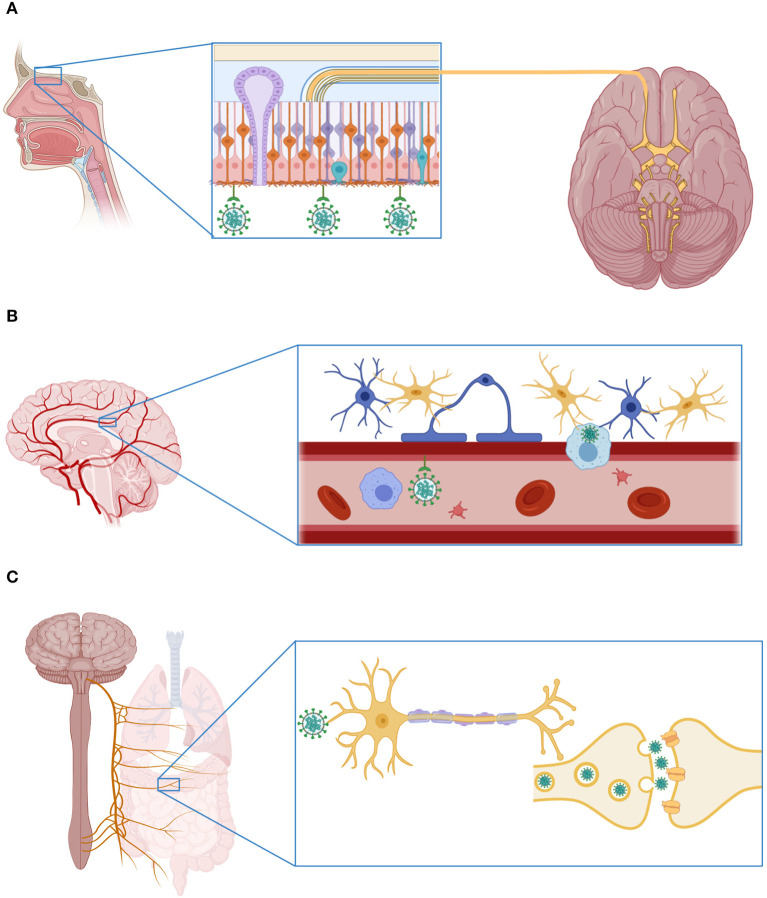
The human infection of the novel severe acute respiratory syndrome coronavirus 2 (SARS-CoV-2) is a public health emergency of international concern that has caused more than 16.8 million new cases and 662,000 deaths as of July 30, 2020. Although coronavirus disease 2019 (COVID-19), which is associated with this virus, mainly affects the lungs, recent evidence from clinical and pathological studies indicates that this pathogen has a broad infective ability to spread to extrapulmonary tissues, causing multiorgan failure in severely ill patients. In this regard, there is increasing preoccupation with the neuroinvasive potential of SARS-CoV-2 due to the observation of neurological manifestations in COVID-19 patients. This concern is also supported by the neurotropism previously documented in other human coronaviruses, including the 2002-2003 SARS-CoV-1 outbreak. Hence, in the current review article, we aimed to summarize the spectrum of neurological findings associated with COVID-19, which include signs of peripheral neuropathy, myopathy, olfactory dysfunction, meningoencephalitis, Guillain-Barré syndrome, and neuropsychiatric disorders. Furthermore, we analyze the mechanisms underlying such neurological sequela and discuss possible therapeutics for patients with neurological findings associated with COVID-19. Finally, we describe the host- and pathogen-specific factors that determine the tissue tropism of SARS-CoV-2 and possible routes employed by the virus to invade the nervous system from a pathophysiological and molecular perspective. In this manner, the current manuscript contributes to increasing the current understanding of the neurological aspects of COVID-19 and the impact of the current pandemic on the neurology field.
新型严重急性呼吸综合征冠状病毒2(SARS-CoV-2)的人类感染是一项国际关注的突发公共卫生事件,截至2020年7月30日,已导致超过1680万例新病例和66.2万人死亡。尽管与该病毒相关的2019冠状病毒病(COVID-19)主要影响肺部,但临床和病理学研究的最新证据表明,这种病原体具有广泛的感染能力,可扩散至肺外组织,导致重症患者出现多器官功能衰竭。在这方面,由于观察到COVID-19患者的神经学表现,人们越来越关注SARS-CoV-2的神经侵袭潜力。其他人类冠状病毒(包括2002 - 2003年SARS-CoV-1疫情)先前记录的嗜神经性也支持了这一担忧。因此,在当前这篇综述文章中,我们旨在总结与COVID-19相关的神经学发现谱,其中包括周围神经病变、肌病、嗅觉功能障碍、脑膜脑炎、吉兰 - 巴雷综合征和神经精神障碍的体征。此外,我们分析了此类神经后遗症的潜在机制,并讨论了与COVID-19相关神经学发现患者的可能治疗方法。最后,我们从病理生理学和分子角度描述了决定SARS-CoV-2组织嗜性的宿主和病原体特异性因素,以及该病毒侵入神经系统可能采用的途径。通过这种方式,当前的手稿有助于增进对COVID-19神经学方面的当前理解以及当前大流行对神经学领域的影响。