Kim Gyungcheon, Bae Jaewoong, Kim Mi Jin, Kwon Hyeji, Park Gwoncheol, Kim Seok-Jin, Choe Yon Ho, Kim Jisook, Park Sook-Hyun, Choe Byung-Ho, Shin Hakdong, Kang Ben
R&D Institute, BioEleven Co., Ltd., Seoul, South Korea.
Department of Food Science and Biotechnology, College of Life Science, Sejong University, Seoul, South Korea.
Front Microbiol. 2020 Sep 11;11:2099. doi: 10.3389/fmicb.2020.02099. eCollection 2020.
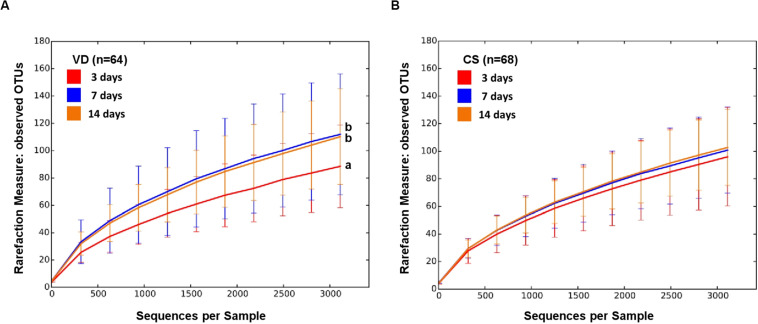
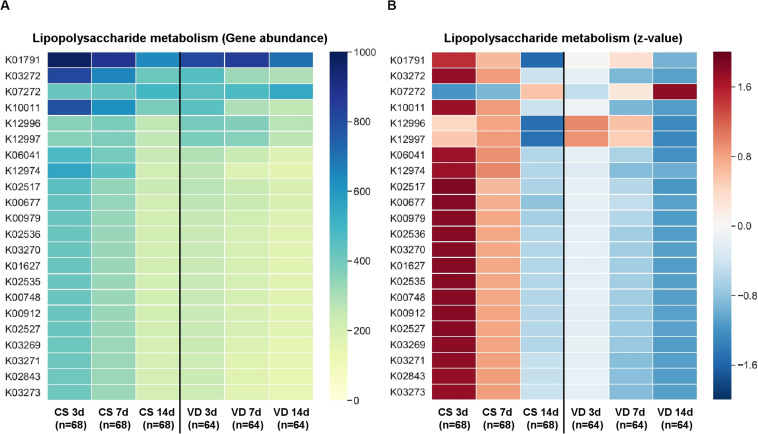
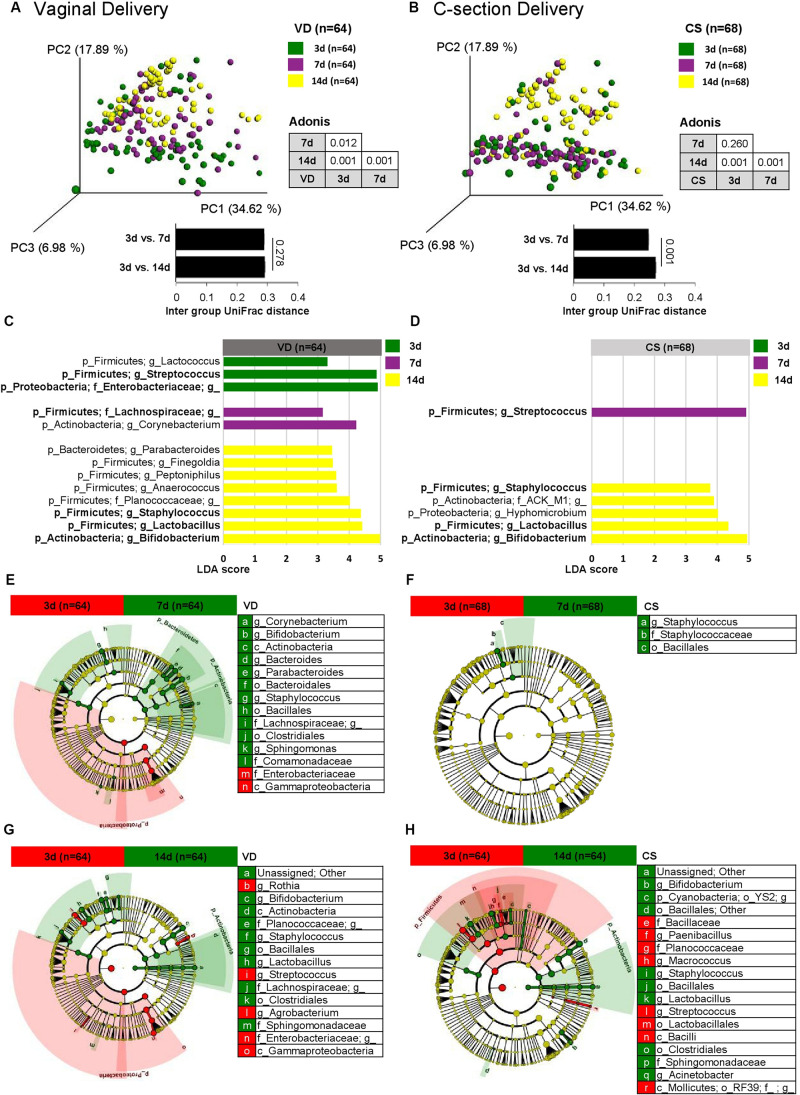
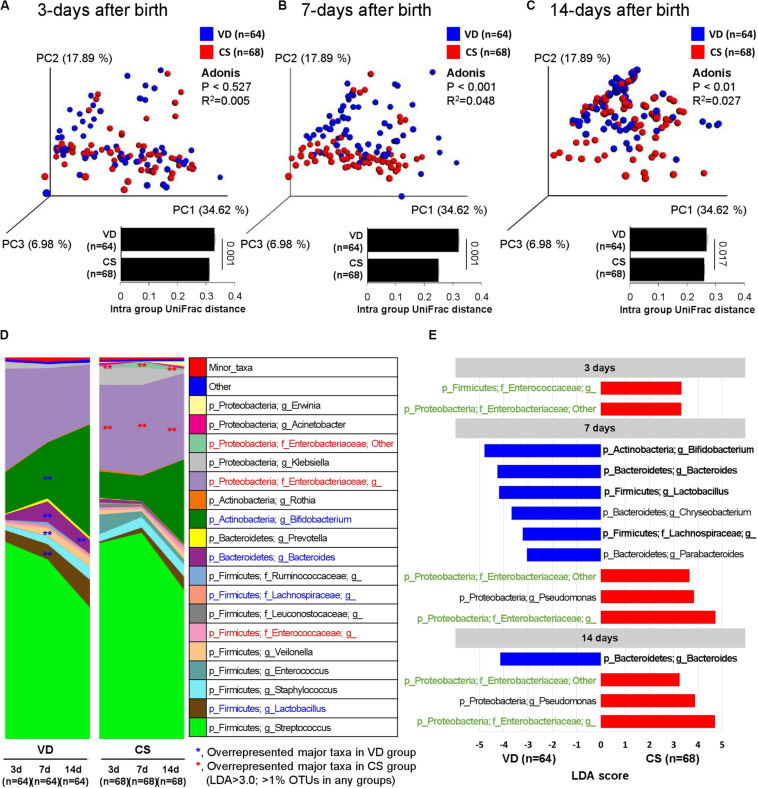
The maternal vaginal microbiome is an important source for infant gut microbiome development. However, infants delivered by Cesarean section (CS) do not contact the maternal vaginal microbiome and this delivery method may perturb the early establishment and development of the gut microbiome. The aim of this study was to investigate the early gut microbiota of Korean newborns receiving the same postpartum care services for two weeks after birth by delivery mode using fecal samples collected at days 3, 7, and 14. Early gut microbiota development patterns were examined using 16S rRNA gene-based sequencing from 132 infants either born vaginally (VD, = 64) or via Cesarean section (CS, = 68). VD-born neonates showed increased alpha diversity in infant fecal samples collated at days 7 and 14 compared to those from day 3, while those of CS infants did not differ ( < 0.015). Bacterial structures of infants from both groups separated at day 7 ( < 0.001) and day 14 ( < 0.01). The bacterial structure of VD infants gradually changed over time (day 3 vs. day 7, < 0.012; day 3 vs. day 14, < 0.001). Day 14 samples of CS infants differed from day 3 and 7 samples (day 3 vs. day 14, < 0.001). VD infant relative abundance of (days 7, 14), (days 7, 14), and (day 7) significantly increased compared to CS infants, with a lower abundance of (found in all periods of the CS group) (LDA > 3.0). Relative abundances of , , and were significantly increased in both VD and CS groups at day 14 (LDA > 3.0). Predicted functional analysis showed that VD infants had overrepresented starch/sucrose, amino acid and nucleotide metabolism in gut microbiota with depleted lipopolysaccharide biosynthesis until day 14 compared to CS infants. This study confirmed that delivery mode is the major determinant of neonatal intestinal microbiome establishment and provides a profile of microbiota perturbations in CS infants. Our findings provide preliminary insight for establishing recovery methods to supply the specific microbes missing in CS infants.
母体阴道微生物群是婴儿肠道微生物群发育的重要来源。然而,剖宫产(CS)分娩的婴儿无法接触到母体阴道微生物群,这种分娩方式可能会干扰肠道微生物群的早期建立和发育。本研究的目的是通过对出生后第3天、第7天和第14天采集的粪便样本,调查韩国新生儿在出生后两周接受相同产后护理服务时,按分娩方式划分的早期肠道微生物群。使用基于16S rRNA基因的测序技术,对132名经阴道分娩(VD,n = 64)或剖宫产(CS,n = 68)的婴儿的早期肠道微生物群发育模式进行了检测。与第3天的样本相比,VD出生的新生儿在第7天和第14天整理的婴儿粪便样本中显示出更高的α多样性,而CS婴儿的样本则没有差异(P < 0.015)。两组婴儿的细菌结构在第7天(P < 0.001)和第14天(P < 0.01)时出现分离。VD婴儿的细菌结构随时间逐渐变化(第3天与第7天,P < 0.012;第3天与第14天,P < 0.001)。CS婴儿第14天的样本与第3天和第7天的样本不同(第3天与第14天,P < 0.001)。与CS婴儿相比,VD婴儿在第7天和第14天的相对丰度显著增加,而CS组在所有时期的丰度均较低(线性判别分析> 3.0)。在第14天,VD组和CS组的相对丰度均显著增加(线性判别分析> 3.0)。预测功能分析表明,与CS婴儿相比,直到第14天,VD婴儿肠道微生物群中的淀粉/蔗糖、氨基酸和核苷酸代谢功能过度表达,而脂多糖生物合成功能则有所减少。本研究证实分娩方式是新生儿肠道微生物群建立的主要决定因素,并提供了CS婴儿微生物群扰动的概况。我们的研究结果为建立恢复方法以补充CS婴儿中缺失的特定微生物提供了初步见解。