Department of Paediatric Immunology and Infectious Diseases, Wilhelmina Children's Hospital of University Medical Centre, Utrecht, the Netherlands.
Spaarne Gasthuis Academy Hoofddorp and Haarlem, Hoofddorp, The Netherlands.
Nat Commun. 2019 Nov 1;10(1):4997. doi: 10.1038/s41467-019-13014-7.
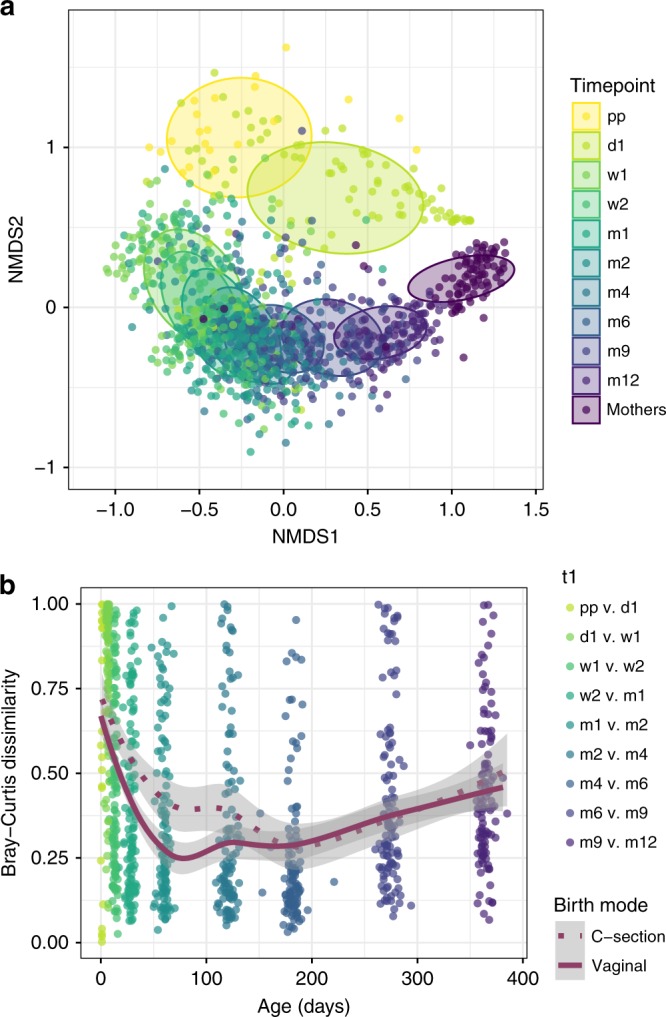
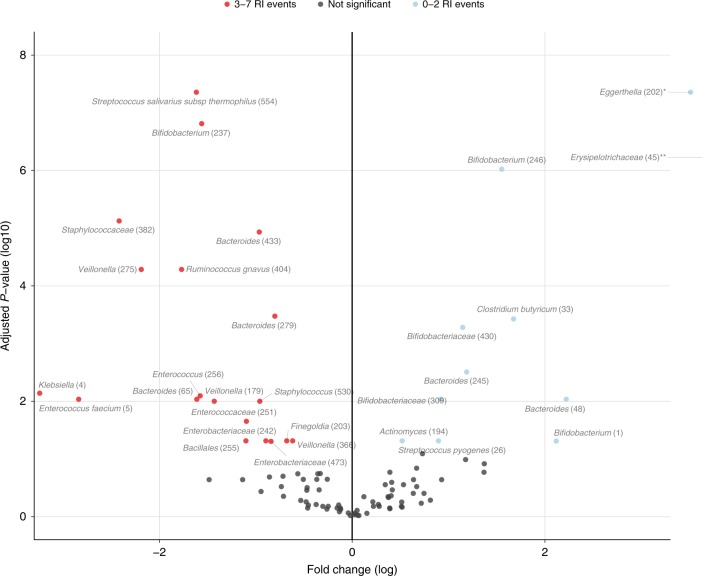
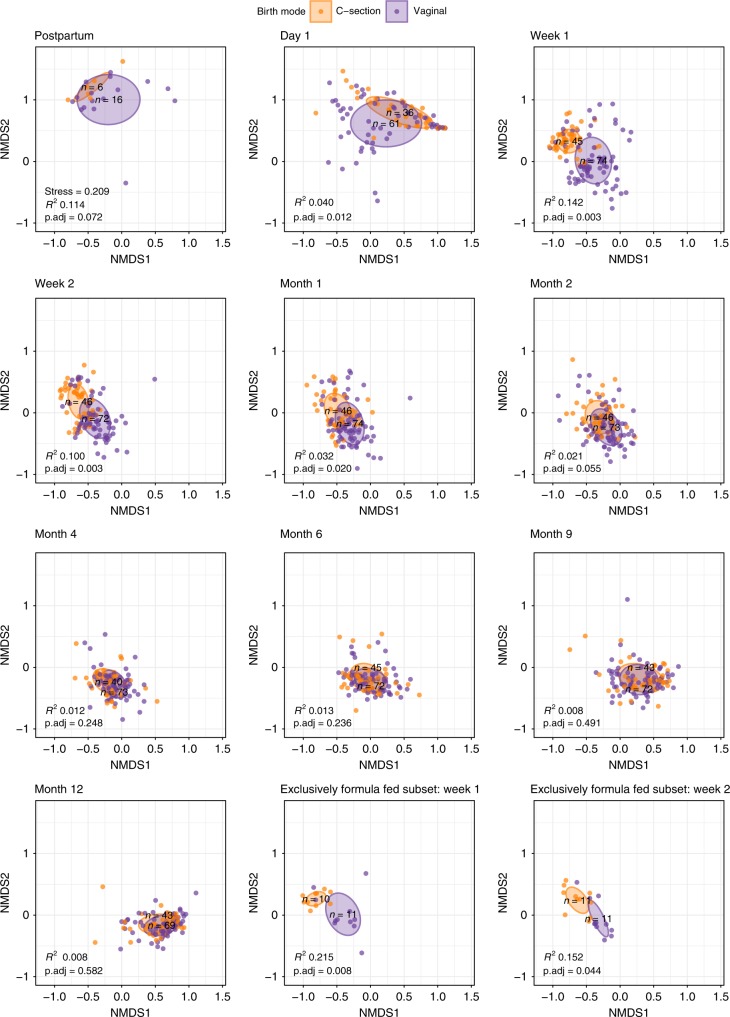
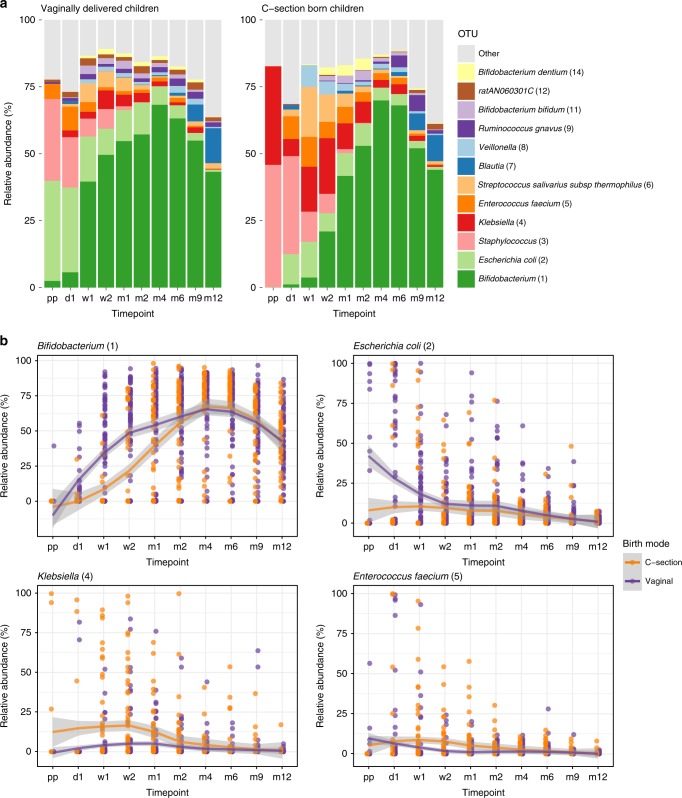
The early-life microbiome appears to be affected by mode of delivery, but this effect may depend on intrapartum antibiotic exposure. Here, we assess the effect of delivery mode on gut microbiota, independent of intrapartum antibiotics, by postponing routine antibiotic administration to mothers until after cord clamping in 74 vaginally delivered and 46 caesarean section born infants. The microbiota differs between caesarean section born and vaginally delivered infants over the first year of life, showing enrichment of Bifidobacterium spp., and reduction of Enterococcus and Klebsiella spp. in vaginally delivered infants. The microbiota composition at one week of life is associated with the number of respiratory infections over the first year. The taxa driving this association are more abundant in caesarean section born children, providing a possible link between mode of delivery and susceptibility to infectious outcomes.
婴儿早期的微生物组似乎受到分娩方式的影响,但这种影响可能取决于产时抗生素的暴露。在这里,我们通过在 74 名阴道分娩和 46 名剖宫产婴儿中推迟常规抗生素的使用,直到脐带夹闭后,评估分娩方式对肠道微生物组的影响,而不考虑产时抗生素的使用。在生命的第一年,剖宫产儿和阴道分娩儿的肠道微生物组存在差异,阴道分娩儿中双歧杆菌属的丰度增加,肠球菌属和克雷伯菌属的丰度减少。出生后一周的微生物组组成与第一年呼吸道感染的次数有关。驱动这种关联的分类群在剖宫产儿中更为丰富,为分娩方式与感染结果易感性之间的联系提供了可能。