Laboratory of Virology, National Institute of Immunology, New Delhi, India.
Front Immunol. 2020 Sep 10;11:565521. doi: 10.3389/fimmu.2020.565521. eCollection 2020.
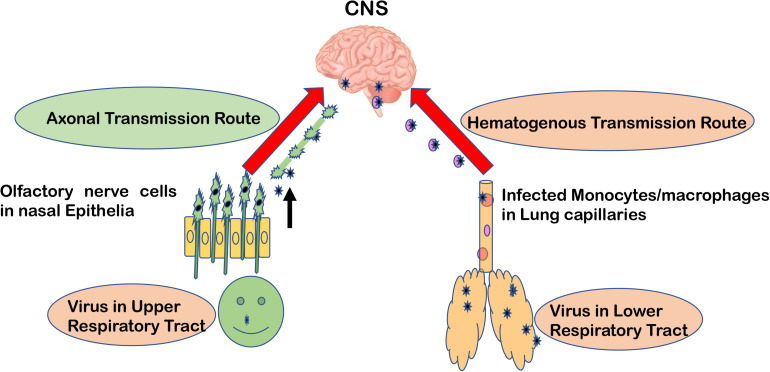
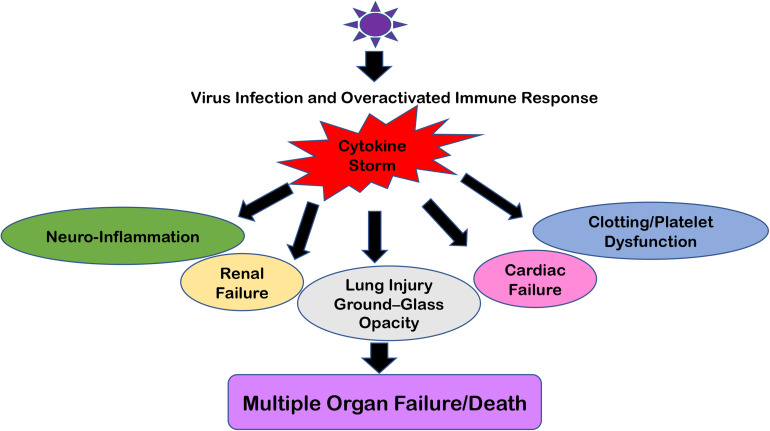
Neurological disorders caused by neuroviral infections are an obvious pathogenic manifestation. However, non-neurotropic viruses or peripheral viral infections pose a considerable challenge as their neuropathological manifestations do not emerge because of primary infection. Their secondary or bystander pathologies develop much later, like a syndrome, during and after the recovery of patients from the primary disease. Massive inflammation caused by peripheral viral infections can trigger multiple neurological anomalies. These neurological damages may range from a general cognitive and motor dysfunction up to a wide spectrum of CNS anomalies, such as Acute Necrotizing Hemorrhagic Encephalopathy, Guillain-Barré syndrome, Encephalitis, Meningitis, anxiety, and other audio-visual disabilities. Peripheral viruses like Measles virus, Enteroviruses, Influenza viruses (HIN1 series), SARS-CoV-1, MERS-CoV, and, recently, SARS-CoV-2 are reported to cause various neurological manifestations in patients and are proven to be neuropathogenic even in cellular and animal model systems. This review presents a comprehensive picture of CNS susceptibilities toward these peripheral viral infections and explains some common underlying themes of their neuropathology in the human brain.
神经病毒感染引起的神经紊乱是一种明显的发病表现。然而,非神经亲和性病毒或外周病毒感染构成了相当大的挑战,因为它们的神经病理学表现不会因原发性感染而出现。它们的继发性或旁观者病理在患者从原发性疾病中恢复之后和期间会更晚出现,例如综合征。外周病毒感染引起的大量炎症会引发多种神经异常。这些神经损伤范围从一般认知和运动功能障碍到中枢神经系统异常的广泛谱,如急性坏死性出血性脑病、格林-巴利综合征、脑炎、脑膜炎、焦虑症和其他视听障碍。据报道,麻疹病毒、肠道病毒、流感病毒(HIN1 系列)、SARS-CoV-1、MERS-CoV 以及最近的 SARS-CoV-2 等外周病毒会在患者中引起各种神经表现,并在细胞和动物模型系统中被证明具有神经致病性。本综述全面介绍了中枢神经系统对这些外周病毒感染的易感性,并解释了它们在人类大脑中的神经病理学的一些常见潜在主题。