Hoel Erik, Levin Michael
Allen Discovery Center, Tufts University, Medford, MA, USA.
Wyss Institute for Biologically Inspired Engineering, Harvard University, Boston, MA, USA.
Commun Integr Biol. 2020 Aug 15;13(1):108-118. doi: 10.1080/19420889.2020.1802914.
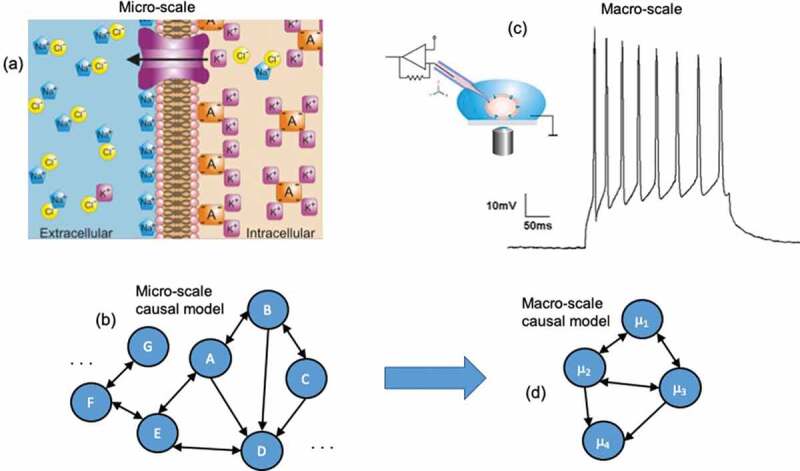
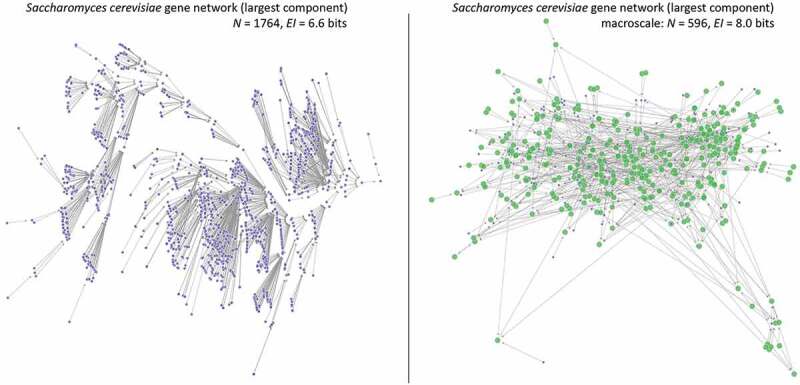
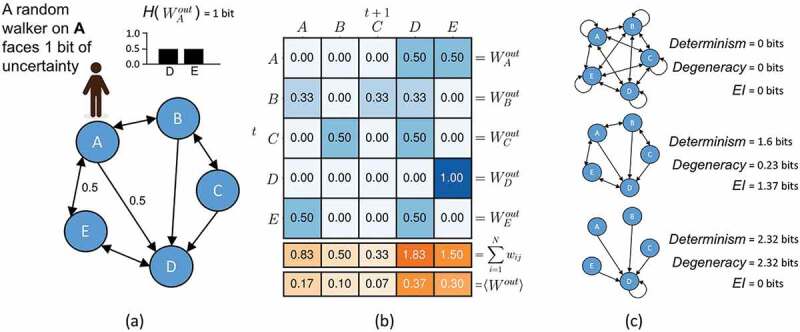
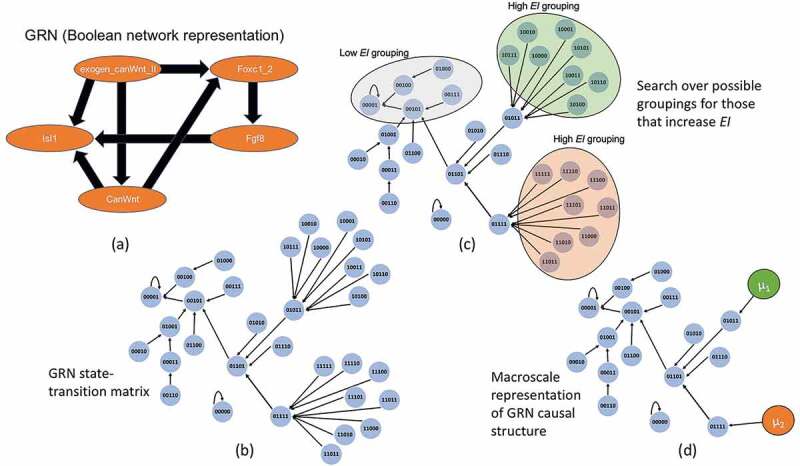
The biological sciences span many spatial and temporal scales in attempts to understand the function and evolution of complex systems-level processes, such as embryogenesis. It is generally assumed that the most effective description of these processes is in terms of molecular interactions. However, recent developments in information theory and causal analysis now allow for the quantitative resolution of this question. In some cases, macro-scale models can minimize noise and increase the amount of information an experimenter or modeler has about "what does what." This result has numerous implications for evolution, pattern regulation, and biomedical strategies. Here, we provide an introduction to these quantitative techniques, and use them to show how informative macro-scales are common across biology. Our goal is to give biologists the tools to identify the maximally-informative scale at which to model, experiment on, predict, control, and understand complex biological systems.
生物科学涵盖了许多空间和时间尺度,旨在理解复杂系统层面过程的功能和进化,比如胚胎发育。人们通常认为,对这些过程最有效的描述是基于分子相互作用。然而,信息论和因果分析方面的最新进展现在使得能够对这个问题进行定量解析。在某些情况下,宏观尺度模型可以将噪声降至最低,并增加实验者或建模者所拥有的关于“什么做了什么”的信息量。这一结果对进化、模式调控和生物医学策略具有诸多影响。在这里,我们对这些定量技术进行介绍,并利用它们展示信息丰富的宏观尺度在生物学中是如何普遍存在的。我们的目标是为生物学家提供工具,以确定对复杂生物系统进行建模、实验、预测、控制和理解的信息量最大的尺度。