Park Soyoung, Park So-Young
Department of Physiology and Smart-aging Convergence Research Center, Yeungnam University College of Medicine, Daegu, Korea.
Yeungnam Univ J Med. 2021 Apr;38(2):83-94. doi: 10.12701/yujm.2020.00563. Epub 2020 Oct 8.
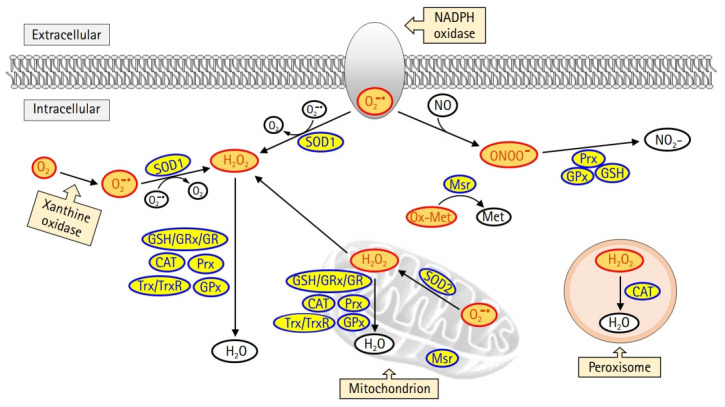
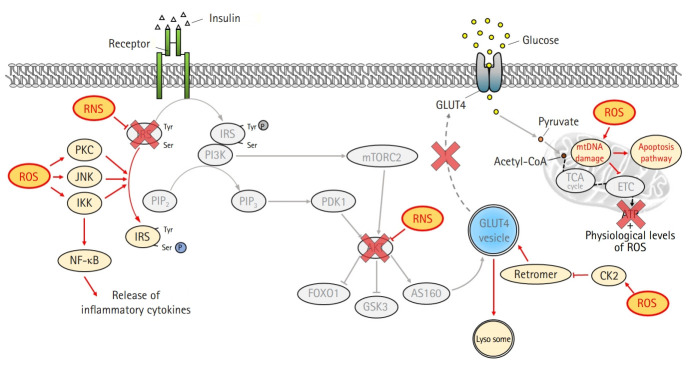
The global obesity epidemic and the growing elderly population largely contribute to the increasing incidence of type 2 diabetes. Insulin resistance acts as a critical link between the present obesity pandemic and type 2 diabetes. Naturally occurring reactive oxygen species (ROS) regulate intracellular signaling and are kept in balance by the antioxidant system. However, the imbalance between ROS production and antioxidant capacity causes ROS accumulation and induces oxidative stress. Oxidative stress interrupts insulin-mediated intracellular signaling pathways, as supported by studies involving genetic modification of antioxidant enzymes in experimental rodents. In addition, a close association between oxidative stress and insulin resistance has been reported in numerous human studies. However, the controversial results with the use of antioxidants in type 2 diabetes raise the question of whether oxidative stress plays a critical role in insulin resistance. In this review article, we discuss the relevance of oxidative stress to insulin resistance based on genetically modified animal models and human trials.
全球肥胖流行和老年人口的不断增加在很大程度上导致了2型糖尿病发病率的上升。胰岛素抵抗是当前肥胖大流行与2型糖尿病之间的关键联系。天然存在的活性氧(ROS)调节细胞内信号传导,并由抗氧化系统保持平衡。然而,ROS产生与抗氧化能力之间的失衡会导致ROS积累并诱导氧化应激。氧化应激会中断胰岛素介导的细胞内信号通路,这在涉及实验啮齿动物抗氧化酶基因修饰的研究中得到了支持。此外,在众多人体研究中也报道了氧化应激与胰岛素抵抗之间的密切关联。然而,在2型糖尿病中使用抗氧化剂的结果存在争议,这引发了氧化应激是否在胰岛素抵抗中起关键作用的问题。在这篇综述文章中,我们基于基因修饰动物模型和人体试验讨论氧化应激与胰岛素抵抗的相关性。