Morris Gerwyn, Athan Eugene, Walder Ken, Bortolasci Chiara C, O'Neil Adrienne, Marx Wolf, Berk Michael, Carvalho André F, Maes Michael, Puri Basant K
Deakin University, IMPACT, the Institute for Mental and Physical Health and Clinical Translation, Barwon Health, School of Medicine, Geelong, Victoria, Australia.
Deakin University, IMPACT, the Institute for Mental and Physical Health and Clinical Translation, Barwon Health, School of Medicine, Geelong, Victoria, Australia; Department of Infectious Disease, Barwon Health, Geelong, Australia.
Life Sci. 2020 Dec 1;262:118541. doi: 10.1016/j.lfs.2020.118541. Epub 2020 Oct 6.
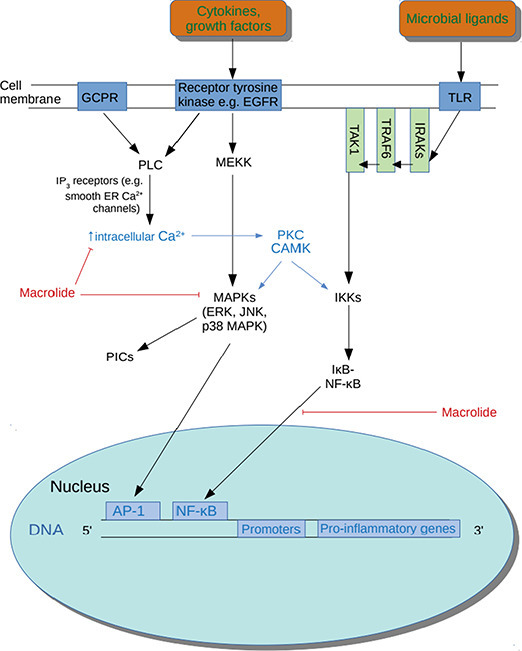
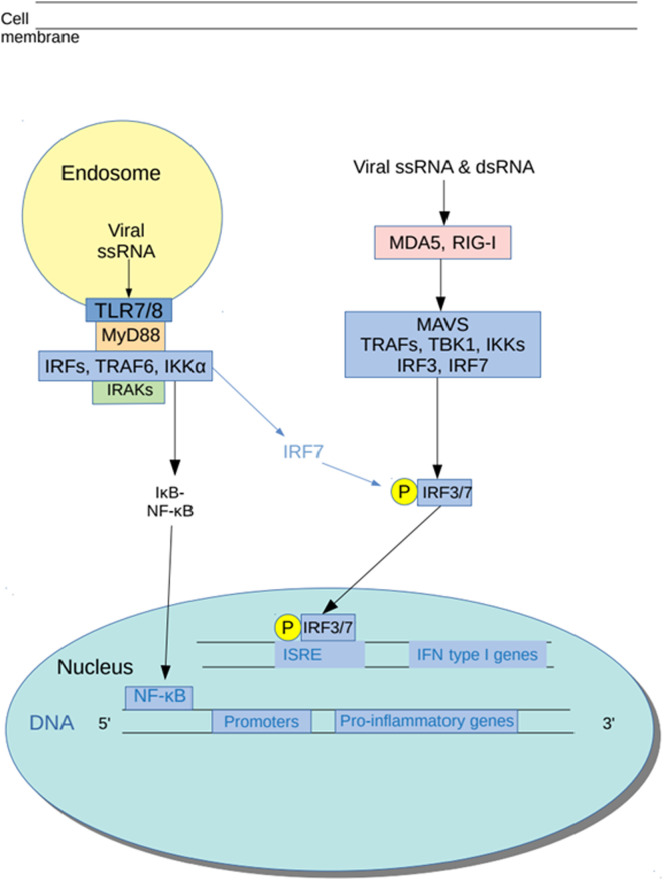
The possibility is examined that immunomodulatory pharmacotherapy may be clinically useful in managing the pandemic coronavirus disease 2019 (COVID-19), known to result from infection by the severe acute respiratory syndrome coronavirus 2 (SARS-CoV-2), a positive-sense single-stranded RNA virus. The dominant route of cell entry of the coronavirus is via phagocytosis, with ensconcement in endosomes thereafter proceeding via the endosomal pathway, involving transfer from early (EEs) to late endosomes (LEs) and ultimately into lysosomes via endolysosomal fusion. EE to LE transportation is a rate-limiting step for coronaviruses. Hence inhibition or dysregulation of endosomal trafficking could potentially inhibit SARS-CoV-2 replication. Furthermore, the acidic luminal pH of the endolysosomal system is critical for the activity of numerous pH-sensitive hydrolytic enzymes. Golgi sub-compartments and Golgi-derived secretory vesicles also depend on being mildly acidic for optimal function and structure. Activation of endosomal toll-like receptors by viral RNA can upregulate inflammatory mediators and contribute to a systemic inflammatory cytokine storm, associated with a worsened clinical outcome in COVID-19. Such endosomal toll-like receptors could be inhibited by the use of pharmacological agents which increase endosomal pH, thereby reducing the activity of acid-dependent endosomal proteases required for their activity and/or assembly, leading to suppression of antigen-presenting cell activity, decreased autoantibody secretion, decreased nuclear factor-kappa B activity and decreased pro-inflammatory cytokine production. It is also noteworthy that SARS-CoV-2 inhibits autophagy, predisposing infected cells to apoptosis. It is therefore also suggested that further pharmacological inhibition of autophagy might encourage the apoptotic clearance of SARS-CoV-2-infected cells.
研究了免疫调节药物疗法在治疗2019年大流行性冠状病毒病(COVID-19)方面的临床实用性,已知该疾病由严重急性呼吸综合征冠状病毒2(SARS-CoV-2)感染引起,SARS-CoV-2是一种正义单链RNA病毒。冠状病毒进入细胞的主要途径是通过吞噬作用,随后在内体中通过内体途径固定,包括从早期内体(EEs)转移到晚期内体(LEs),最终通过内溶酶体融合进入溶酶体。EE到LE的运输是冠状病毒的限速步骤。因此,内体运输的抑制或失调可能会抑制SARS-CoV-2的复制。此外,内溶酶体系统的酸性腔pH值对于许多pH敏感水解酶的活性至关重要。高尔基体亚区室和高尔基体衍生的分泌囊泡也依赖于轻度酸性以实现最佳功能和结构。病毒RNA激活内体 Toll样受体可上调炎症介质,并导致全身炎症细胞因子风暴,这与COVID-19患者临床结局恶化有关。使用可提高内体pH值的药物可抑制此类内体Toll样受体,从而降低其活性和/或组装所需的酸依赖性内体蛋白酶的活性,导致抗原呈递细胞活性受到抑制、自身抗体分泌减少、核因子-κB活性降低以及促炎细胞因子产生减少。还值得注意的是,SARS-CoV-2抑制自噬,使受感染细胞易发生凋亡。因此,也有人提出进一步通过药物抑制自噬可能会促进SARS-CoV-2感染细胞的凋亡清除。