CMDB Graduate Program, Johns Hopkins University, Baltimore, MD, USA.
Molecular Biology Program, Sloan Kettering Institute, New York, NY, USA.
Nat Commun. 2020 Oct 9;11(1):5096. doi: 10.1038/s41467-020-18921-8.
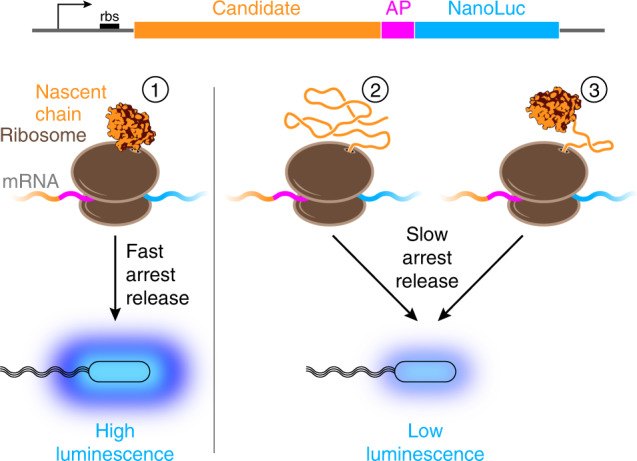
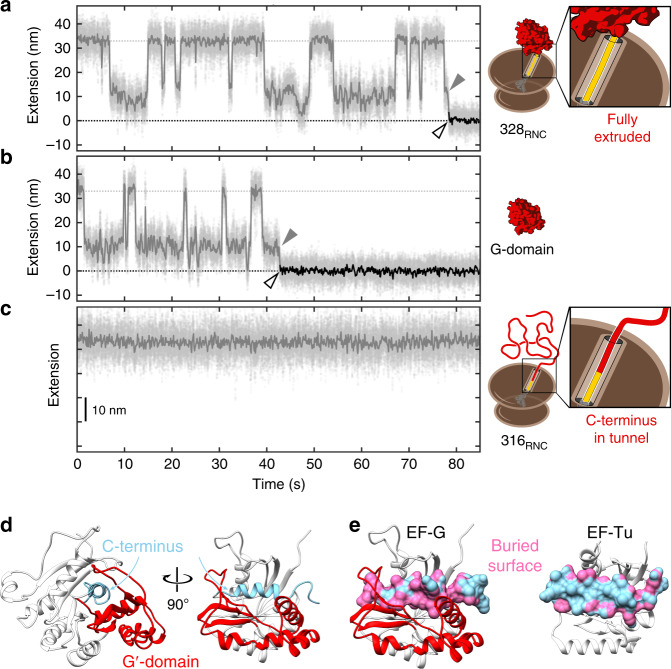
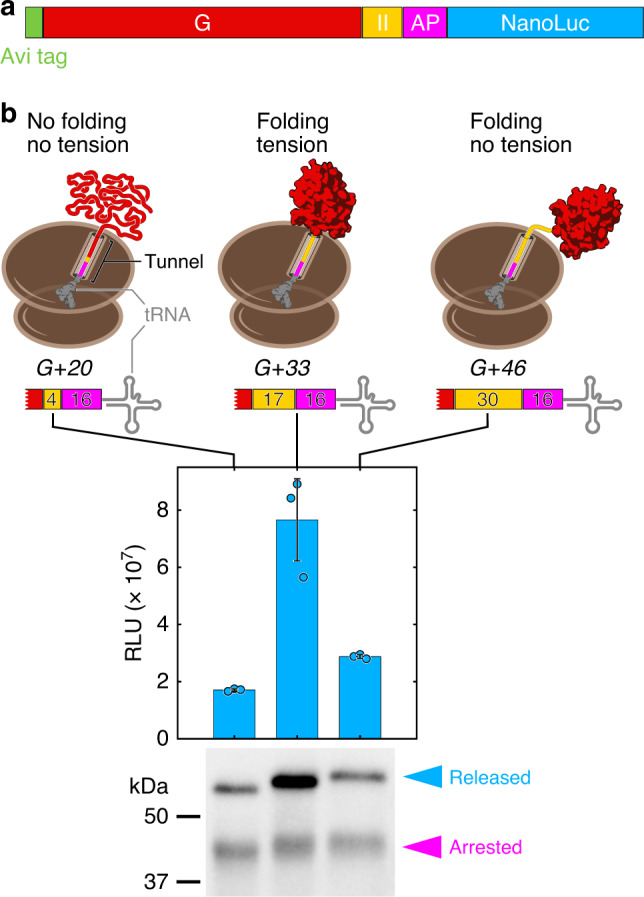
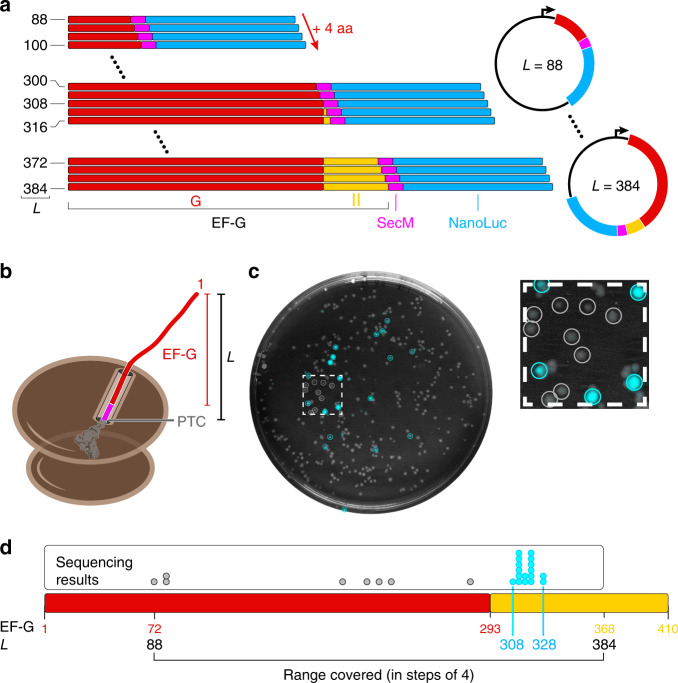
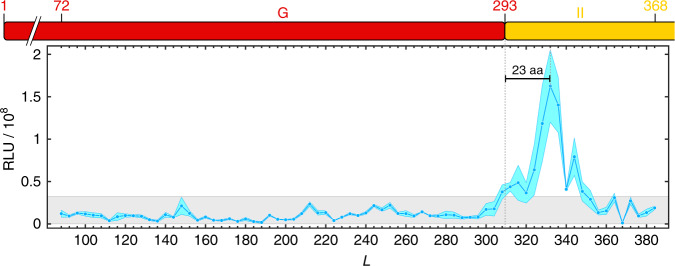
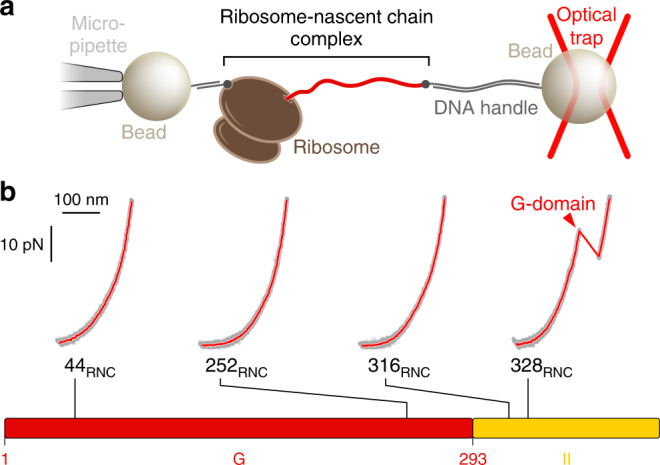
Folding of individual domains in large proteins during translation helps to avoid otherwise prevalent inter-domain misfolding. How folding intermediates observed in vitro for the majority of proteins relate to co-translational folding remains unclear. Combining in vivo and single-molecule experiments, we followed the co-translational folding of the G-domain, encompassing the first 293 amino acids of elongation factor G. Surprisingly, the domain remains unfolded until it is fully synthesized, without collapsing into molten globule-like states or forming stable intermediates. Upon fully emerging from the ribosome, the G-domain transitions to its stable native structure via folding intermediates. Our results suggest a strictly sequential folding pathway initiating from the C-terminus. Folding and synthesis thus proceed in opposite directions. The folding mechanism is likely imposed by the final structure and might have evolved to ensure efficient, timely folding of a highly abundant and essential protein.
在翻译过程中,单个结构域在大型蛋白质中的折叠有助于避免普遍存在的结构域间错误折叠。在体外观察到的大多数蛋白质的折叠中间体与共翻译折叠的关系尚不清楚。我们通过将体内和单分子实验相结合,研究了延伸因子 G 的第一个 293 个氨基酸的 G 结构域的共翻译折叠。令人惊讶的是,该结构域在完全合成之前保持未折叠状态,不会折叠成无规卷曲样状态或形成稳定的中间体。当完全从核糖体中释放出来后,G 结构域通过折叠中间体过渡到其稳定的天然结构。我们的结果表明,这是一种从 C 端起始的严格顺序折叠途径。折叠和合成因此朝相反的方向进行。这种折叠机制可能是由最终结构决定的,并且可能已经进化为了确保一种高度丰富和必需的蛋白质的有效、及时折叠。